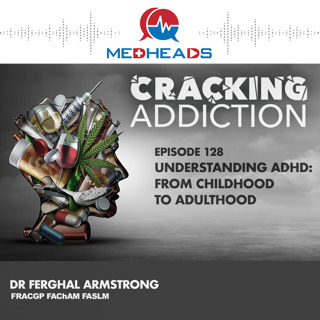
Understanding ADHD: From Childhood to Adulthood
Cracking Addiction24 Tammi 2024

Understanding ADHD: From Childhood to Adulthood

In this groundbreaking episode of Cracking Addiction, Dr. Ferghal Armstrong and Manu Bhatnagar guide listeners through a deep dive into ADHD, unraveling its complexities and controversies. The duo dissects the widely debated concept of ADHD from a neuropsychological standpoint, exploring its validity, prevalence, and implications for both children and adults. Listeners will gain valuable insights into the social constructs and cultural influences shaping ADHD diagnosis and management.

**Key Points**:

1. ADHD as a Real Neurological Disorder

2. Social Construct Controversy

3. Prevalence and Diagnostic Criteria

4. ADHD in Children and Adults

5. Retrospective Diagnosis and Comorbidities

6. Higher Prevalence in Incarcerated Populations and Substance Users

**Learning Outcomes**:

1. Understanding ADHD as a Real Neurological Disorder:

Dr. Bhatnagar's explanation sheds light on the misconceptions surrounding ADHD and reaffirms its standing as a neurodevelopmental disorder. Listeners will gain a comprehensive understanding of the neurological underpinnings and complexities of ADHD, dispelling any lingering doubts about its legitimacy.

2. Unraveling the Social Construct Controversy:

The insightful discussion delves into the social construct controversy surrounding ADHD, providing a nuanced perspective on how societal factors can impact its diagnosis and management. Listeners will grasp the intricate balance between neurobiological constructs and environmental influences in delineating ADHD.

3. Exploring Prevalence and Diagnostic Criteria:

Dr. Armstrong and Dr. Bhatnagar offer a detailed exploration of the prevalence and diagnostic criteria for ADHD, elucidating the contrast and impact of using DSM criteria versus ICD criteria. Listeners will grasp the intricacies of diagnosing ADHD in children and gain awareness of the challenges in assessing the disorder in adults.

4. Navigating ADHD in Children and Adults:

Through the episode, listeners will gain a deeper comprehension of how ADHD manifests in children and the transition into adulthood. The nuanced discussion presents a holistic view of the developmental trajectory of ADHD, fostering a balanced understanding of its implications across different life stages.

5. Retrospective Diagnosis and Comorbidities:

The speakers unravel the complexity of retrospectively diagnosing ADHD in adults and the intricacies of identifying co-occurring conditions. Listeners will gain insights into the challenges of retrospective diagnosis, emphasising the need for thorough assessments to ensure accurate diagnoses in adulthood.

**Actionable Takeaways**:

1. Foster Empathy and Understanding:

Emphasise the real neurobiological underpinnings of ADHD to foster empathy and understanding for individuals struggling with the disorder, dispelling societal stigmas and misconceptions.

2. Advocate for Comprehensive Assessment:

Encourage comprehensive assessments, including collateral evidence from early life, to ensure accurate and thorough diagnoses of ADHD in both children and adults, promoting effective interventions.

3. Consider Cultural and Social Influences:

Remain cognisant of the cultural and social influences shaping the diagnosis and management of ADHD, recognizing the dynamic interplay between biological factors and environmental context.

4. Support Holistic Approaches to Treatment:

Emphasise the importance of holistic treatment approaches for ADHD, including psychosocial interventions alongside pharmacological interventions, to address the multifaceted nature of the disorder.

#ADHD #Neurodiversity #MentalHealthMatters #Neuroplasticity #PsychiatricDiagnosis #SocialConstruct #Comorbidities #HolisticTreatment #ChildhoodDevelopment #AdultADHD

Jaksot(238)

Dopamine, Relapse, and Recovery: Why Addiction Needs Long-Term Management

Dopamine, Relapse, and Recovery: Why Addiction Needs Long-Term Management

A lot of people still think addiction recovery is just about willpower.But addiction neuroscience tells a different story: dopamine, the reward system, and relapse risk all help explain why recovery o...

25 Maalis 5min

Why You Can Be Detoxed and Still Addicted

Why You Can Be Detoxed and Still Addicted

Addiction neuroscience, dopamine, cravings: detox ends withdrawal, but it does not end addiction.The MythA common myth in addiction recovery is that once detox is over, the problem is solved. Many peo...

18 Maalis 5min

Relapse Happens to Everyone: Here's the Science Why - Addiction Basics 06

Relapse Happens to Everyone: Here's the Science Why - Addiction Basics 06

Dr. Fergal Armstrong reframes relapse in addiction, explaining why it's not a personal failure but a common part of the recovery journey, comparable to chronic illnesses. Understanding the neuroscienc...

11 Maalis 5min

The Science of Withdrawal: What's Actually Happening? - Addiction Basics #5

The Science of Withdrawal: What's Actually Happening? - Addiction Basics #5

Withdrawal is one of the most feared parts of addiction recovery.But neuroscience shows something important:Withdrawal isn’t a failure of willpower — it’s the brain restoring balance after long-term c...

4 Maalis 5min

Addiction vs Dependence vs Tolerance: The Critical Medical Difference

Addiction vs Dependence vs Tolerance: The Critical Medical Difference

🚨 TOLERANCE ≠ ADDICTION 🚨Most people — even healthcare professionals — use these terms incorrectly.And that confusion is hurting patients.In this episode, we break down:🧠 The real definition of add...

25 Helmi 5min

Why Buprenorphine Is Safer Than Full Opioid Agonists

Why Buprenorphine Is Safer Than Full Opioid Agonists

Most people think methadone is the only real option for opioid addiction.Wrong.Buprenorphine — especially long-acting injectable depot — is flipping the entire system upside down.No daily pharmacy vis...

23 Helmi 28min

How Cravings Work: Limbic System vs Prefrontal Cortex - Addiction Basics EP3

How Cravings Work: Limbic System vs Prefrontal Cortex - Addiction Basics EP3

Addiction neuroscience explains why wanting to quit isn’t the same as being able to quit. Dopamine reshapes the brain’s reward system.In Episode 3 of Addiction Basics, we tackle one of the most painfu...

18 Helmi 6min

Dopamine and Addiction: The Science of Cravings - Addiction Basics EP2

Dopamine and Addiction: The Science of Cravings - Addiction Basics EP2

Addiction neuroscience explained. Dopamine, cravings, brain recovery, and neuroplasticity — backed by research.If you’ve ever wondered how addiction works in the brain, this is the science most people...

12 Helmi 6min

Suosittua kategoriassa Terveys ja hyvinvointi

unicast
rss-hanna-tikander
voi-hyvin-meditaatiot-2
tiedenaiset-podcast
rss-pitaisko-erota
psykopodiaa-podcast
rss-narsisti
rss-kuumilla-aalloilla
vakeva-elama-viisaampi-mieli-vahvempi-keho
puhu-muru
junnut-pelissa
meditaatiot-suomeksi
rss-pt-paahtio
rss-kyykkya-ja-kuoharia
terapiassa
fitnessvastaanotto
katilon-kahvitunti
selviytyjat-tarinoita-elamasta
paritellen
rss-seuraava-potilas