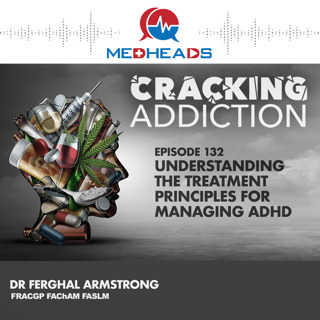
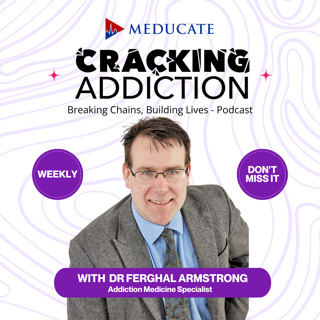
Understanding the Treatment Principles for Managing ADHD
Cracking Addiction6 Maalis 2024

Understanding the Treatment Principles for Managing ADHD

In this episode, Dr. Ferghal Armstrong and guest Dr. Manu Bhatnagar explore the treatment principles underlying the management of ADHD. If you want to gain valuable insights into the use of stimulant medication and non-stimulant pharmacology in addressing ADHD, this episode is a must-listen.

The focus keyword for this episode is "ADHD management." Dr. Armstrong and Dr. Bhatnagar provide in-depth analysis of the use of stimulant medications, such as dexamphetamine and lisdexamfetamine, as well as non-stimulant medications like atomoxetine, in the treatment of ADHD. They shed light on the difference between dexamphetamine and amphetamine, the safety concerns associated with stimulant therapy, and the role of non-stimulant pharmacology in ADHD management.

Learning outcomes:

1. Understanding the nuances of stimulant medications: Dr. Armstrong and Dr. Bhatnagar explain the mechanism of action and differences between amphetamines, including dexamphetamine, lisdexamfetamine, and methylphenidate, helping listeners grasp the key factors to consider when prescribing and using these medications.

2. Safety considerations and risk management: The episode delves into the potential risks associated with stimulant therapy, such as psychosis and substance use disorder, while also addressing the assessment and management of these risks to ensure safe and effective treatment for individuals with ADHD.

3. Exploring non-stimulant pharmacology: Listeners will gain insights into the role of atomoxetine as a non-stimulant medication for ADHD management. The episode highlights the considerations and scenarios where non-stimulant pharmacology might be preferred or necessary, providing a comprehensive view of treatment options.

Actionable takeaways:

1. Informed decision-making: Gain an understanding of the specific characteristics of different stimulant medications and how they impact dopamine release, enabling more informed decisions when prescribing medications for ADHD management.

2. Risk assessment and mitigation: Learn about the potential risks, such as psychosis and substance use disorder, associated with stimulant therapy, and discover strategies for assessing and managing these risks to ensure patient safety and treatment effectiveness.

3. Consideration of non-stimulant options: Explore the role of non-stimulant pharmacology, particularly atomoxetine, in the management of ADHD, and understand the scenarios where non-stimulant medications may be beneficial, providing a holistic approach to treatment.

Quote or insight:

"Every now and then, if you have that propensity to have a psychotic episode, [stimulant medication] might be the thing that adds another notch to your likelihood meter."

#ADHDmanagement #StimulantMedication #NonStimulantPharmacology #PatientSafety #RiskAssessment #Atomoxetine #InformedPrescribing #SubstanceUseDisorder #PsychosisRisk #CrackingAddiction

Thank you for tuning in to this episode of Cracking Addiction. For more insightful content, be sure to like and subscribe to our channel. You can find more information and episodes on our Meducate website: https://meducate.com.au.

Jaksot(238)

Dopamine, Relapse, and Recovery: Why Addiction Needs Long-Term Management

Dopamine, Relapse, and Recovery: Why Addiction Needs Long-Term Management

A lot of people still think addiction recovery is just about willpower.But addiction neuroscience tells a different story: dopamine, the reward system, and relapse risk all help explain why recovery o...

25 Maalis 5min

Why You Can Be Detoxed and Still Addicted

Why You Can Be Detoxed and Still Addicted

Addiction neuroscience, dopamine, cravings: detox ends withdrawal, but it does not end addiction.The MythA common myth in addiction recovery is that once detox is over, the problem is solved. Many peo...

18 Maalis 5min

Relapse Happens to Everyone: Here's the Science Why - Addiction Basics 06

Relapse Happens to Everyone: Here's the Science Why - Addiction Basics 06

Dr. Fergal Armstrong reframes relapse in addiction, explaining why it's not a personal failure but a common part of the recovery journey, comparable to chronic illnesses. Understanding the neuroscienc...

11 Maalis 5min

The Science of Withdrawal: What's Actually Happening? - Addiction Basics #5

The Science of Withdrawal: What's Actually Happening? - Addiction Basics #5

Withdrawal is one of the most feared parts of addiction recovery.But neuroscience shows something important:Withdrawal isn’t a failure of willpower — it’s the brain restoring balance after long-term c...

4 Maalis 5min

Addiction vs Dependence vs Tolerance: The Critical Medical Difference

Addiction vs Dependence vs Tolerance: The Critical Medical Difference

🚨 TOLERANCE ≠ ADDICTION 🚨Most people — even healthcare professionals — use these terms incorrectly.And that confusion is hurting patients.In this episode, we break down:🧠 The real definition of add...

25 Helmi 5min

Why Buprenorphine Is Safer Than Full Opioid Agonists

Why Buprenorphine Is Safer Than Full Opioid Agonists

Most people think methadone is the only real option for opioid addiction.Wrong.Buprenorphine — especially long-acting injectable depot — is flipping the entire system upside down.No daily pharmacy vis...

23 Helmi 28min

How Cravings Work: Limbic System vs Prefrontal Cortex - Addiction Basics EP3

How Cravings Work: Limbic System vs Prefrontal Cortex - Addiction Basics EP3

Addiction neuroscience explains why wanting to quit isn’t the same as being able to quit. Dopamine reshapes the brain’s reward system.In Episode 3 of Addiction Basics, we tackle one of the most painfu...

18 Helmi 6min

Dopamine and Addiction: The Science of Cravings - Addiction Basics EP2

Dopamine and Addiction: The Science of Cravings - Addiction Basics EP2

Addiction neuroscience explained. Dopamine, cravings, brain recovery, and neuroplasticity — backed by research.If you’ve ever wondered how addiction works in the brain, this is the science most people...

12 Helmi 6min

Suosittua kategoriassa Terveys ja hyvinvointi

unicast
rss-hanna-tikander
voi-hyvin-meditaatiot-2
tiedenaiset-podcast
rss-pitaisko-erota
psykopodiaa-podcast
rss-narsisti
rss-kuumilla-aalloilla
vakeva-elama-viisaampi-mieli-vahvempi-keho
puhu-muru
junnut-pelissa
meditaatiot-suomeksi
rss-pt-paahtio
rss-kyykkya-ja-kuoharia
terapiassa
fitnessvastaanotto
katilon-kahvitunti
selviytyjat-tarinoita-elamasta
paritellen
rss-seuraava-potilas