55. You’re not all at sea if you know where you are

55. You’re not all at sea if you know where you are

It may not come as a surprise to discover that many authorities believe that, if you’re doing a long journey at sea, it can be helpful to know where you are.

Working out your latitude was relatively simple and had been known for a long time before the eighteenth century. Longitude was another matter. The British government even put up a prize for the first to come up with a really viable solution.

Enter John Harrison, a remarkable craftsman. He started as a joiner, so a skilled woodworker. When he started building clocks, he used wood for the work. But he realised that, to build a chronometer, a device that could tell sailors at sea the time in a specified distant location, e.g. London, he would have to work in metals. So he taught himself to do so.

He impressed the Board of Longitude in 1737 with his first prototype, but he wasn’t happy with it himself. So he spent another 27 years building three more, with financial support from the Board. In 1764, his fourth prototype, the size of a large watch, passed the test required for the prize.

A lot of this work had been funded by the grants from the Longitude Board, a public body. That’s a model for research that persists to this day. As do the techniques that followed the success of his chronometer: mass production of the devices, exploring techniques that would be the hallmark of the industrial revolution.

The Longitude story is about helping sailors navigate at sea. But it’s also about ways of dealing with Research and Development, and with Manufacturing processes, that went far further still. It shows how much can be achieved by the clever use of government funds well invested.

Illustration: John Harrison by Thomas King, with his successful fourth prototype chronometer. Science Museum Group Collection, released under Creative Commons

Music: Bach Partita #2c by J Bu licensed under an Attribution-NonCommercial-No Derivatives (aka Music Sharing) 3.0 International License

Jaksot(275)

234. Fall of an iron curtain and of a jewel from the crown

234. Fall of an iron curtain and of a jewel from the crown

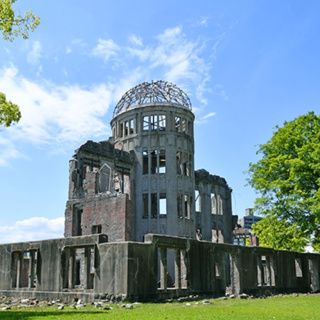
It was a strange world that emerged from the Second World War.Both genocide and the mass killing of civilians, above all through bombing, culminating with the A-bombs dropped on Japan, had become some...

9 Maalis 202514min
233. Shocks and surprises at the war’s end

233. Shocks and surprises at the war’s end

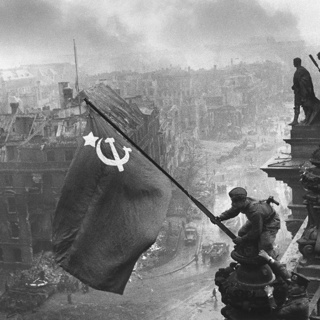
Following the German surrender in May 1945, the ‘Big Three’ – the United States, the Soviet Union and Britain – met for the third and last time in conference. And this time, appropriately, they met on...

2 Maalis 202514min
232. Bickering allies win in Europe

232. Bickering allies win in Europe

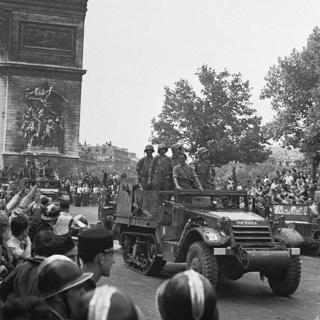
At the Yalta conference, between the US, the Soviet Union and Britain, the tensions between the Allies became increasingly obvious. Representing Britain, Churchill wanted the Allies’ war effort to be ...

23 Helmi 202514min
231. Nazis facing defeat

231. Nazis facing defeat

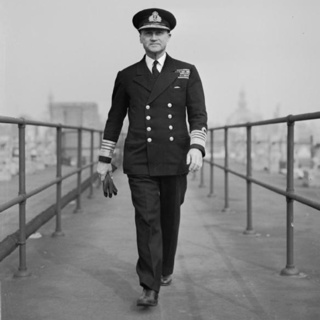
By the time of the Yalta conference in February 1945, between the USA, Soviet Union and Britain, the latter still being treated as a great power though its decline was already clear, there could be li...

16 Helmi 202514min
230. From Husky to Overlord, Sicily to the D-Day beaches

230. From Husky to Overlord, Sicily to the D-Day beaches

In 1943, Britain didn’t feel the Western Allies were ready yet for an invasion of France, and with its influence at the highest point it ever reached, it was able to persuade the Americans reluctantly...

9 Helmi 202514min
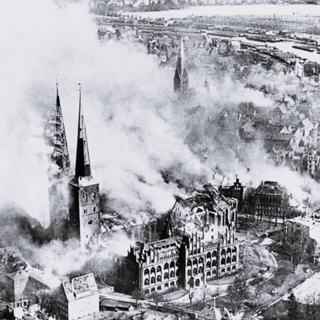
229. The tide turns

229. The tide turns

The tide turned against the Axis and in favour of the Allies in the course of 1943. Victories at Stalingrad in Russia, in the Battle of the Atlantic, and in North Africa, came on top of American advan...

2 Helmi 202514min
228. Turning points: 1943

228. Turning points: 1943

This is an episode for turning points. The year’s 1943. The Battle of Stalingrad, where the unstoppable German offensive into Russia was finally stopped and turned around, with Soviet forces essentia...

26 Tammi 202514min
227. Tough times: 1941 and 1942

227. Tough times: 1941 and 1942

The years 1941 and 1942 were tough ones… Things were going badly in the Battle of the Atlantic, with Germany threatening to strangle Britain by sinking more merchant ships than the British could bear ...

19 Tammi 202514min

Suosittua kategoriassa Historia

olipa-kerran-otsikko
gogin-ja-janin-maailmanhistoria
mayday-fi
huijarit
mystista
rss-ikiuni
konginkangas
totuus-vai-salaliitto
tsunami
rouva-diktaattori
rss-subjektiivinen-todistaja
rss-i-dont-like-mondays-2
rss-kirkon-ihmeellisimmat-tarinat
rss-peter-peter
rss-sattuu-sita-suomessakin
sotaa-ja-historiaa-podi
historiaa-suomeksi
apinan-vuosi
tiedetta-ja-sirkushuveja-vanhojen-aikojen-podcast
maailmanpuu