55. You’re not all at sea if you know where you are

55. You’re not all at sea if you know where you are

It may not come as a surprise to discover that many authorities believe that, if you’re doing a long journey at sea, it can be helpful to know where you are.

Working out your latitude was relatively simple and had been known for a long time before the eighteenth century. Longitude was another matter. The British government even put up a prize for the first to come up with a really viable solution.

Enter John Harrison, a remarkable craftsman. He started as a joiner, so a skilled woodworker. When he started building clocks, he used wood for the work. But he realised that, to build a chronometer, a device that could tell sailors at sea the time in a specified distant location, e.g. London, he would have to work in metals. So he taught himself to do so.

He impressed the Board of Longitude in 1737 with his first prototype, but he wasn’t happy with it himself. So he spent another 27 years building three more, with financial support from the Board. In 1764, his fourth prototype, the size of a large watch, passed the test required for the prize.

A lot of this work had been funded by the grants from the Longitude Board, a public body. That’s a model for research that persists to this day. As do the techniques that followed the success of his chronometer: mass production of the devices, exploring techniques that would be the hallmark of the industrial revolution.

The Longitude story is about helping sailors navigate at sea. But it’s also about ways of dealing with Research and Development, and with Manufacturing processes, that went far further still. It shows how much can be achieved by the clever use of government funds well invested.

Illustration: John Harrison by Thomas King, with his successful fourth prototype chronometer. Science Museum Group Collection, released under Creative Commons

Music: Bach Partita #2c by J Bu licensed under an Attribution-NonCommercial-No Derivatives (aka Music Sharing) 3.0 International License

Jaksot(275)

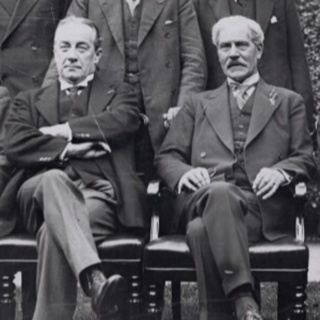
210. Ramsay MacDonald and the coalition that split Labour

210. Ramsay MacDonald and the coalition that split Labour

The ‘flapper election’ took place on 30 May 1929. The reference was top ‘flappers’, fashionable and slightly shocking young women of the 1920s, who could vote in it because, at last, universal suffrag...

22 Syys 202414min
209. Aftermath of defeat

209. Aftermath of defeat

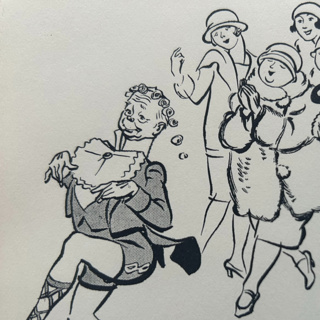
We pick up the story just after the defeat of the 1926 British General Strike. It was a bad time for the unions, with strikes accounting for only just over a fifth as many working days lost in the wh...

15 Syys 202414min
208. Taking a break

208. Taking a break

It's time for A History of England to take a short break, until 15 September. So this episode is a brief review of where we’ve got to, after the defeat of the General Strike. That defeat showed the po...

18 Elo 20246min
207. Revolution?

207. Revolution?

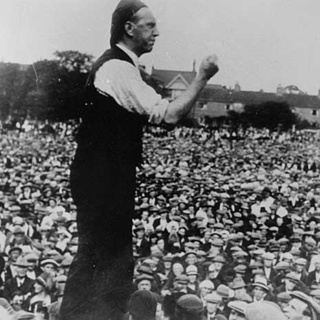
It’s the general strike! This time the unions couldn’t push Stanley Baldwin’s government into making concessions to the miners. That was because while, in his own words, in the previous year Baldwin ...

11 Elo 202414min
206. Confrontation

206. Confrontation

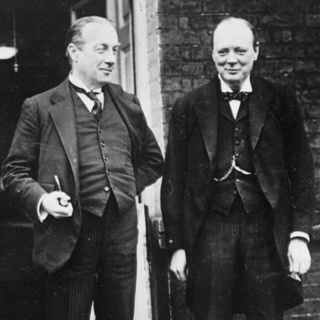
The Labour government was kicked out of office at the 1924 General Election, in a campaign marked by the Conservative-leaning Daily Mail engaging in some fake news. It published a forged letter claimi...

4 Elo 202414min
205. The Empire at its peak, the country in the pits

205. The Empire at its peak, the country in the pits

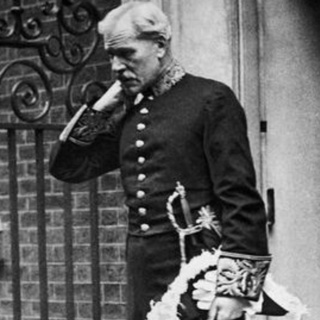
In contrast to the last episode, where we saw how dire the state of the British economy was and how close to violent confrontation society was coming, this episode is the one where we find Britain rea...

28 Heinä 202414min
204. Forward to revolution?

204. Forward to revolution?

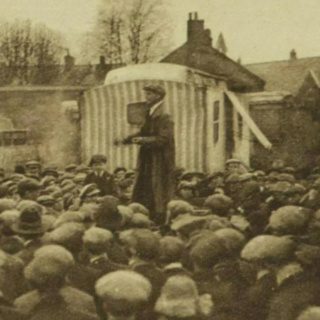
The promise of building Britain into a ‘land fit for heroes’ never came close to being kept. Instead inflation undermined wages, unemployment rose, and living conditions, with widespread slum housing,...

21 Heinä 202414min
203. Carthaginian Peace

203. Carthaginian Peace

Before moving on from the times when Lloyd George held power, we take a look in this episode at one of the major moments of his time as an international statesman: the Paris Peace Conference and, abov...

14 Heinä 202414min

Suosittua kategoriassa Historia

olipa-kerran-otsikko
gogin-ja-janin-maailmanhistoria
mayday-fi
huijarit
mystista
rss-ikiuni
konginkangas
totuus-vai-salaliitto
tsunami
rouva-diktaattori
rss-subjektiivinen-todistaja
rss-i-dont-like-mondays-2
rss-kirkon-ihmeellisimmat-tarinat
rss-peter-peter
rss-sattuu-sita-suomessakin
sotaa-ja-historiaa-podi
historiaa-suomeksi
apinan-vuosi
tiedetta-ja-sirkushuveja-vanhojen-aikojen-podcast
maailmanpuu