160. Managing power, coping with weakness

160. Managing power, coping with weakness

Salisbury had a fairly accurate view of just what Britain could and couldn’t do on its own, given the limitations on British power itself, but also the blocks caused by domestic political opposition . He equally had a clear notion of just what massive damage the new generations of weapons might do in a war in which both sides had them, essentially a war between great powers. Finally, he also understood that the point of empire wasn’t sentiment, it was business.

All this made him deeply suspicious of the Jingoist spirit of many who wanted to push Britain’s imperial interests ever further forward. Instead, however much the Jingoes might criticise him for it, he preferred to concede to rivals in areas where he felt no vital interest was at stake.

On the other hand, where such an interest was on the table, he was more than prepared to fight. He’d decided, in particular, that given his colleagues’ fear of taking on Turkey, the best way to protect the Suez Canal, the vital link to India, was through Britain’s control of Egypt. But Egypt depended on the Nile, and that river ran through Sudan. That’s why, while Salisbury avoided war over West Africa, or over holdings grabbed by other powers in China, or with the US over the Guyana-Venezuela border dispute, he stood firm over Sudan and sent Kitchener in there to win his victory of Omdurman and then against the remaining Mahdist forces as he swept southwards.

Control of the Nile Valley was a goal he felt Britain could achieve and which would be key to its imperial interests. So it was worth fighting for. Even, as we’ll discover next week, when that brought him into conflict with a great power.


Illustration: The main gate to the munitions depot in Quingdao, after the German occupation, in 1898. From the Bundesarchiv of the Federal Republic of Germany.

Music: Bach Partita #2c by J Bu licensed under an Attribution-NonCommercial-No Derivatives (aka Music Sharing) 3.0 International License.


Jaksot(274)

265. War in a unipolar world

265. War in a unipolar world

By the latter part of the twentieth century, the world had become unipolar. The Soviet Empire collapsed even more rapidly than the British one had after the Berlin Wall fell in 1989. China was not yet...

26 Loka 202514min
264. Ethics, votes and wars

264. Ethics, votes and wars

We saw in the last episode, that Britain’s involvement in the NATO intervention in Kosovo could be regarded as part of an ‘ethical foreign policy’, since its objective, many felt, was humanitarian, th...

12 Loka 202514min
263. Tragedy at home, ethics abroad

263. Tragedy at home, ethics abroad

Divorce, contrary to what many believe, was not permitted by the Church of England. Henry VIII didn’t divorce two wives, he had the marriages annulled, declaring in effect that they’d never happened. ...

5 Loka 202514min
262. Uncool

262. Uncool

In the early years of Blair’s premiership, his supporters liked to refer to Britain as ‘Cool Britannia’, in a play on the title of the song ‘Rule Britannia’. Last week, we talked about some of the coo...

28 Syys 202514min
261. Cool Britannia

261. Cool Britannia

The Blair government threw itself into action as soon as it was formed.Rather confirming the existence of a deal between them, something they’ve never confirmed, Blair quickly appointed Gordon Brown C...

21 Syys 202514min

260. New Dawn

260. New Dawn

It was a new dawn. Or at least so Tony Blair said, as he emerged from his landslide victory in the 1997 General Election. It’s what he would say, isn’t it?Still, there was some truth to the claim. It ...

14 Syys 202514min

259. Major error, major success, Major’s out

259. Major error, major success, Major’s out

We’re just about ready to move on from John Major but, before we do, we need to spend a few moments on two major events of his second premiership. One was a significant breakthrough, in Ireland, even ...

7 Syys 202514min
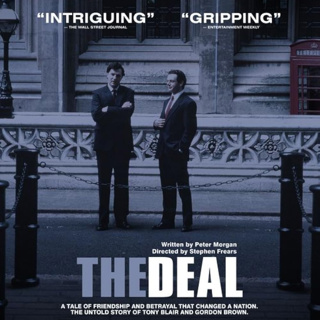
258. Major’s bastards and Labour’s deal

258. Major’s bastards and Labour’s deal

By winning the 1992 general election, John Major had gained his own mandate to form a government, instead of imply inheriting Margaret Thatcher’s. He’d shown himself capable of leading the Conservativ...

31 Elo 202514min

Suosittua kategoriassa Historia

olipa-kerran-otsikko
gogin-ja-janin-maailmanhistoria
mayday-fi
huijarit
mystista
rss-ikiuni
konginkangas
tsunami
totuus-vai-salaliitto
rouva-diktaattori
rss-subjektiivinen-todistaja
rss-i-dont-like-mondays-2
historiaa-suomeksi
rss-sattuu-sita-suomessakin
maailmanpuu
rss-kirkon-ihmeellisimmat-tarinat
rss-peter-peter
sotaa-ja-historiaa-podi
historian-nurkkapoyta
hippokrateen-vastaanotolla