172. Liberals back, great power tensions too

172. Liberals back, great power tensions too

Arthur Balfour’s intention in resigning as Prime Minister but without a general election was probably to oblige Liberal leader Henry Campbell-Bannerman to form a government, which might force their divisions to the surface. That would weaken their chances in an election that was bound to be held soon.

There was a curious symmetry between the divisions in the main parties. The Liberals were split three ways over the Boer War. Liberal Imperialist right wing backed Britain’s military intervention, while the left, sometimes called pro-Boer, opposed it, and in the middle a group around the leader accepted the need for war but denounced its most brutal aspects (such as the concentration camps).

Meanwhile, the Unionists were split three ways over tariff reform. The ‘wholehoggers’ backed a full system of import tariffs to protect British trade, the free traders wanted to stick with the old doctrine of tariff-free commerce, and a group around the leader accepted the need for reform but wanted to proceed more cautiously.

Unfortunately, tariff reform was topical while the war had been over for three years. The Liberals were able to unite in attacking the government, specifically over tariff reform. And they won their last landslide in the 1906 election.

Despite the end of the Boer War, the new Liberal government faced a world haunted by the spectre of renewed war. There was uncertainty over who the enemy would be if a new war broke out. The traditional enemy was France, and Britain likes its traditions. But an increasing threat was now coming from across the North Sea in Germany. Politicians and even novelists (the latter best represented by Erskine Childers and his Riddle of the Sands) were beginning to warn that the German threat was the more serious.

The entente cordiale with France in 1904 showed Britain beginning to move closer to France and further away from Germany. Then Kaiser Wilhelm II of Germany showed up in Tangier in Morocco, making a speech designed to provoke France, and tensions quickly grew. The conference that ended the crisis failed to address Germany’s issues. That made Tangier just the first of a series of crises that set two groupings of European great powers increasingly at odds with each other.

Finally, this episode also talks about a small step forward in the ugliest of the European colonies in Africa, Congo. Again with a link to a novel.


Illustration: A 1904 British cartoon on the Entente cordiale: John Bull (Britain) walking off arm-in-arm with Marianne (France), turning their back on Wilhelm II of Germany, whose sabre is poking out of his coat. A Punch cartoon by John Bernard Partridge.


Music: Bach Partita #2c by J Bu licensed under an Attribution-NonCommercial-No Derivatives (aka Music Sharing) 3.0 International License.


Jaksot(275)

258. Major’s bastards and Labour’s deal

258. Major’s bastards and Labour’s deal

By winning the 1992 general election, John Major had gained his own mandate to form a government, instead of imply inheriting Margaret Thatcher’s. He’d shown himself capable of leading the Conservativ...

31 Elo 202514min
257. Iron Lady out, Grey Man in

257. Iron Lady out, Grey Man in

With the poll tax, Thatcher took one bad decision to many. From the point of view of orthodox Thatcherite thought, it sounded like a good idea. She’d been working for years to shrink the state but, wh...

24 Elo 202514min
256. Maggie losing it

256. Maggie losing it

Having looked last week at how Maggie Thatcher was running out of options for how to carve out a new role for Britain on the world stage, this week we look at how things were going at home. After all,...

17 Elo 202514min
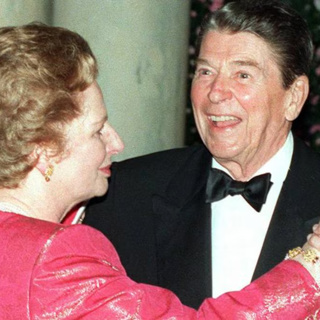
255. Maggie: lioness or poodle?

255. Maggie: lioness or poodle?

Maggie Thatcher in 1987 pulled off a trick that had eluded all other British Prime Ministers of the twentieth century: she won three general elections in a row. Even more, she won a second Commons lan...

10 Elo 202514min
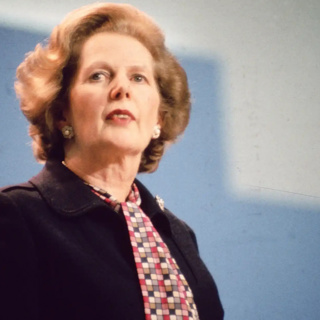
254. Maggie reaching the top

254. Maggie reaching the top

Thatcher’s victories, including a general election landslide and breaking the miners’ strike, emboldened her to launch another phase in the reduction of the role of the state in the British economy. N...

3 Elo 202514min
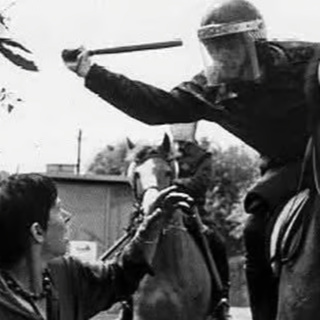
253. The Enemy Within

253. The Enemy Within

What had converted Maggie Thatcher from something of a lame duck into a front runner for the next British general election?While the economy had begun to pick up, that had been patchy at best, with so...

27 Heinä 202514min
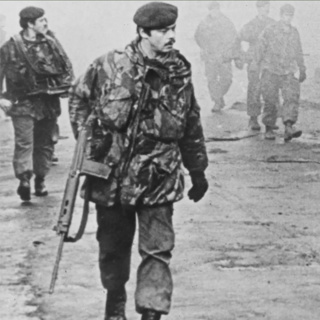
252. Iron Lady

252. Iron Lady

Mrs Thatcher’s first term in office was one of the great get out of jail events. She came into office intent on braking with the Keynesianism and social democracy of the postwar consensus. She drew on...

20 Heinä 202514min
251. Unlucky Jim

251. Unlucky Jim

In 1976, Jim Callaghan took over from Harold Wilson as leader of the Labour Party and British Prime Minister. He was a competent politician, though not an outstanding one. He did his job well, but he ...

13 Heinä 202514min

Suosittua kategoriassa Historia

olipa-kerran-otsikko
gogin-ja-janin-maailmanhistoria
mayday-fi
huijarit
mystista
rss-ikiuni
totuus-vai-salaliitto
tsunami
konginkangas
rouva-diktaattori
sotaa-ja-historiaa-podi
rss-sattuu-sita-suomessakin
rss-i-dont-like-mondays-2
rss-kirkon-ihmeellisimmat-tarinat
rss-peter-peter
rss-subjektiivinen-todistaja
apinan-vuosi
historiaa-suomeksi
tiedetta-ja-sirkushuveja-vanhojen-aikojen-podcast
maailmanpuu