178. Things get radical

178. Things get radical

1910 was a year of battle between the House of Commons and the House of Lords. Which means a year of battle between the Liberals, with their (initially) huge majority in the Commons, and the Unionists with an equally massive (and entrenched) majority in the Lords.

Two issues needed settling between them.

Firstly, what would happen to Lloyd George’s People’s Budget, which the Lords had already rejected once. That would be the issue decided by the general election of January 1910.

It was won by the Liberals, though only just and without an overall majority. However, with help from the Irish Nationalist MPs and Labour, they could form another government and resubmit the budget. Having seen the Liberals win the election, however narrowly, and faced with the threat of the king creating a load more Liberal peers to give them their own majority, the Lords caved and passed the budget.

Secondly, it was time to settle the relationship between the two Houses of Parliament. Since the Lords couldn’t be expected to vote to reduce their own powers, the government again turned to the king to have him create enough Liberal peers to force a measure through. He argued that it would require another election, so Brits were called to the ballot box again in December 1910, for the second time that year.

Again, and for the last time in their history, the Liberals emerged as the biggest single party in the Commons, though again without a majority. Once more, with support from the Irish MPs and Labour, they could form a government. And, again, faced with the prospect of huge numbers of Liberal peers joining the Lords, the upper house caved, passing the legislation that massively reduced its say in politics.

As their price for the support the Liberals needed, the Irish MPs were looking for renewed moves towards Home Rule, while Labour wanted to see more progressive measures adopted. And both groups had the presence in parliament to get their demands listened to.

Which must have been painful for the women’s movement. It needed influence to win the vote. Without the vote, however, it lacked influence.

A frustrating Catch-22 position to be in.


Illustration: The first page of the Parliament Act of 1911.

Music: Bach Partita #2c by J Bu licensed under an Attribution-NonCommercial-No Derivatives (aka Music Sharing) 3.0 International License.


Jaksot(275)

242. A wind of change driving the retreat from empire

242. A wind of change driving the retreat from empire

‘The wind of change’ was the other famous phrase of Harold Macmillan’s, along with ‘You’ve never had it so good’. It came in a speech in which he talked about how a movement had grown up in many count...

4 Touko 202514min
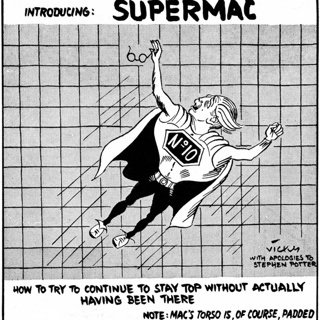
241. Supermac: you've never had it so good

241. Supermac: you've never had it so good

Macmillan overcame the terrible legacy of the Suez catastrophe and, running an economy focused on growth to fund increasing living standards, giving him the opportunity to annouce that people had neve...

27 Huhti 202514min
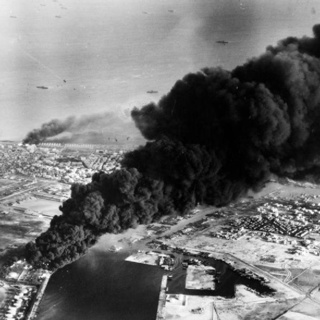
240. Suez: nail in the imperial coffin

240. Suez: nail in the imperial coffin

Anthony Eden started his premiership well, chalking up a general election win and the lowest level of unemployment Britain has seen at any time since the Second World War. Little else went well, howev...

20 Huhti 202514min
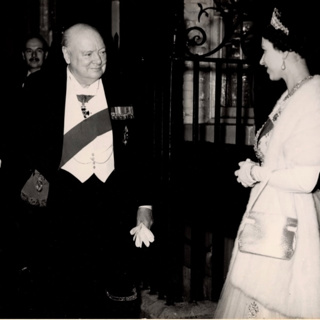
239. Winston back, Winston out

239. Winston back, Winston out

The old man was back. The Conservatives won the 1951 election and Winston Churchill returned to Downing Street. And he really was an old man – nearly 77 when he took office. To many, he it seemed incr...

13 Huhti 202514min
238. Decline to defeat

238. Decline to defeat

Circumstances seemed unfavourable for a Labour victory in a 1950 election but, when it was held, Attlee managed to lead his party to the second win in its history. It took a majority of the popular vo...

6 Huhti 202514min
237. Citizen socialism at home, resisting the Soviets abroad

237. Citizen socialism at home, resisting the Soviets abroad

What Attlee’s government had shown was that, though it regarded itself as Socialist, it was a very distinctive kind of Socialism and heavily influenced by Liberal thinking. Where a more Marxist Social...

30 Maalis 202514min
236. Greyness at home, decline abroad

236. Greyness at home, decline abroad

Of the five ‘giant evils’ William Beveridge identified, the Attlee government set out to deal with want through social security, squalor through better housing, ignorance through more schooling and di...

23 Maalis 202514min
235. Clem against the Evil Giants

235. Clem against the Evil Giants

In the July 1945 general election, the British public offered Winston Churchill, as he put it himself, the ‘order of the boot’. A victorious war Prime Minister was kicked out. In his place, his deputy...

16 Maalis 202514min

Suosittua kategoriassa Historia

olipa-kerran-otsikko
gogin-ja-janin-maailmanhistoria
mayday-fi
huijarit
mystista
rss-ikiuni
totuus-vai-salaliitto
tsunami
konginkangas
rouva-diktaattori
sotaa-ja-historiaa-podi
rss-sattuu-sita-suomessakin
rss-i-dont-like-mondays-2
rss-kirkon-ihmeellisimmat-tarinat
rss-peter-peter
rss-subjektiivinen-todistaja
apinan-vuosi
historiaa-suomeksi
tiedetta-ja-sirkushuveja-vanhojen-aikojen-podcast
maailmanpuu