200. Ireland partitioned

200. Ireland partitioned

Would Britain go to war in Ireland? Was military action its only available response to the republican party, Sinn Fein, and its determination to govern an independent nation from its own parliament, the Dáil? And, indeed, was it in Britain’s power to go for that option?

At first, that certainly seemed to be the way things were heading. Attacks by IRA units against the police or army led to increasingly brutal reprisals by the British authorities, using the notorious Black and Tans or the Auxies, as well as soldiers. Two of the most shocking events were the firing on the crowd at a Gaelic Football stadium on ‘Bloody Sunday’, 21 November 1920, and the burning of Cork the following month.

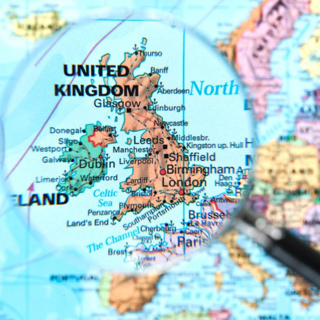
In the end though, the Lloyd Government had to decide that it lacked either the strength or the stomach to force the Irish to bow to their rule. The earlier decision never to negotiate with terrorists had to be dropped and, in the summer and autumn of 1921, discussions finally led to what Lloyd George believed was a triumph of his negotiating skills. He won the agreement of leading Sinn Fein men to a Peace Treaty that partitioned Ireland, hiving off the six Protestant-majority counties of the North which would remain inside the United Kingdom, while the other 26 would form a new Dominion, the Irish Free State, within the British Empire.

It seemed like a triumph for him. But that feeling wasn’t going to last long.


Illustration: Workers clearing rubble on St Patrick's Street in Cork after the fires (detail). National Library of Ireland on The Commons @Flickr Commons

Music: Bach Partita #2c by J Bu licensed under an Attribution-NonCommercial-No Derivatives (aka Music Sharing) 3.0 International License.


Jaksot(274)

217. An event-packed year (2)

217. An event-packed year (2)

We’re still looking at 1936, a year packed with so many events that it’s taken two episodes to review the main ones. This week, on the domestic, British front: - The year of three kings, as one died, ...

10 Marras 202414min
216. An event-packed year (1)

216. An event-packed year (1)

This episode is our first look at the exciting year of 1936. It was a time when some British politicians tried to appease one dictator, Mussolini, by taking no action to stop invading Abyssinia, in or...

3 Marras 202414min
215. A military adventure shakes the kaleidoscope

215. A military adventure shakes the kaleidoscope

Britain and France reckoned they’d secured the support of Italy, in the Stresa Front, for their efforts to contain Hitler. Britain was the first to undermine that pleasant understanding, by signing a ...

27 Loka 202414min
214. The doormat League of Nations

214. The doormat League of Nations

In the mid-1930s, there was still widespread hope across Britain that a major war could be avoided. That could be achieved, many believed, by international negotiation towards disarmament, and by col...

20 Loka 202414min
213. Carson honoured, Churchill mocked

213. Carson honoured, Churchill mocked

We start this episode with the unveiling of the statue of Edward Carson at Stormont Castle in Northern Ireland. It rather makes the point that a man who helped organise an armed force against British ...

13 Loka 202414min
212. Labour struggling, Tories soaring, the economy wobbling

212. Labour struggling, Tories soaring, the economy wobbling

It was a terrible time for Labour, down to just 52 MPs and having to choose a new leadership from a narrow pool from which most of the brightest lights, in the view of many but above all their own, we...

6 Loka 202414min
211. Troubled times: India, Press Harlots, and Winston Churchill

211. Troubled times: India, Press Harlots, and Winston Churchill

This episode looks at the impact in Britain of continuing trouble in India. There Gandhi had launched his salt march, walking to the sea to make salt, in breach of the British monopoly and the heavy t...

29 Syys 202414min
210. Ramsay MacDonald and the coalition that split Labour

210. Ramsay MacDonald and the coalition that split Labour

The ‘flapper election’ took place on 30 May 1929. The reference was top ‘flappers’, fashionable and slightly shocking young women of the 1920s, who could vote in it because, at last, universal suffrag...

22 Syys 202414min

Suosittua kategoriassa Historia

olipa-kerran-otsikko
gogin-ja-janin-maailmanhistoria
mayday-fi
huijarit
mystista
rss-ikiuni
totuus-vai-salaliitto
tsunami
konginkangas
rouva-diktaattori
rss-subjektiivinen-todistaja
rss-peter-peter
rss-i-dont-like-mondays-2
rss-sattuu-sita-suomessakin
sotaa-ja-historiaa-podi
rss-kirkon-ihmeellisimmat-tarinat
historiaa-suomeksi
apinan-vuosi
maailmanpuu
tiedetta-ja-sirkushuveja-vanhojen-aikojen-podcast