The New Optimism, with Matt Ridley, Johan Norberg, David Runciman and Laura Kuenssberg

The New Optimism, with Matt Ridley, Johan Norberg, David Runciman and Laura Kuenssberg

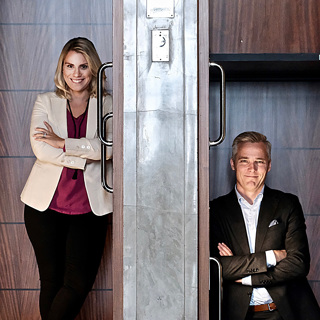
Are you an optimist or a pessimist? And why should it matter? After what for many of us has been an annus horribilis in 2016, pessimists seem to have all the best tunes. Terror attacks, horror headlines from Syria, a tide of hatred and resentment poisoning our politics: the world looks increasingly grim. But what about the actual facts? If you step back and examine the data, it’s clear that life is better today for the majority of people than at any previous time in history. And we’re not just talking about the developing world, where progress has been remarkable. Here in the West, most of us have never had it so good. Just look at the improvements in health and longevity, the breadth of entertainment available, and the opportunities to travel that we blithely take for granted. In this special Intelligence Squared event, we examined two fundamentally opposing worldviews. In the optimists’ corner were Matt Ridley, author of the prize-winning The Rational Optimist, and Johan Norberg, whose latest book is Progress: Ten Reasons to Look Forward to the Future. They argued that the progress that has been made over the past centuries – whether in education, child labour, poverty or violent deaths – is now running at an unprecedented pace and that there is every reason to think that it will continue for decades to come. But is their essentially rationalist approach one that can really explain what appears to be the conflict-ridden world we live in? After all, many of us have never felt so gloomy and perplexed. This tension is not new. It has run through mainstream political thought since the Enlightenment. It set rationalists such as Adam Smith and J. S. Mill against those who sought to interpret the darker side of human nature such as Rousseau and Dostoevsky. They have been joined more recently by behavioural economists such as Daniel Kahneman and Richard Thaler. For these latter thinkers, rationalism will always fail to give a full account of human behaviour. Exploring this line of thought in our event was the acclaimed political scientist David Runciman. And steering the discussion was be the BBC’s star political editor Laura Kuenssberg. Optimist or pessimist? Some say that pessimism is dangerous, as it’s the emotions of fear and nostalgia that are fertile breeding grounds for populist demagogues. Others argue that too optimistic a view can blind us to the real threats facing our freedoms and democracy. Support this show http://supporter.acast.com/intelligencesquared. See acast.com/privacy for privacy and opt-out information. Learn more about your ad choices. Visit podcastchoices.com/adchoices

Jaksot(1512)

Jon Ronson on Conspiracies, Culture Wars and How Things Fell Apart, Part One

Jon Ronson on Conspiracies, Culture Wars and How Things Fell Apart, Part One

The is the first instalment of a two-part discussion. For this episode, Jon Ronson – the journalist, author, and filmmaker – dives into the world of conspiracies and the culture wars. They’re themes t...

28 Kesä 202443min

Why Politics Matters, with Alastair Campbell

Why Politics Matters, with Alastair Campbell

The political strategist, journalist and author turned hit podcast host of The Rest is Politics returns to Intelligence Squared to discuss why politics matters in our everyday lives. Campbell has just...

26 Kesä 202441min

Sotheby's Talks – Creative London: An Artistic Crossroads, with Grayson Perry

Sotheby's Talks – Creative London: An Artistic Crossroads, with Grayson Perry

Has London's cultural power essentially radiated outwards, influencing artists and creatives across the world? Or is London's creative preeminence dependent on the influx of global talent that has gal...

24 Kesä 20241h

The Magic Number for Creating a Successful Team, with Robin Dunbar

The Magic Number for Creating a Successful Team, with Robin Dunbar

The anthropologist and evolutionary psychologist Robin Dunbar is Emeritus Professor of evolutionary psychology at Oxford University. He’s also part of a small club of academics whose work has become p...

23 Kesä 202453min

Mishal Husain on Family, Empire and Why Partition Still Matters, Part Two

Mishal Husain on Family, Empire and Why Partition Still Matters, Part Two

The is the second instalment of a two-part discussion. On August 15 1947 Pakistan and India gained their independence and colonialism came to an end in the subcontinent. But it was not a time of celeb...

20 Kesä 202439min

Mishal Husain on Family, Empire and Why Partition Still Matters, Part One

Mishal Husain on Family, Empire and Why Partition Still Matters, Part One

The is the first instalment of a two-part discussion. On August 15 1947 Pakistan and India gained their independence and colonialism came to an end in the subcontinent. But it was not a time of celebr...

19 Kesä 202454min

Sotheby's Talks – London: An Artistic Crossroads | Gallery Open House

Sotheby's Talks – London: An Artistic Crossroads | Gallery Open House

London has long been a cultural melting pot for artists from around the world who, in their own unique ways, have revealed with each touch of a brush, the impact of the dynamic environment in which th...

16 Kesä 20241h 23min

Rachel Cusk on Art, Womanhood and Redefining Fiction, Part Two

Rachel Cusk on Art, Womanhood and Redefining Fiction, Part Two

This is the second instalment of three-part discussion. The writing of Rachel Cusk poses us constant challenges. Her critically acclaimed Outline trilogy and memoirs – A Life’s Work and Aftermath – da...

15 Kesä 202436min

Suosittua kategoriassa Politiikka ja uutiset

aikalisa
rss-ootsa-kuullut-tasta
tervo-halme
ootsa-kuullut-tasta-2
politiikan-puskaradio
viisupodi
rss-podme-livebox
rss-vaalirankkurit-podcast
otetaan-yhdet
et-sa-noin-voi-sanoo-esittaa
rss-asiastudio
the-ulkopolitist
linda-maria
rss-kaikki-uusiksi
rss-merja-mahkan-rahat
io-techin-tekniikkapodcast
rikosmyytit
rss-mina-ukkola
rss-pykalien-takaa
rss-kuka-mina-olen