Jaron Lanier on the Future of Our Digital Lives
Intelligence Squared17 Marras 2017

Jaron Lanier on the Future of Our Digital Lives

Jaron Lanier is one of the foremost digital visionaries of our times. One of Silicon Valley’s key early innovators, this dreadlocked digital prophet has been dubbed the ‘father of virtual reality’ and named as one of Time’s 100 most influential people in the world. A former goatherd and midwife, and a virtuoso player of rare instruments, Lanier is sometimes called the ‘alternative Steve Jobs’. Neither a tech optimist nor a doom-monger, he is unique for always seeing the opportunities offered by technology as well as the dangers. In bestsellers such as You Are Not A Gadget and Who Owns the Future? he sounded an early warning about the perils of the internet – describing the tech giants as ‘spy agencies’ and ‘lords of the clouds’ for the way they reduce the value of humans to that of the data they provide. But he has also proposed another, more imaginative way to use technology. A ‘human-centered approach’, he argues, ‘leads to more interesting, more exotic, more wild, and more heroic adventures than the machine-supremacy approach, where information is the highest goal.’ Now Lanier is going back to the field where he did his pioneering work in the 1980s: virtual reality. VR has become the new frontier of human engagement with tech, and has become a medium that has transformed surgical trials, aircraft design and the treatment of injured war veterans. But it is not only about design, games and headsets, as he argues in his new book, Dawn of the New Everything. Virtual reality can extend the ‘intimate magic’ of childhood into the adult world, Lanier says, and allow us to imagine life beyond the limits of biology. But it will also test who we are. In the same way that he foresaw the dangers of web 2.0, Lanier offers a warning. Virtual reality has the potential to isolate us from each other – and render us even more in thrall to predatory tech companies. Lanier was joined om conversation by Economics editor at the BBC, Kamal Ahmed. Support this show http://supporter.acast.com/intelligencesquared. See acast.com/privacy for privacy and opt-out information. Learn more about your ad choices. Visit podcastchoices.com/adchoices

Tämä jakso on lisätty Podme-palveluun avoimen RSS-syötteen kautta eikä se ole Podmen omaa tuotantoa. Siksi jakso saattaa sisältää mainontaa.

Jaksot(1645)

What Lyse Doucet Has Learned from 40 Years Reporting From War Zones, Live

What Lyse Doucet Has Learned from 40 Years Reporting From War Zones, Live

As the BBC’s Chief International Correspondent, Lyse Doucet has witnessed and reported on some of the most consequential events of our time. She has reported from Iran and Afghanistan since 1988, play...

23 Syys 1h 27min

Anthony Scaramucci and Tina Brown on How To Fix America, Live in London

Anthony Scaramucci and Tina Brown on How To Fix America, Live in London

According to Anthony Scaramucci, former White House Communications Director, outspoken Trump critic and co-host of The Rest Is Politics: US, President Trump represents one of the greatest challenges A...

20 Syys 1h 37min
Why Your Plans Will Fail After Five Minutes, and How To Fix Them, with Kevin Fong

Why Your Plans Will Fail After Five Minutes, and How To Fix Them, with Kevin Fong

Kevin Fong has spent his working life in high-risk, high-performance teams. He flies as a Helicopter Emergency Medical Service doctor, has worked on NASA’s human spaceflight programme, and was part of...

19 Syys 51min
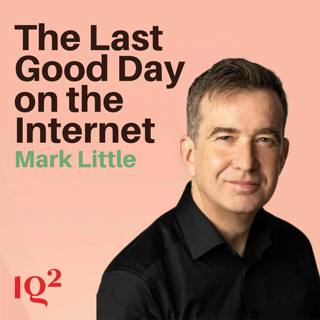
Has Tech Lost All Humanity? With Mark Little

Has Tech Lost All Humanity? With Mark Little

The internet was once imagined as a place that would bring us closer together – a shared space for curiosity, creativity and connection. So how did it become a machine for capturing our attention, amp...

18 Syys 42min
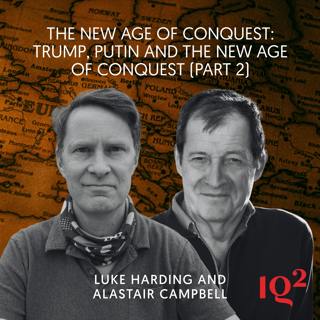
Luke Harding and Alastair Campbell: Trump, Putin and the New Age of Conquest (Part Two)

Luke Harding and Alastair Campbell: Trump, Putin and the New Age of Conquest (Part Two)

The post-war international order is under increasing strain. The principle that borders cannot be changed by force is being challenged –not only by Russia’s invasion of Ukraine, but by Donald Trump’s ...

15 Syys 36min
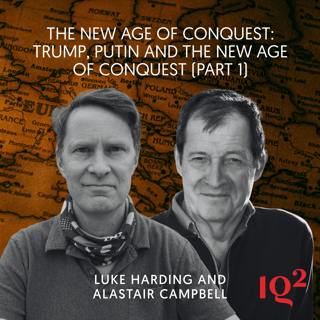
Luke Harding and Alastair Campbell: Trump, Putin and the New Age of Conquest (Part One)

Luke Harding and Alastair Campbell: Trump, Putin and the New Age of Conquest (Part One)

The post-war international order is under increasing strain. The principle that borders cannot be changed by force is being challenged –not only by Russia’s invasion of Ukraine, but by Donald Trump’s ...

13 Syys 33min
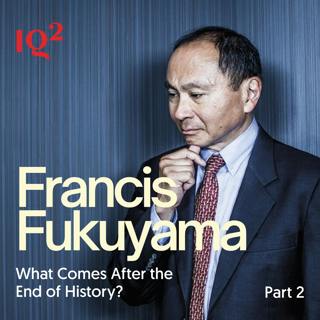
Francis Fukuyama on the New World Order (Part Two)

Francis Fukuyama on the New World Order (Part Two)

Francis Fukuyama is one of the most influential political thinkers of our time. His famous 1989 essay, The End of History? – written as the Berlin Wall fell and communism collapsed – posed a provocati...

12 Syys 39min
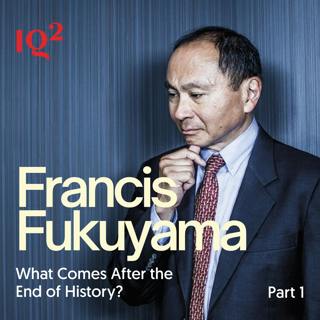
What Comes After the End of History? with Francis Fukuyama (Part One)

What Comes After the End of History? with Francis Fukuyama (Part One)

Francis Fukuyama is one of the most influential political thinkers of our time. His famous 1989 essay, The End of History? – written as the Berlin Wall fell and communism collapsed – posed a provocati...

10 Syys 36min

Suosittua kategoriassa Politiikka ja uutiset

uutiscast
vallattomat
aikalisa
politiikan-puskaradio
rss-viihde-media
ootsa-kuullut-tasta-2
rss-ootsa-kuullut-tasta
rss-vaalirankkurit-podcast
otetaan-yhdet
rss-voi-venaja
tervo-halme
rss-podme-livebox
rss-asiastudio
et-sa-noin-voi-sanoo-esittaa
the-ulkopolitist
rss-ulkopoditiikkaa
aihe
linda-maria
rss-toisten-taskuilla
rikosmyytit