207. Revolution?

207. Revolution?

It’s the general strike!

This time the unions couldn’t push Stanley Baldwin’s government into making concessions to the miners. That was because while, in his own words, in the previous year Baldwin had not been ready, this time he was.

When the miners came out and the TUC with them, they found the government ready to call up volunteers as strike breakers or special constables to support the police. The country had been divided into districts with Civil Commissioners in each of them, ready to ensure essential goods were distributed and order was maintained.

In any case, any suggestion that the movement was revolutionary was belied by the moderation the strikers and their leaders showed. That didn’t stop the hardliners in cabinet behaving as though they were facing a major threat to civilisation. Strangely, the leading hardliner was Winston Churchill, even though he was a former Liberal and always keen on alleviating the sufferings of the poor. He edited the government newspaper, the British Gazette, and turned it into a huge-circulation propaganda broadsheet pushing the government line. The BBC, too, broadcasting news for the first time, took a highly pro-government stance. And Churchill wasn't above making shows of military force to underline his propaganda points.

The unions weren’t ready for a long strike and their funds began quickly to run out. With legal action threatening against them, and their members suffering, the non-mining unions were looking for a compromise to end the strike. But the miners were at least as intransigent as the mine owners and the government. No compromise was possible.

After nine days, the TUC called off the strike. The British Gazette gloatingly proclaimed ‘Surrender!’ The unions had suffered a major defeat.

And, once more, the miners were left to fight on alone.


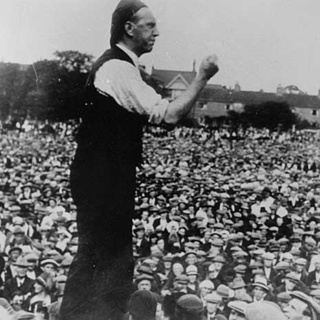
Illustration: Arthur Cook, the miners’ leader, addressing a mass meeting of strikers. Public Domain

Music: Bach Partita #2c by J Bu licensed under an Attribution-NonCommercial-No Derivatives (aka Music Sharing) 3.0 International License


Jaksot(274)

249. Who governs Britain?

249. Who governs Britain?

How did Heath end up calling an election on the question of who governed the country? Especially as the choice he seemed to be offering was between him and the minders. This episode traces the impact ...

5 Heinä 202514min
248. Withered Heath

248. Withered Heath

Ted Heath’s government had to deal with two problems drawn from Britain’s postimperial standing: • adapting to its loss of global status, by negotiating, at the third time of asking and for the first ...

22 Kesä 202514min
247. Hopes dashed

247. Hopes dashed

After talking last week about his government’s achievements in the social sphere, this episode looks at the difficulties Wilson faced in economics and foreign affairs.One way Wilson explored to addres...

15 Kesä 202514min
246. The sixties, swinging - high and low

246. The sixties, swinging - high and low

According to the English poet Philip Larkin, the sixties saw the invention of sexual intercourse. While that may not be quite the case, it was certainly a time when a lot of people decided that it was...

8 Kesä 202514min
245. Pressures preventing progress

245. Pressures preventing progress

The Wilson government got off to a pretty sticky start, with the new Prime Minister learning, more or less as he arrived at Downing Street in October 1964, that the trade deficit for the year was like...

1 Kesä 202514min
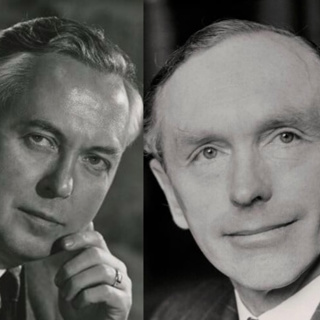
244. Harold gets Home

244. Harold gets Home

Here we’re focusing on the changes that took place in Britain after Supermac (Harold Macmillan) stood down as Prime Minister.A lot of how that went depended on the Opposition formed by the Labour Part...

25 Touko 202514min

243. Sex, spies and a slippery slope

243. Sex, spies and a slippery slope

Last time we looked at the continuing disintegration of the British Empire. In this episode we look at two other key aspects of Macmillan’s foreign policy, Britain’s relations with the US and with pot...

18 Touko 202515min

242. A wind of change driving the retreat from empire

242. A wind of change driving the retreat from empire

‘The wind of change’ was the other famous phrase of Harold Macmillan’s, along with ‘You’ve never had it so good’. It came in a speech in which he talked about how a movement had grown up in many count...

4 Touko 202514min

Suosittua kategoriassa Historia

olipa-kerran-otsikko
gogin-ja-janin-maailmanhistoria
mayday-fi
huijarit
mystista
rss-ikiuni
tsunami
konginkangas
totuus-vai-salaliitto
rouva-diktaattori
rss-kirkon-ihmeellisimmat-tarinat
rss-i-dont-like-mondays-2
rss-sattuu-sita-suomessakin
sotaa-ja-historiaa-podi
apinan-vuosi
rss-peter-peter
historiaa-suomeksi
tiedetta-ja-sirkushuveja-vanhojen-aikojen-podcast
rss-subjektiivinen-todistaja
matakuu