207. Revolution?

207. Revolution?

It’s the general strike!

This time the unions couldn’t push Stanley Baldwin’s government into making concessions to the miners. That was because while, in his own words, in the previous year Baldwin had not been ready, this time he was.

When the miners came out and the TUC with them, they found the government ready to call up volunteers as strike breakers or special constables to support the police. The country had been divided into districts with Civil Commissioners in each of them, ready to ensure essential goods were distributed and order was maintained.

In any case, any suggestion that the movement was revolutionary was belied by the moderation the strikers and their leaders showed. That didn’t stop the hardliners in cabinet behaving as though they were facing a major threat to civilisation. Strangely, the leading hardliner was Winston Churchill, even though he was a former Liberal and always keen on alleviating the sufferings of the poor. He edited the government newspaper, the British Gazette, and turned it into a huge-circulation propaganda broadsheet pushing the government line. The BBC, too, broadcasting news for the first time, took a highly pro-government stance. And Churchill wasn't above making shows of military force to underline his propaganda points.

The unions weren’t ready for a long strike and their funds began quickly to run out. With legal action threatening against them, and their members suffering, the non-mining unions were looking for a compromise to end the strike. But the miners were at least as intransigent as the mine owners and the government. No compromise was possible.

After nine days, the TUC called off the strike. The British Gazette gloatingly proclaimed ‘Surrender!’ The unions had suffered a major defeat.

And, once more, the miners were left to fight on alone.


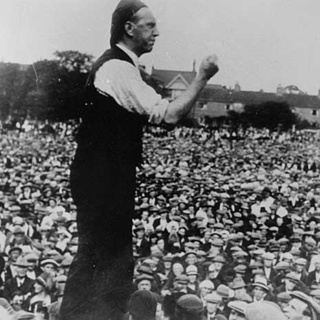
Illustration: Arthur Cook, the miners’ leader, addressing a mass meeting of strikers. Public Domain

Music: Bach Partita #2c by J Bu licensed under an Attribution-NonCommercial-No Derivatives (aka Music Sharing) 3.0 International License


Jaksot(275)

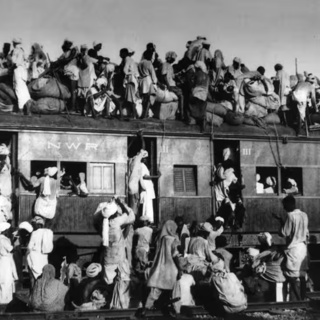
234. Fall of an iron curtain and of a jewel from the crown

234. Fall of an iron curtain and of a jewel from the crown

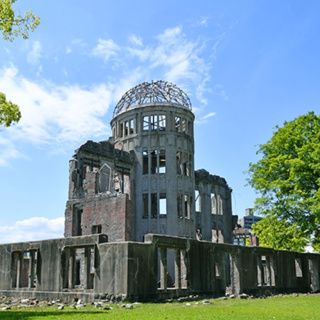
It was a strange world that emerged from the Second World War.Both genocide and the mass killing of civilians, above all through bombing, culminating with the A-bombs dropped on Japan, had become some...

9 Maalis 202514min
233. Shocks and surprises at the war’s end

233. Shocks and surprises at the war’s end

Following the German surrender in May 1945, the ‘Big Three’ – the United States, the Soviet Union and Britain – met for the third and last time in conference. And this time, appropriately, they met on...

2 Maalis 202514min
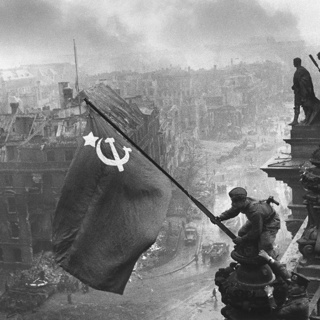
232. Bickering allies win in Europe

232. Bickering allies win in Europe

At the Yalta conference, between the US, the Soviet Union and Britain, the tensions between the Allies became increasingly obvious. Representing Britain, Churchill wanted the Allies’ war effort to be ...

23 Helmi 202514min
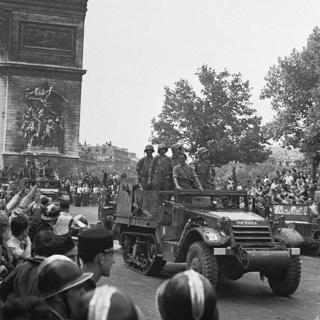
231. Nazis facing defeat

231. Nazis facing defeat

By the time of the Yalta conference in February 1945, between the USA, Soviet Union and Britain, the latter still being treated as a great power though its decline was already clear, there could be li...

16 Helmi 202514min
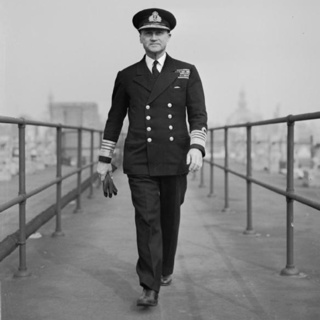
230. From Husky to Overlord, Sicily to the D-Day beaches

230. From Husky to Overlord, Sicily to the D-Day beaches

In 1943, Britain didn’t feel the Western Allies were ready yet for an invasion of France, and with its influence at the highest point it ever reached, it was able to persuade the Americans reluctantly...

9 Helmi 202514min
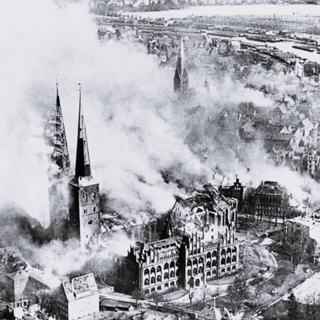
229. The tide turns

229. The tide turns

The tide turned against the Axis and in favour of the Allies in the course of 1943. Victories at Stalingrad in Russia, in the Battle of the Atlantic, and in North Africa, came on top of American advan...

2 Helmi 202514min
228. Turning points: 1943

228. Turning points: 1943

This is an episode for turning points. The year’s 1943. The Battle of Stalingrad, where the unstoppable German offensive into Russia was finally stopped and turned around, with Soviet forces essentia...

26 Tammi 202514min
227. Tough times: 1941 and 1942

227. Tough times: 1941 and 1942

The years 1941 and 1942 were tough ones… Things were going badly in the Battle of the Atlantic, with Germany threatening to strangle Britain by sinking more merchant ships than the British could bear ...

19 Tammi 202514min

Suosittua kategoriassa Historia

olipa-kerran-otsikko
gogin-ja-janin-maailmanhistoria
mayday-fi
huijarit
mystista
rss-ikiuni
konginkangas
tsunami
totuus-vai-salaliitto
rouva-diktaattori
sotaa-ja-historiaa-podi
rss-subjektiivinen-todistaja
rss-kirkon-ihmeellisimmat-tarinat
rss-i-dont-like-mondays-2
rss-peter-peter
rss-sattuu-sita-suomessakin
historiaa-suomeksi
apinan-vuosi
maailmanpuu
tiedetta-ja-sirkushuveja-vanhojen-aikojen-podcast