Gerald Ashley & Rory Sutherland on Prosilience

Gerald Ashley & Rory Sutherland on Prosilience

What is Prosilience, and how can organisations ensure their people provide it?

That’s where the discussion between my guests on this episode, Gerald Ashley and Rory Sutherland, begins. Where it goes from there, is a joyous adventure in which two great thinkers explore a range of Human Risk related topics.

* Listener Warning: the episode contains adult language *

This episode is the 100th in the Human Risk podcast series and is a continuation of a discussion which began in the 99th episode. I recommend listening to that first before exploring this one.

You'll find my earlier discussion with Rory here: https://www.podpage.com/the-human-risk-podcast/rory-sutherland-on-compliance/
and Gerald here: https://www.podpage.com/the-human-risk-podcast/gerald-ashley-on-uncertainty/

As with the previous episode, I’m providing more detailed show notes given the breadth and depth of issues covered.

05:18 Rory refers to Seeing Like A State by James C Scott. More on that here: https://en.wikipedia.org/wiki/Seeing_Like_a_State

05:54 Gerald talks about the metrics used to measure Soviet bicycle manufacturing. This article doesn’t feature bicycles, but covers the idea and features a wonderful cartoon from a Soviet magazine: https://econlife.com/2015/08/the-incentives-that-metrics-create/

09:32 Rory talks about his appearance on Bloomberg TV. You can watch that here: https://www.bloomberg.com/news/videos/2015-03-25/advertisers-becoming-too-obsessed-with-tech-sutherland

11:50 Rory mentions Rod Liddell in the context of a story about the BBC’s travel policy. To learn more about Rod: https://en.wikipedia.org/wiki/Rod_Liddle

12:34 Gerald mentions Peter Turchin, who Rory explains is a Cliodynamicist. You’ll find Peter’s website here: http://peterturchin.com/ and a guide to Cliodynamics one that website here: http://peterturchin.com/cliodynamics/

14:10 A rare intervention by me to mention David Graber’s book Bullshit Jobs - https://en.wikipedia.org/wiki/Bullshit_Jobs

14:30 Rory refers to 14th Century Middle Eastern Historian Ibn Khaldoun - https://www.britannica.com/biography/Ibn-Khaldun

15:04 Gerald talks about The Great Wave by David Hackett Fischer - https://en.wikipedia.org/wiki/The_Great_Wave_(book)

18:25 Rory talks about Daniel Kahneman’s research into risk appetites of CEOs and division heads. You can read more about that in this HBR article: https://hbr.org/2020/03/your-company-is-too-risk-averse

19:40 Gerald talks about the Lockheed Martin Skunkworks. You can read about the history of that unit here https://www.lockheedmartin.com/en-us/news/features/history/skunk-works.html and its current role here: https://www.lockheedmartin.com/en-us/who-we-are/business-areas/aeronautics/skunkworks.html

22:59 Gerald talks about Nudgestock, the annual Behavioural Science festival hosted by Rory. You can read about that here: https://www.nudgestock.co.uk/
The presentation he refers to is by Jules Goddard called The Fatal Bias and can be seen here: https://www.youtube.com/watch?v=oNlzl37GLdA

24:46 Rory highlights the story of mathematician’s Abraham Wald intervention in the Second World War. It is explained in this excerpt from Jordan Ellenberg’s excellent How Not To Be Wrong: https://medium.com/@penguinpress/an-excerpt-from-how-not-to-be-wrong-by-jordan-ellenberg-664e708cfc3d

25:56 Rory talks about IBM’s Thomas Watson and his desire to have Wild Geese. In actual fact, Watson talked about Wild Ducks (https://www.mbiconcepts.com/watson-sr-and-wild-ducks.html). Interestingly, the Duck story actually comes from an original fable by Søren Kierkegaard about a Wild Goose. For some reason Watson preferred Ducks! You can read the Kierkegaard story here: https://www.maxelon.co.uk/2015/01/domestic-geese/

26:18 Rory refers to James C Scott’s idea of an Anarchist’s Squint. You can read more about that in his collection of essays called Two Cheers for Anarchism: https://theanarchistlibrary.org/library/james-c-scott-two-cheers-for-anarchism

32:33 Gerald talks about how the British government sold Rolls Royce engines to the Russian government. You can read about that here: https://nationalinterest.org/blog/the-buzz/how-british-turbojet-allowed-russias-mig-15-fight-the-air-26385

32:50 Rory explains how penicillin was passed by America to supposedly neutral countries during World War Two, against British instructions. It ended up saving Adolf Hitler’s life after a bomb plot on 20th July 1940. More on the research behind that here: https://www.sheffield.ac.uk/news/nr/154-1.175018

40:05 Rory references British supergroup The Travelling Wilburys. Find out who they are here: https://en.wikipedia.org/wiki/Traveling_Wilburys. You can hear them on Spotify here: https://open.spotify.com/artist/2hO4YtXUFJiUYS2uYFvHNK?si=eqMFhifpSIai03kZPFHOVQ

Tämä jakso on lisätty Podme-palveluun avoimen RSS-syötteen kautta eikä se ole Podmen omaa tuotantoa. Siksi jakso saattaa sisältää mainontaa.

Jaksot(368)

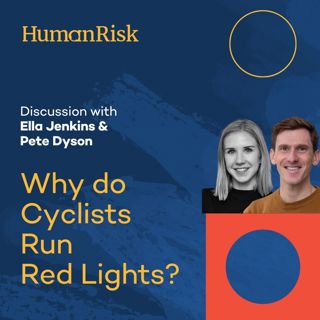
Ella Jenkins & Pete Dyson on Why Do Cyclists Run Red Lights?

Ella Jenkins & Pete Dyson on Why Do Cyclists Run Red Lights?

Why do cyclists in London run red lights? It's against the law, and yet, if you've cycled, driven or just observed London's cyclists, you'll know that many of them don't stop when there's a red light....

31 Elo 202554min
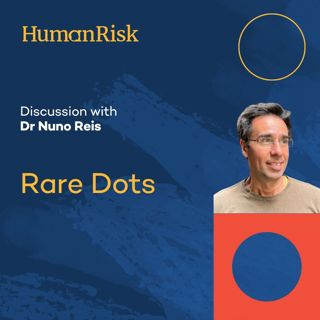
Dr Nuno Reis on Rare Dots

Dr Nuno Reis on Rare Dots

What if the ideas that linger in the back of your mind — the ones you can’t quite explain — are the ones you most need to pay attention to?Episode SummaryIn this episode, I explore that question with ...

24 Elo 20251h 7min
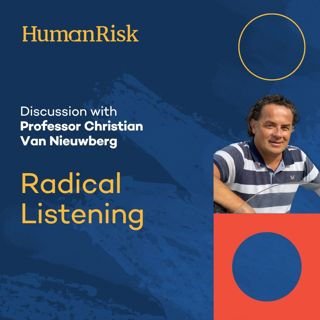
Professor Christian van Nieuwberg on Radical Listening

Professor Christian van Nieuwberg on Radical Listening

Is listening a hidden superpower we’ve overlooked?  You've heard of Active Listening, but what is Radical Listening and why does it matter?Episode SummaryOn this episode, I’m joined by Professor Chris...

17 Elo 20251h 9min

Dr Sunita Sah on Defiance - how to speak up when it matters

Dr Sunita Sah on Defiance - how to speak up when it matters

Why do we follow orders or go along with things that feel wrong? Why might defiance be better than compliance? And how can we go about becoming more defiant?Episode SummaryI’ve always been fascinated ...

9 Elo 20251h 2min
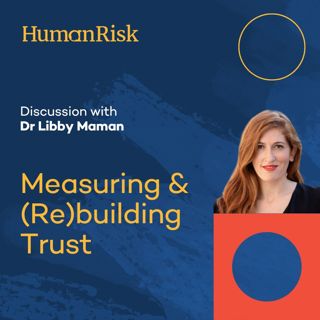
Dr Libby Maman on Measuring and (Re-)building Trust

Dr Libby Maman on Measuring and (Re-)building Trust

What happens when citizens lose faith in the institutions that serve them? And how can we rebuild that trust?Episode SummaryOn this episode, I'm speaking to someone who cares passionately about this s...

2 Elo 20251h
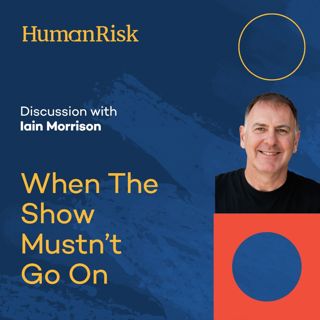
Iain Morrison on When The Show Mustn't Go On

Iain Morrison on When The Show Mustn't Go On

We’ve all heard the phrase ‘the show must go on’.  But when shouldn’t the show go on?  To help me answer that, I’m speaking to someone who has spent 35 years managing some of Australia’s most iconic l...

26 Heinä 20251h 5min

Zsike Peter on Thinkbait

Zsike Peter on Thinkbait

What if the real risk of AI isn’t job loss but brain atrophy?Episode SummaryIf you've spent any time on social media recently, you'll be familiar with the flood of low-quality AI-generated sludge. And...

19 Heinä 20251h 9min
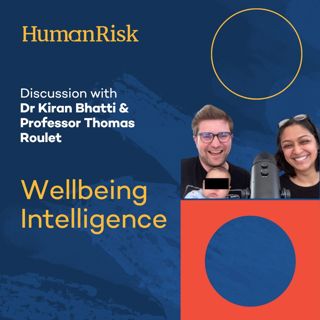
Dr Kiran Bhatti & Professor Thomas Roulet on Wellbeing Intelligence

Dr Kiran Bhatti & Professor Thomas Roulet on Wellbeing Intelligence

What if we treated mental health like a capability instead of a crisis? On this episode, I'm talking to a business school professor and a counselling psychologist about their new book that looks at pr...

12 Heinä 20251h 2min

Suosittua kategoriassa Tiede

rss-poliisin-mieli
tiedekulma-podcast
rss-mita-tulisi-tietaa
docemilia
filocast-filosofian-perusteet
rss-tiedetta-vai-tarinaa
rss-lapsuuden-rakentajat-podcast
sotataidon-ytimessa
menologeja-tutkimusmatka-vaihdevuosiin
rss-duodecim-lehti
rss-lihavuudesta-podcast
radio-antro
rss-bios-podcast
rss-metsantuntijat-podcast
rss-luontopodi-samuel-glassar-tutkii-luonnon-ihmeita