Dr Ludmila Praslova on The Canary Code

Dr Ludmila Praslova on The Canary Code

What can canaries in coalmines teach us about diversity and inclusion? In this episode, I’m speaking to an academic who has some fascinating ideas and insights into how we can create more inclusive work environments and cultures — in other words, how to get the best out of all employees.

Guest Bio
My guest, Dr. Ludmila Praslova, is a Professor and the Founding Director of Graduate Programs in Organizational Psychology at Vanguard University in Costa Mesa, California. She is an industrial organizational psychologist with a background in global diversity, intercultural relations, and, more recently, neurodiversity in the workplace.

She’s also the author of a new book called 'The Canary Code: A Guide to Neurodiversity, Dignity, and Intersectional Belonging at Work’ which takes a concept you’ve heard of — the canary in the coal mine — and applies it to the world of inclusion.

Her simple yet fascinating idea is that if we can focus on meeting the needs of those who are most sensitive to negative workplace dynamics and then create an environment that allows them to flourish, we can create an environment where everyone can flourish.


Episode Description:
In our discussion, we explore the importance of removing barriers in the workplace, the pitfalls of traditional hiring practices, and how the Canary Code works in practice. You'll hear
insights on creating inclusive environments, addressing workplace biases, and why something I've often done, viewing neurodivergent traits as 'superpowers', is actually unhelpful.

AI-generated timestamp summary
[00:00:00] - Introduction
  • Christian Hunt introduces Dr. Ludmila Praslova, discussing her book "The Canary Code" and its focus on inclusive work environments.
[00:01:00] - Ludmila's Background
  • Ludmila, an industrial-organizational psychologist, specializes in global diversity, intercultural relations, and neurodiversity.
[00:03:00] - Interest in Diversity
  • Ludmila's journey into diversity began with global diversity and now focuses on intersectional inclusivity and neurodiversity.
[00:07:00] - The Canary Code Concept
  • The concept suggests that addressing the needs of the most vulnerable employees can improve conditions for all.
[00:11:00] - Flexibility in the Workplace
  • Emphasizes creating flexible work environments to reduce workplace toxicity and improve productivity.
[00:18:00] - Neurodiversity Explained
  • Neurodiversity includes ADHD, dyslexia, autism, and other neurological differences that impact workplace experiences.
[00:22:00] - Managerial Concerns
  • Managers don't need to specialize in every condition but should create generally inclusive and flexible environments.
[00:25:00] - Job Matching and Crafting
  • Focus on matching jobs to individual strengths and job crafting to optimize roles.
[00:28:00] - The Limits of Flexibility
  • Some roles require specific skills and cannot be flexible, but many roles can adapt to a diverse workforce.
[00:31:00] - Validity in Hiring Practices
  • Emphasizes the need for valid, job-relevant assessments in hiring to ensure fairness and effectiveness.
[00:39:00] - Resistance to Change
  • Some organizations resist flexible work practices, but modern, flexible practices can help attract and retain talent.
[00:46:00] - Book Structure
  • "The Canary Code" is structured to be accessible to CEOs, diversity professionals, and neurodivergent individuals, with stories, research, and practical advice.
[00:58:00] - The Superpower Myth
  • While neurodivergent individuals may see their traits as superpowers, using this as a hiring argument is problematic.
[01:02:00] - Conclusion
  • Advocates for creating environments where everyone can thrive without needing extraordinary measures. Encourages more inclusive and flexible workplace practices.
Links
Ludmila's Faculty Page - https://www.vanguard.edu/about/history

The Canary Code - https://www.penguinrandomhouse.com/books/742858/the-canary-code-by-ludmila-n-praslova-phd/

Ludmila on Social Media
LinkedIn - https://www.linkedin.com/in/ludmila-praslova/
Twitter/X - https://x.com/ludmilapraslova

A piece explaining the point we discussed on the show about why neurodiversity isn't a 'superpower' - https://www.psychologytoday.com/us/blog/positively-different/202405/healing-the-invalidation-the-complex-truth-of-autism


Tämä jakso on lisätty Podme-palveluun avoimen RSS-syötteen kautta eikä se ole Podmen omaa tuotantoa. Siksi jakso saattaa sisältää mainontaa.

Jaksot(368)

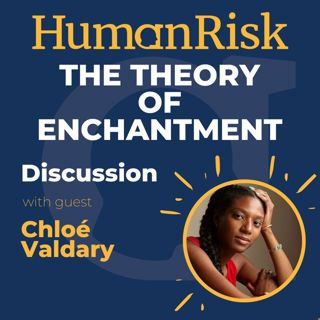
Chloé Valdary on The Theory of Enchantment

Chloé Valdary on The Theory of Enchantment

How can watching Disney movies, help create more inclusive environments?  The answer is in the word Enchantment.On this episode, I'm speaking to Chloé Valdary, the founder of an organisation called Th...

26 Syys 20241h 4min
Morgan Hamel on Moral Polarization

Morgan Hamel on Moral Polarization

How does moral polarization challenge even the most well-intentioned leaders?In this episode, I speak with Morgan Hamel, who talks frankly about her journey from working in business ethics to launchin...

21 Syys 20241h 8min
Chloé Valdary, Morgan Hamel & Peter Stein on De-Polarized Diversity, Equity & Inclusion

Chloé Valdary, Morgan Hamel & Peter Stein on De-Polarized Diversity, Equity & Inclusion

What do you think of when you hear the words Diversity, Equity & Inclusion (DE&I)? If it's something negative, then this is the episode for you; because I'm exploring how we can transform DE&I from so...

14 Syys 202455min
Matt Ottley on Neurodiversity and Creativity

Matt Ottley on Neurodiversity and Creativity

How does neurodiversity impact creativity? On this episode, I explore the challenges of mental health and how it can be both a driver of astonishing creativity and the cause of significant pain. I bel...

7 Syys 20241h 8min
Sharon O'Dea on Navigating the Digital Workspace

Sharon O'Dea on Navigating the Digital Workspace

What makes a digital workplace truly effective? In this episode, I talk to Sharon O'Dea, co-founder of Lithos Partners, about the intricacies of navigating the digital workplace.Sharon brings her weal...

30 Elo 20241h 2min

Announcing the Decision-Making Studio Podcast

Announcing the Decision-Making Studio Podcast

Introducing the Decision-Making Studio Podcast If you’re a regular listener to the show, you’ll know that it’s all about the risks of human decision-making. I try to bring you guests who can help us t...

27 Elo 20245min
Danielle Letayf on building a community

Danielle Letayf on building a community

How can passion and irritation lead to innovation and community building? In this episode, my guest is Danielle Letayf, the founder of Badassery, a dynamic community designed for unconventional though...

24 Elo 20241h 5min
Professor Shannon Vallor on the AI Mirror

Professor Shannon Vallor on the AI Mirror

What if we saw Artificial Intelligence as a mirror rather than as a form of intelligence?That’s the subject of a fabulous new book by Professor Shannon Vallor, who is my guest on this episode.In our d...

16 Elo 20241h 10min

Suosittua kategoriassa Tiede

rss-poliisin-mieli
tiedekulma-podcast
rss-mita-tulisi-tietaa
docemilia
filocast-filosofian-perusteet
rss-tiedetta-vai-tarinaa
rss-lapsuuden-rakentajat-podcast
sotataidon-ytimessa
menologeja-tutkimusmatka-vaihdevuosiin
rss-duodecim-lehti
rss-lihavuudesta-podcast
radio-antro
rss-bios-podcast
rss-metsantuntijat-podcast
rss-luontopodi-samuel-glassar-tutkii-luonnon-ihmeita