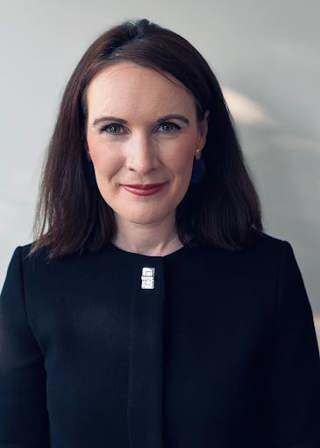
Episode Sixteen Dr. Rose Dolan, “One Step Beyond: Sociology and the three capitals”

Episode Sixteen Dr. Rose Dolan, “One Step Beyond: Sociology and the three capitals”

My guest in this episode is Dr. Rose Dolan, Associate Professor and Teacher Educator in the Department of Education in Maynooth University. Rose led the postgraduate initial teacher education programme from 2003 to 2016 in Maynooth University and is currently the programme leader of the Doctor of Education programme in and she also leads the the Teacher Education strands on the M.Ed and the Doctorate. Rose is a qualified Science, Biology and Mathematics teacher and she also worked in the Youth Services prior to becoming a teacher. In this episode of this podcast series Rose gives a nod to a song by Madness in her title “One Step Beyond: Sociology and the three capitals”. She recalls how the song (One Step Beyond) has very few lyrics and a lot of music and the reason she chose to include it in her title was because it reminded her of the idea of taking a step, a ‘giant step or a small step’ in thinking about structural and sociological issues that can seem so big and sometimes even huge. Rose talks about taking and going one step almost beyond ourselves to further and inform our understanding and our thinking about the world and the teaching profession. We also discuss the sociological concept of capital and the many forms it takes, including economic, cultural, social and institutionalised capital also referred to as Bourdieu’s theories. Rose mentions how Bourdieu talked about capital as “presenting itself in three fundamental guises economic capital, which is immediately and directly convertible into money, and maybe institutionalised in the form of property, cultural, which is convertible into economic capital, and may be institutionalised in the form of educational qualifications, and social capital, which are social obligations, or connections, convertible in certain conditions into economic and maybe also institutionalised in the form of what he talked about title of nobility, (which I don't think we'd talk about it that same way today)”. We also discuss the Lyons et al Inside Classrooms study (2003), which Rose worked on, the ESRI Post-primary Longitudinal study, Professor Emer Smyth’s work in the ESRI, Brookfield lenses, the importance of parents in educational outcomes of their children and the privilege that teachers have in a classroom space. We discuss the challenges for parents and for teachers in supporting students to progress through the system. Rose mentions how it is important that as educators that we should look for “what is good within our young people”. And that we don't demonise them and we don't present images of them that that are hurtful for them to hear about themselves” or for them to see. “So I think within those ideas of justice and fairness, we need to be careful in the things that we say. And we need to, to be conscious of the words that are used and, and the actions that are taken that are interpreted and sometimes misinterpreted by those students that we work with.” We also discuss the challenges for student teachers in terms of capital and for those who want to become teachers but who may lack the means or the economic, cultural or institutional capital to do so and how this impacts on the overall diversity of the profession. Rose talks about how “if the cultural systems, or the culture of schools is so far, or is a distance removed from the culture of particular teachers, do they feel at home? Do they feel at home and feel steady and feel that they belong? And that's a much deeper issue that we need to think about, and that we need to talk about.” We also discuss the benefits of the extended programmes of Initial Teacher Education in Ireland and in particular the benefit of the extended School Placement or practicum and the fact that students undertake placement in at least two different settings and how this has enhanced outcomes for student teachers and also for the teaching profession overall. We discuss Covid and the impact of Covid on us as teacher educators and on student teachers. One of the most prominent memories Rose has is how when “teaching in that early stage when we had first gone home back in March, April, and being really conscious of where I was positioning the screen, and what was behind me and all of those kinds of things, Family Photos, did I want them visible, did I not? Because I think what COVID did was, we ended up going into each other's houses, whether we wanted to or not, or whether others wanted us to or not.” She mentions how students coped and how they managed to get through their courses, young people saying that “they didn't want their cameras on because they didn't want their peers, their classmates to see where they were studying from, or, what was going on in the background, people blurring their background to maintain privacy for lots of different reasons. The stories of people completing assignments on their phones, because they didn't have a laptop or a desktop at home, that they could work on. People sharing devices in a family and, and the demand for particular devices at particular times. Those were some of the things from the early part of COVID-19. that really stuck with me…all of those things speak to structural equality or structural inequality.” Dr. Rose Dolan finishes her episode with the thought that “sometimes this kind of stuff (Sociology of Education) can seem big and vast, and you get lost in the middle of it, and you get wobbly. You just go wobbly, and you figure some of these are so massive, how can I possibly make any difference within it. And that goes back to that idea of “just one step one step beyond”. All we need to do is continue to take that one step beyond to make progress. Céim ar chéim, i ndiaidh a chéile a thógtar na caisleáin.

Tämä jakso on lisätty Podme-palveluun avoimen RSS-syötteen kautta eikä se ole Podmen omaa tuotantoa. Siksi jakso saattaa sisältää mainontaa.

Jaksot(34)

S2 Episode Fifteen:  Dr. Anne Marie Kavanagh "Decolonising the curriculum: Creating a more inclusive, diverse, and critically-engaged approach to education"

S2 Episode Fifteen: Dr. Anne Marie Kavanagh "Decolonising the curriculum: Creating a more inclusive, diverse, and critically-engaged approach to education"

In this episode I chat to Anne Marie Kavanagh (PhD, FHEA). Anne Marie’s episode is called Decolonising the curriculum: Creating a more inclusive, diverse, and critically-engaged approach to education....

10 Huhti 202548min
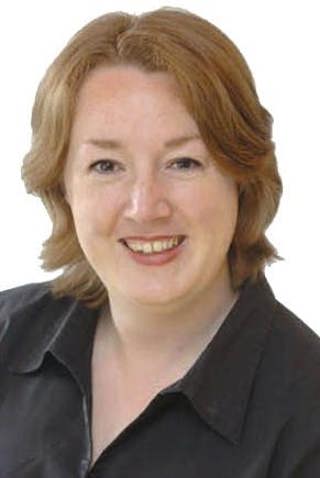
S2 Episode Fourteen: Dr. Alison Egan "Navigating the Third Space in Higher Education Institutions"

S2 Episode Fourteen: Dr. Alison Egan "Navigating the Third Space in Higher Education Institutions"

In this episode I speak to Dr. Alison Egan in an episode entitled Navigating the Third Space in Higher Education Institutions where we discuss the concept of the "third space" in higher education, whi...

20 Maalis 202554min
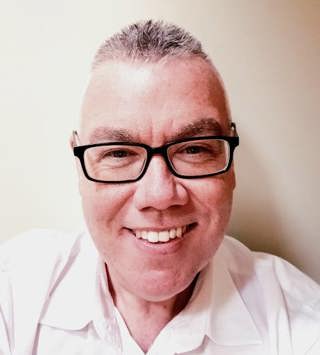
S2 Episode Thirteen: Niall Mulpeter "From Policy to Practice: Enacting Values in Publicly Managed Schools through Communities of Practice and Professional Learning Communities"

S2 Episode Thirteen: Niall Mulpeter "From Policy to Practice: Enacting Values in Publicly Managed Schools through Communities of Practice and Professional Learning Communities"

In this episode I speak to Niall Mulpeter in an episode entitled From Policy to Practice: Enacting Values in Publicly Managed Schools through Communities of Practice and Professional Learning Communit...

6 Maalis 202547min
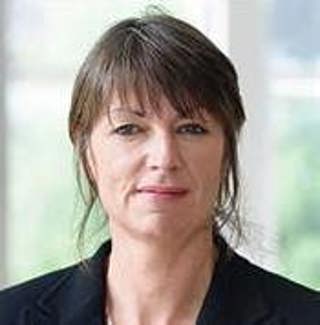
S2 Episode Twelve: Professor Dympna Devine "What has social justice got to do with pedagogy?"

S2 Episode Twelve: Professor Dympna Devine "What has social justice got to do with pedagogy?"

In this episode I speak to Professor Dympna Devine in an episode entitled, "What has social justice got to do with pedagogy?" a title which Dympna explains was inspired by a question from a student in...

27 Helmi 202551min
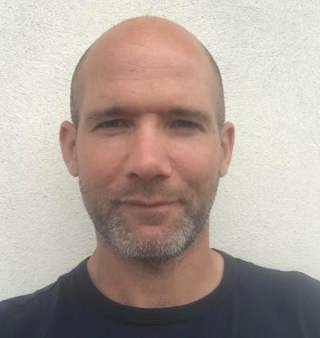
S2 Episode Eleven: Declan Qualter “Parents as partners in education: Rhetoric and reality in an era of digital and AI transformation”

S2 Episode Eleven: Declan Qualter “Parents as partners in education: Rhetoric and reality in an era of digital and AI transformation”

Declan Qualter is the Practice Placement Supervisor for the BEd with Gaeilge and/or Modern Languages Programme in the UCD School of Education. He also teaches on the Professional Masters in Education ...

20 Helmi 202553min
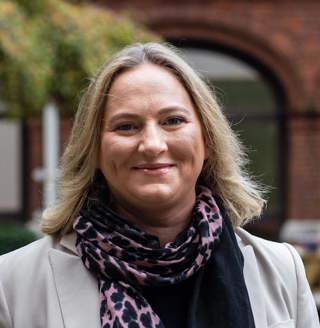
S2 Episode Ten: Dr. Audrey Bryan “Enduring Inequalities in Education: Whither Sociology?”

S2 Episode Ten: Dr. Audrey Bryan “Enduring Inequalities in Education: Whither Sociology?”

Dr. Audrey Bryan is an Associate Professor of Sociology in the School of Human Development at Dublin City University’s Institute of Education (DCU IoE).  Her teaching spans a number of undergraduate a...

13 Helmi 202558min
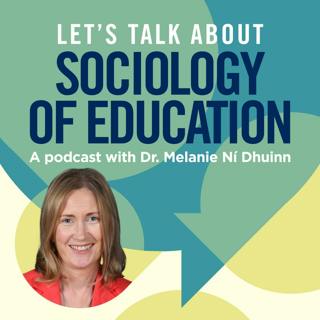
 S2 Episode Nine: Highlights episode

S2 Episode Nine: Highlights episode

In this episode Dr. Melanie Ní Dhuinn revisits the eight episodes released in the first half of season two. She highlights key discussions from the first eight episodes of Season Two and recaps on to...

7 Helmi 202540min
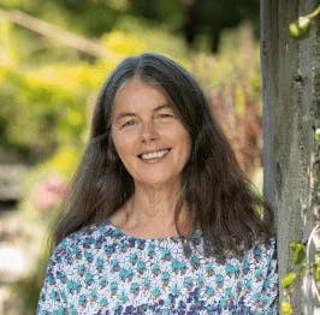
S2 Episode Eight: Dr. Michelle Share "Food Matters: It's not just what you eat, but where, how, and with whom"

S2 Episode Eight: Dr. Michelle Share "Food Matters: It's not just what you eat, but where, how, and with whom"

Dr Michelle Share is a Senior Research Fellow at the School of Education, Trinity College Dublin.  She is a sociologist with extensive experience in the conduct of multi-site research and evaluation p...

19 Joulu 202459min
Suosittua kategoriassa Koulutus

rss-murhan-anatomia
psykopodiaa-podcast
rss-narsisti
rss-arkea-ja-aurinkoa-podcast-espanjasta
rss-liian-kuuma-peruna
voi-hyvin-meditaatiot-2
adhd-podi
kesken
rahapuhetta
filocast-filosofian-perusteet
rss-vuosikymmenen-ilmastoteko
jari-sarasvuo-podcast
ihminen-tavattavissa-tommy-hellsten-instituutti
rss-vapaudu-voimaasi
aamukahvilla
salainen-paivakirja
psykologia
rss-psykalab
rss-ai-mita-siskopodcast
rss-luonnollinen-synnytys-podcast