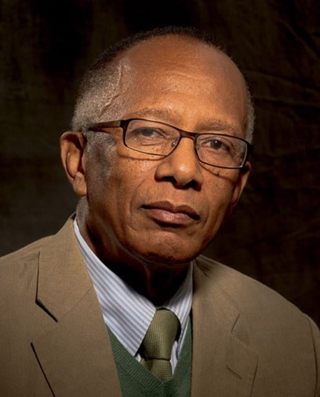
Orlando Patterson: "Slavery and Genocide: The U.S, Jamaica and the Historical Sociology of Evil"
Matrix Podcast22 Touko 2023

Orlando Patterson: "Slavery and Genocide: The U.S, Jamaica and the Historical Sociology of Evil"

A transcript of this episode can be found at https://matrix.berkeley.edu/research-article/slavery-and-genocide-the-u-s-jamaica-and-the-historical-sociology-of-evil/.

Recorded on May 1, 2023, this episode of the Matrix Podcast features a lecture by Orlando Patterson, John Cowles Professor of Sociology at Harvard University, entitled "Slavery and Genocide: The U.S, Jamaica and the Historical Sociology of Evil."

Presented as the Matrix Distinguished Lecture, the lecture was presented at Social Science Matrix, an interdisciplinary center at the University of California, Berkeley. Stephen Best, Professor of English at UC Berkeley and Director of the Townsend Center for the Humanities, was the discussant. The lecture was co-sponsored by the Townsend Center for the Humanities.

Orlando Patterson, a historical and cultural sociologist, is John Cowles Professor of Sociology at Harvard University. He previously held faculty appointments at the University of the West Indies, his alma mater, and the London School of Economics where he received his Ph.D. His academic interests include the culture and practices of freedom; the comparative study of slavery and ethno-racial relations; and the cultural sociology of poverty and underdevelopment with special reference to the Caribbean and African American youth. He has also written on the cultural sociology of sports, especially the game of cricket.

Professor Patterson is the author of numerous academic papers and six major academic books including, Slavery and Social Death (1982); Freedom in the Making of Western Culture (1991); The Ordeal of Integration (1997); and The Cultural Matrix: Understanding Black Youth (2015). A public intellectual, Professor Patterson was, for eight years, Special Advisor for Social policy and development to Prime Minister Michael Manley of Jamaica. He was a founding member of Cultural Survival, one of the leading advocacy groups for the rights of indigenous peoples, and was for several years a board member of Freedom House, a major civic organization for the promotion of freedom and democracy around the world. The author of three novels, he has published widely in journals of opinion and the national press, especially the New York Times, where he was a guest columnist for several weeks. His columns have also appeared in Time Magazine, Newsweek, The Public Interest, The New Republic, and The Washington Post.

Stephen Best's scholarship encompasses a variety of fields and materials: American and African-American literature and culture, cinema and technology, rhetoric and the law, and critical theory. His research pursuits in the fields of American and African American criticism have been rather closely aligned with a broader interrogation of recent literary critical practice. To be specific, his interest in the critical nexus between slavery and historiography, in the varying scholarly and political preoccupations with establishing the authority of the slave past in black life, quadrates with an exploration of where the limits of historicism as a mode of literary study may lay, especially where that search manifests as an interest in alternatives to suspicious reading in the text-based disciplines.

To this end, Professor Best has edited a number of special issues of the journal Representations (on whose board he sits) – "Redress" (with Saidiya Hartman), on theoretical and political projects to undo the slave past, "The Way We Read Now" (with Sharon Marcus), on the limits of symptomatic reading, and "Description Across Disciplines" (with Sharon Marcus and Heather Love), on disciplinary valuations of description as critical practice. Best is the author of two books: The Fugitive's Properties: Law and the Poetics of Possession (University of Chicago, 2004), a study of property, poetics, and legal hermeneutics in nineteenth-century American literary and legal culture; and, most recently, None Like Us: Blackness, Belonging, Aesthetic Life (Duke University Press, 2018). His work has been supported by the Mellon Foundation, the Hellman Foundation, the Humanities Research Institute (University of California), and the Ford Foundation. In 2015-2016, he was the Mary Bundy Scott Professor at Williams College, and in spring 2020 he was the Whitney J. Oates Fellow in the Council of the Humanities at Princeton University.

Tämä jakso on lisätty Podme-palveluun avoimen RSS-syötteen kautta eikä se ole Podmen omaa tuotantoa. Siksi jakso saattaa sisältää mainontaa.

Jaksot(114)

California Spotlight: Wealth & Poverty

California Spotlight: Wealth & Poverty

California is one of the wealthiest states in the country, yet it also faces persistent poverty, stark economic inequality, and some of the highest costs of living in the nation. These tensions raise ...

14 Loka 59min
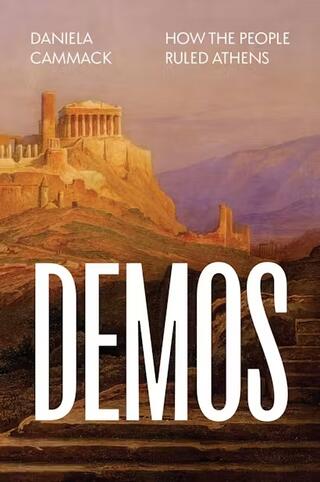
Authors Meet Critics: "Demos: How the People Ruled Athens" by Daniela Cammack

Authors Meet Critics: "Demos: How the People Ruled Athens" by Daniela Cammack

Recorded on October 1, 2026, this video features an Authors Meet Critics panel on the book Demos: How the People Ruled Athens, by Daniela Cammack, Assistant Professor of Political Science at UC Berke...

14 Loka 1h 10min
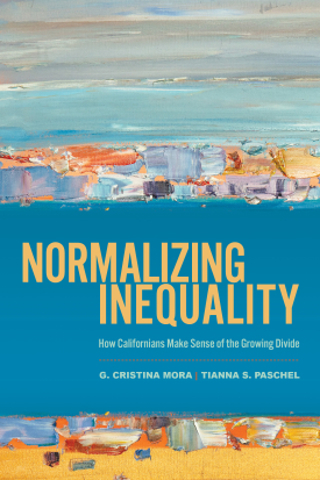
Authors Meet Critics: "Normalizing Inequality: How Californians Make Sense of the Growing Divide"

Authors Meet Critics: "Normalizing Inequality: How Californians Make Sense of the Growing Divide"

Recorded on September 9, 2026 at the University of California, Berkeley, this Authors Meet Critics panel centered on the book Normalizing Inequality: How Californians Make Sense of the Growing Divide,...

22 Syys 1h 8min
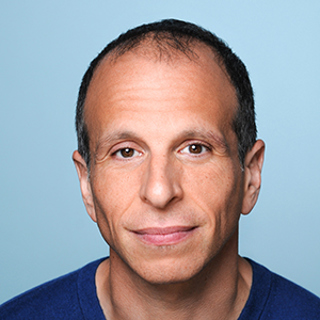
Benjamin Recht: "The Irrational Decision: How We Gave Computers the Power to Choose for Us"

Benjamin Recht: "The Irrational Decision: How We Gave Computers the Power to Choose for Us"

Recorded on May 5, 2026, this video features a talk by Benjamin Recht, Professor of Electrical Engineering and Computer Sciences at UC Berkeley, focused on his book, The Irrational Decision: How We G...

14 Touko 1h 21min
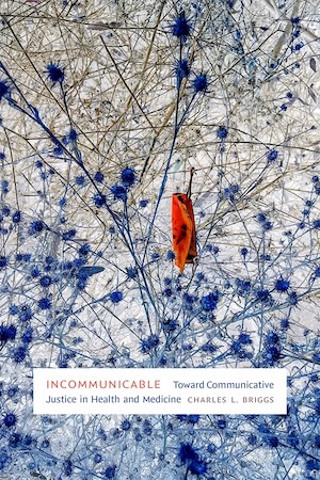
Incommunicable: Toward Communicative Justice in Health and Medicine

Incommunicable: Toward Communicative Justice in Health and Medicine

Recorded on April 9, 2026, this Authors Meet Critics panel features the book Incommunicable: Toward Communicative Justice in Health and Medicine, by Charles Briggs, the Alan Dundes Distinguished Profe...

23 Huhti 1h 12min
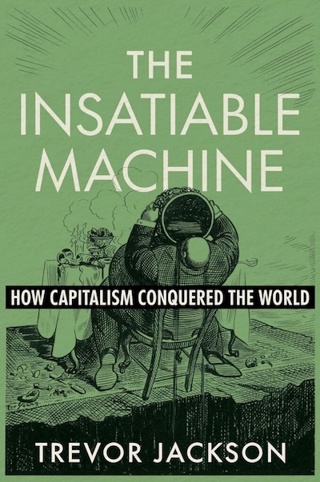
Authors Meet Critics: Trevor Jackson, "The Insatiable Machine: How Capitalism Conquered the World"

Authors Meet Critics: Trevor Jackson, "The Insatiable Machine: How Capitalism Conquered the World"

On April 7, 2026, Social Science Matrix hosted an Authors Meet Critics panel on the book The Insatiable Machine: How Capitalism Conquered the World, by Trevor Jackson, Associate Professor of History a...

23 Huhti 1h 21min
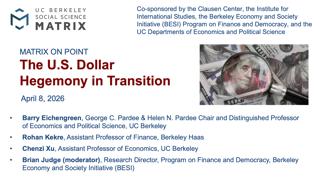
Matrix on Point: The U.S. Dollar Hegemony in Transition

Matrix on Point: The U.S. Dollar Hegemony in Transition

The global dominance of the U.S. dollar has long shaped international trade, financial markets, and geopolitical power. Amid shifting global dynamics and the rapid development of stablecoins and other...

23 Huhti 1h
Julien Migozzi: "Algorithms of Distinction: Class, Credit Scores, and Property in South Africa"

Julien Migozzi: "Algorithms of Distinction: Class, Credit Scores, and Property in South Africa"

Recorded on March 18, 2026, this podcast features a lecture by Julien Migozzi, an economic geographer and Assistant Professor in Development Studies at the University of Cambridge. Dr Migozzi's lectur...

1 Huhti 43min

Suosittua kategoriassa Tiede

tiedekulma-podcast
utelias-mieli
rss-mita-tulisi-tietaa
rss-duodecim-lehti
rss-hereilla
docemilia
rss-kasvikutsut
rss-vaasan-yliopiston-podcastit
rss-poliisin-mieli
rss-kasvatuspsykologiaa-kaikille







