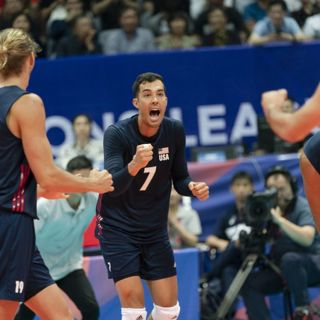
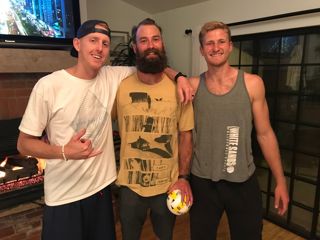
Kawika Shoji: Leading the wildly talented Hawai'i generation of Olympians

Kawika Shoji: Leading the wildly talented Hawai'i generation of Olympians

A few weeks ago, Kawika Shoji and Taylor Crabb escaped the tedium of quarantine to do some hill sprints near their houses in Manoa. There is nothing new or special or spectacular about this. It is, actually, the most normal, mundane, practiced bit of Shoji’s life up to this point. It isn’t necessarily the hill sprints that are typical, but the fact that Shoji was there. Leading.

Forever leading.

Much has been justifiably made – and more needs to be made – of the current generation of Hawai’i volleyball players either currently or previously representing the United States in some professional capacity or other. There is Spencer McLachlin, a national champ at Stanford in 2010, Crabb’s first partner on the AVP Tour, currently a coach at UCLA. There’s Brad Lawson, McLachlin’s who put together one of the most complete performances in any collegiate national championship, leading the Cardinal to that 2010 title with 24 kills in 28 swings. He was named, alongside Shoji, his setter, the NCAA Tournament MVP. There’s Micah Christensen, Shoji’s current roommate and arguably the best setter on the planet. There’s Shoji’s younger brother, Erik, his teammate and libero on the United States National Team

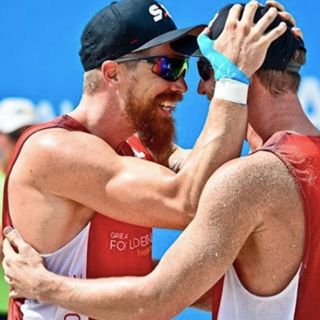
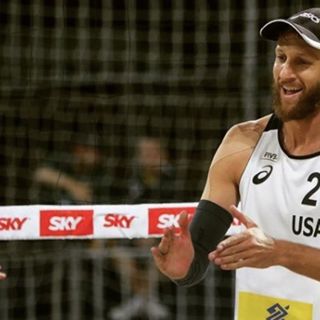
Then, on the beach, there’s Tri Bourne, one of the top blockers in the USA Volleyball pipeline and currently ranked second in the American race to Tokyo. And the Crabbs, both Taylor and Trevor, the former currently ranked No. 1 in the American Olympic race, the latter, Bourne’s partner, to be cemented on the Manhattan Beach Pier later this year. There’s the McKibbins, Riley and Madison, whose infectious personalities and talents both on the beach and in the YouTube studios have led them to become perhaps the AVP’s most recognizable and hirsute faces.

There are two common threads here: Honolulu roots.

And Kawika Shoji.

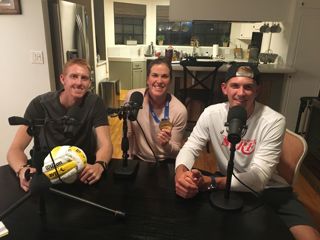
“I was kind of the first generation to come over,” he said on SANDCAST: Beach volleyball with Tri Bourne and Travis Mewhirter.

It is not difficult to see why Shoji is the one who cleared that path, from the Islands to California to anywhere in the world that might need a good volleyball player. The son of legendary coach Dave Shoji, who helmed the University of Hawai’i from 1975-2017, Kawika saw first-hand what it took to climb the ladder. Even as a kid, he realized that volleyball, be it on the beach or indoors, is “a skillful game, it’s an athletic game, but it’s also a game of intelligence and decision making and strategy,” said Kawika, who is 32, married and with a 2-year-old daughter, Ada-Jean. “That’s the biggest takeaway I have of my upbringing. Most of us from Hawai’i, especially Erik and I, are not genetic freaks. We’re not jumping out of the gym, not the tallest, not the strongest, but the ability to control the ball and the ability to make the right decisions are things we pride ourselves on and have carried us a long way. It’s something I have a lot of pride in.”

His is an old-school mindset. He wasn’t raised in an era of social media highlight tapes, but in repetition-intensive practices. Ball control and decision-making was king. It’s how he became the first brick upon the Stanford foundation that would win that 2010 National Championship. Not with awe-inducing swings or bounce-blocks, but the two most fundamental aspects of the game: Controlling the ball, controlling your mind.

“I still think the game needs to be played the right way, and if you look at the top players, you don’t get to the top unless you can control the ball,” he said. “That’s just the way it is. That came from my dad. He knew the importance of ball control. He was really skill focused and old school in that way: A lot of repetitions. It can definitely get a little monotonous for sure, but if you don’t put in those touches, those hours, you can’t master whatever skill you’re trying to master. You gotta find a way to touch the ball and feel the ball.”

It wasn’t just volleyball that he espoused that mindset. As a standout on the Iolani School basketball team, he was named the Hawai’i State Player of the Year. He joked that his being named Player of the Year says more about the state of Hawai’i high school basketball than it does about his own skills on the court, but the one thing that he did point out was this: “I got it around just because of how smart I was on the court.”

It is more than possible that this generation of Honolulu natives would enjoy the successes they had whether Shoji paved the way or not. But few can be roommates with the player who shares their position, fighting for the same spot, and see it not as an awkward pairing, but as a legitimate advantage.

“I’m going to be ready if needed, and I’m going to do all of the little things to help our team win, help our team prepare, and that’s just understanding yourself, your strengths and weaknesses, your role, and valuing that role and what you do for others,” he said. “We all have service aspects of our life and our different roles in life and you have to value it.”

So he’s carved out a successful career overseas, picking up contracts in Finland, Germany, Turkey, Russia, Italy, and, currently, Poland. He supplements that with his role on the United States National Team, with whom he won a bronze medal in 2016.

At the current moment, he’s quarantined, like every other athlete. He has his brother, his daughter. The Crabbs, when they’re home, are “a lob wedge” down the street. He’s finding ways to be productive, be it watching film or running hill sprints or finishing up his masters in sports psychology.

Finding some way to do what he’s always done: Lead.

Jaksot(500)

SANDCAST No. 5: A glimpse into greatness with April Ross, Part 1

SANDCAST No. 5: A glimpse into greatness with April Ross, Part 1

There has only ever seemed to be one gear for April Ross: Go. Such is how the Newport Beach native has garnered a laundry list of accomplishments that include, among others: A Gatorade National Player of the Year award at Newport Harbor High School; two national championships at USC (where she never even planned on playing, but more on that in Part 2); a two-year stretch with partner Jen Kessey between 2008-2010 in which she medaled in 17 of 20 FIVB events; an undefeated AVP season in 2014 with Kerri Walsh-Jennings; two Olympics medals, one silver, one bronze. And every time Ross thinks it’s time to unwind, to relax – well, there’s always another mountain to climb. “It’s so hard. It’s so hard. What I find happens is I convince myself to find that balance a little bit and not stress about it and not work so hard,” she said. “And then I’ll go to a competition, underperform, and I’m like ‘F this! I’m going to home, step it up. I’m not training hard enough, not focused hard enough. If you just want to win that bad – it’s so hard to take a step back and find that balance.” This season was, as Ross describes it on SANDCAST, full of “hiccups.” A last-minute breakup with Walsh-Jennings, with whom Ross won a bronze medal in the 2016 Olympic Games, along with a toe injury that had more of an effect that she realized until she watched video of her approach, made for a mercurial year, though certainly not a bad one – not by most standards, anyway. Ross still won a pair of AVP tournaments, in Austin split-blocking with Whitney Pavlik, and in New York defending for Lauren Fendrick. She still made the World Championship finals in Vienna, pushing the 2016 Olympic gold medalists Laura Ludwig and Kira Walkenhorst to three sets. But one of those hiccups – having a constantly-changing partner situation – is resolved for 2018. In Alix Klineman, the 2017 AVP Rookie of the Year, Ross has partner stability once more. “It was really hard to figure out what to do,” Ross said. “There weren’t many chances to compete and to try people out. It came down to really intangible things. I decided to go with Alix Klineman to take a shot at Tokyo.”

29 Marras 201750min

SANDCAST No. 4: Welcome to the United States, Chaim Schalk

SANDCAST No. 4: Welcome to the United States, Chaim Schalk

Chaim Schalk had been to the United States before. The Alberta native has actually been an American citizen his entire life -- his mother is an Iowan -- but as a kid raised in Red Deer, Schalk has been competing in the Canadian pipeline his entire life.  Until now.  After the 2017 season, Schalk, who finished fifth at the 2017 Beach Volleyball World Championships with longtime partner Ben Saxton, the 6-foot-5 defender made the decision to transfer to compete for the United States, homeland of his wife, Lane Carico, another top-flight U.S. defender whom he married on New Years Eve of 2015. “It was probably halfway through the season when I considered what my options were going to be,” Schalk said. “Me and Ben, we weren’t, I don’t think, were on the same page after a certain period of time. We had a really good run over five years but I was hoping we were going to become more consistent and we never actually won a tournament, and every team around our level has won a tournament. Every team. And that was one thing I wanted to do: I wanted to win. “We’d get into these tournaments where we were so close and every time, something happened. Not to say that’s the reason why I wanted to move on, because if it’s not Ben, who am I going to win with?” And that remains the No. 1 question for Schalk moving forward: Who will the erstwhile Canadian partner with? Because of an FIVB transfer rule, Schalk will have to sit out of FIVB tournaments until October of 2019. He’ll be an exclusively AVP talent, though it's possible he could compete in the World Series of Beach Volleyball, should it not fall under the FIVB umbrella, as it did not this past season. He hasn’t decided on anything; he hasn’t ruled anything out. It’s just as possible he plays with Brazilian blocker Ricardo Santos, with whom he played in AVP New York and stunned Phil Dalhausser and Nick Lucena in the first round, as with a young and developing blocker. For now, Schalk is rehabbing his pinky finger post-surgery, though the next time he steps on the sand, it’ll be as a member of USA Volleyball. WATCH: SANDCAST host Tri Bourne plays against SANDCAST guest Chaim Schalk in the Toronto semifinals: https://www.youtube.com/watch?v=t8BHlrar2wc&t=934s Where to find Chaim Schalk: Twitter: @chaimschalk  Instagram: @Chaimer Website: ChaimSchalk.com

25 Marras 20171h 18min

SANDCAST No. 3: It's finally (finally) video game season for Kelly Claes

SANDCAST No. 3: It's finally (finally) video game season for Kelly Claes

In a frenetic span of 120 days, Kelly Claes was able to accomplish what the vast majority of the beach volleyball world would be satisfied with in a career.  She won a national championship with USC, which was preceded by the USAV Collegiate Beach Championships. She stunned 2016 Olympic gold medalists Laura Ludwig and Kira Walkenhorst to claim a bronze medal in the World Series of Beach Volleyball. She won an AVP during the season finale in Chicago, which came with the added bonus of boosted prize money, money she was alas able to accept. She even won a NORCECA qualifier – playing defense with Lauren Fendrick. And Claes isn’t done yet. Not even close.  “I want to be the best blocker in the world,” she says repeatedly throughout the podcast. She’s not far off, despite playing professionally for less than one full season (she had to skip the AVP’s opener in Huntington Beach). While her and partner Sara Hughes, the FIVB Rookie of the Year, finished the collegiate season No. 1 in the country and national champs for the fourth straight season, they also finished No. 16 internationally and sixth on the AVP.  On the podcast, Claes discusses her remarkable partnership with Hughes, which includes a record 103-match winning streak, and what she learned by playing with Fendrick and AVP MVP April Ross in an FIVB in China. “You can only learn so much from one person,” she says. “I feel like reaching into another hat is always helpful. I feel like I learned from both of them and I wouldn’t trade that for anything. It was a really cool experience.” With a little less than three months to go before the opening event of the 2018 season, in The Hague, Claes and Hughes are back on the sand. Claes discusses what her training looks like, what events she’s looking forward to in the 2018 season, her aspirations both immediate and long term, and how she plans on developing into the best blocker in the world. Where you can find Claes: Twitter: @kellyclaes3 Instagram: Kellyclaes3 Facebook: Kelly Claes Of course, this podcast would not be possible without our generous sponsors from Marriott Vacation Club Rentals, which offer the best vacation accommodations in the world’s best vacation destinations. Wherever you travel… Florida to Hawaii, Europe to California, choose to rest in our luxurious guest rooms, suites or villas for your next getaway. Villas offer all of the comforts of home including a full kitchen, living and dining area and separate bedrooms. Stay with the Marriott name you know and trust.    Book Big Spaces in Great Places today.  Visit www.MVCRentals.com!

15 Marras 20171h 2min

SANDCAST No. 2: Ryan Doherty, the Most Interesting Man in Beach Volleyball

SANDCAST No. 2: Ryan Doherty, the Most Interesting Man in Beach Volleyball

Dos Equis had it all wrong when the beer company casted actor Jonathan Goldsmith as its "Most Interesting Man in the World" campaign.  It missed out on Ryan Doherty.  Even amongst a group of peers with circuitous routes into beach volleyball, Doherty’s path has been exceptionally itinerant. A star pitcher out of the baseball-mad town of Toms River, New Jersey, Doherty threw for Notre Dame in college. He left early, going undrafted but getting scooped up by the Arizona Diamondbacks, where he spent two years in the minor leagues, years filled with long bus rides, pitching well, pitching not so well – until he got the call from the manager’s office. Doherty was cut. It was, as rock bottom moments can often be, a watershed moment for Doherty, as serendipitous as it was crushing. After couch surfing for a bit in South Carolina, where he was routinely beaten down in beach volleyball by high schoolers, Doherty had made up his mind: He was moving to California, and he was going to play professional beach volleyball. Since, the 7-foot-1 – well, 7-foot-and-a-half – blocker has partnered with Olympians Casey Patterson, Nick Lucena, Todd Rogers and John Hyden. He has beaten Phil Dalhausser. He has represented the United States internationally and domestically, becoming a mainstay on both the AVP and FIVB Tours. Doherty discusses all of that and a great deal more on SANDCAST: Beach Volleyball with Tri Bourne and Travis Mewhirter. Mentioned in the show: Doherty wrote a book, Avatar’s Guide to Beach Volleyball. You can get that on Amazon here: Where you can find Doherty: Twitter: @RyanDVolley Facebook: Ryan Doherty As always, this show would not be possible without the sponsorship of Marriott Vacation Club Rentals, who offers the best vacation accommodations in the world’s best vacation destinations.  Wherever you travel… Florida to Hawaii, Europe to California, choose to rest in our luxurious guest rooms, suites or villas for your next getaway.   Villas offer all of the comforts of home including a full kitchen, living and dining area and separate bedrooms.   Stay with the Marriott name you know and trust.   Book Big Spaces in Great Places today.  Visit www.MVCRentals.com!

8 Marras 20171h 3min

Suosittua kategoriassa Politiikka ja uutiset

aikalisa
rss-ootsa-kuullut-tasta
tervo-halme
ootsa-kuullut-tasta-2
politiikan-puskaradio
otetaan-yhdet
rss-vaalirankkurit-podcast
rss-kuka-mina-olen
et-sa-noin-voi-sanoo-esittaa
rss-podme-livebox
aihe
the-ulkopolitist
rss-tasta-on-kyse-ivan-puopolo-verkkouutiset
rikosmyytit
rss-hyvaa-huomenta-bryssel
politbyroo
radio-antro
eevan-politiikkapodi-totuuksia-suomesta
rss-pykalien-takaa
rss-kaikki-uusiksi