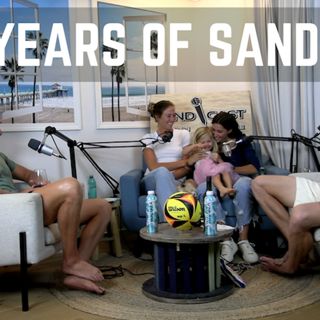
FIVE YEARS OF SANDCAST: 261 episodes in a row, 261 more to come

FIVE YEARS OF SANDCAST: 261 episodes in a row, 261 more to come

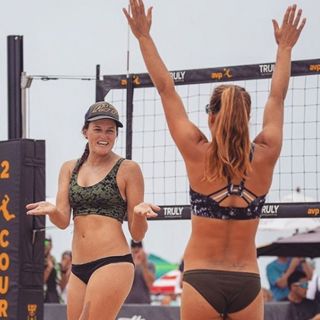
Last week marked FIVE STRAIGHT YEARS OF SANDCAST! In five years, somehow, Tri Bourne and Travis Mewhirter haven't missed a single episode. So much has happened:

- Travis made his first AVP main draw (then a bunch of international medals)

- Tri battled an autoimmune disease...then became an Olympian...then a two-time Manhattan Beach Open champion

- Tri had a kid, Naia Bourne, who makes many appearances on this episode

- Travis got married to Delaney Knudsen, who has since won a bunch of big time matches and tournaments, including the USA Volleyball Queen of the Beach

- Gabby Bourne produced her own movie, and is soon appearing in one with Ben Affleck and Matt Damon (!!!)

- Our numbers have exploded, growing, on average, 30 percent per year

- The NVL came and went

- p1440 came and went

- Volleyball World became a thing

- The AVP was bought by Bally's

- And a whole, whole lot more.

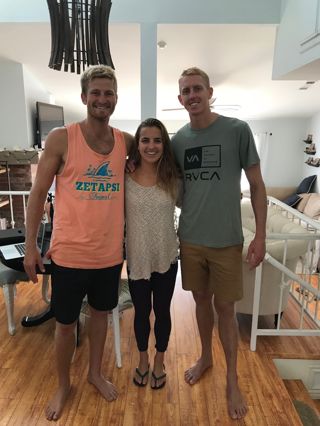
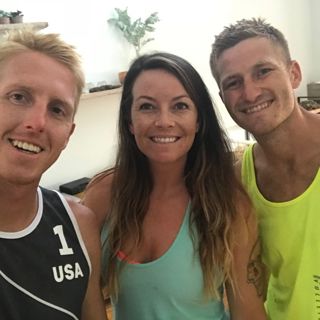
We just got the full family together on this one and reflected on five years of podcasting, and the wild and surreal life changes that have come with it. Thank you all SO MUCH for being part of this wonderful journey. Cheers to five years, and cheers to five more

SHOOTS!

***

NEW BOOK ALERT!!! Travis Mewhirter and Kent Steffes just published a seminal work on the history of beach volleyball in their new book, Kings of Summer: The Rise of Beach Volleyball. Check it out on Amazon!! https://www.amazon.com/Kings-Summer-rise-beach-volleyball/dp/B0B3JHFKM7/ref=sr_1_1?crid=1WGJFWHPBGPQ2&keywords=kings+of+summer+book&qid=1658922972&sprefix=kings+of+summer+book%2Caps%2C1328&sr=8-1

We are FIRED UP to announce that we've signed on for another year with Athletic Greens! Stay healthy with Tri Bourne and Travis Mewhirter and get your greens today! https://athleticgreens.com/partner/d35ctoffer-strength/en?utm_source=podcast&utm_medium=influencer&utm_campaign=sandcast_d35ct__a3172__o27&utm_term=cac__a3172__o27&utm_content=sport__a3172__o27

We now have SANDCAST MERCHANDISE!! Rock the gear of your favorite podcast today! https://www.sandcastmerch.com/

If you want to receive our SANDCAST weekly newsletter, the Beach Volleyball Digest, which dishes all the biggest news in beach volleyball in one quick newsletter, head over to our website and subscribe! We'd love to have ya! https://www.sandcastvolleyball.com/

This episode, as always, is brought to you by Wilson Volleyball, makers of the absolute best balls in the game, hands down. You can get a 20-percent discount using our code, SANDCAST-20! https://www.wilson.com/en-us/volleyball

Check out our book, Volleyball for Milkshakes, written by SANDCAST hosts Tri Bourne and Travis Mewhirter: https://www.amazon.com/Volleyball-Milkshakes-Travis-Mewhirter/dp/B089781SHB

Jaksot(500)

Patty Dodd: Manhattan Champ, National Champ, and more importantly, Coach

Patty Dodd: Manhattan Champ, National Champ, and more importantly, Coach

Patricia Orozco knew Mike Dodd was serious the day he picked her up at UCLA in 1985. She knew he was serious because, after taking her to Marine Street for a crash course in beach volleyball, he took her to The Kettle for lunch in Manhattan Beach. “And it was like ‘Whoa!’ If you get taken to The Kettle for lunch then this he’s serious,” she said on SANDCAST: Beach Volleyball with Tri Bourne and Travis Mewhirter. Serious enough that, a year later, they wed, and Patty took Dodd’s last name, and 33 years later they remain not only happily married, but business partners and elite coaches in the Manhattan Beach area where Patty began to learn the beach game. Well, Patty is at least an elite coach. Mike is technically, and hilariously, the equipment manager at MB Sand Volleyball Club, and he takes his job seriously enough that when Patty couldn’t make it one day, one of the 12-year-olds commented that MB Sand must be running terribly low on coaches because the equipment guy had to fill in. She had no idea the equipment guy was a five-time Manhattan Beach Open champion and Olympic silver medalist. “The mom just could not wait to call me, because she knows Mike’s background,” Patty said, laughing. “That’s what 12-year-olds can say. The janitor is going to run practice.” Some janitor. And some janitor’s wife, too. Let’s, for a moment, put their prolific playing careers aside – and indeed they were prolific – and examine only their coaching backgrounds. When Patty graduated from UCLA, she took up an assistant opening with the Bruins indoor team. They won a national championship in the very first year. “I knew early on that I wanted to do this,” she said. “I just fell into being a graduate assistant in my fifth year and we won NCAA and it’s like ‘Oh, yeah, alright, I like this. I really like this.’ I was so young at the time, but the fact that what you said had an effect on the player or the play or the outcome, I was hooked. “It just took me a while to get to the coaching part because I was doing my playing part.” And she did her playing part well. A native of Bogota, Colombia, Dodd graduated from high school in 1980 and moved to Santa Fe Springs, where she could learn English and play volleyball for a local club team. Within those six months she had offers to play for UCLA, Hawaii, USC and Oregon. "I remember when I first saw her at a Christmas tournament," then-UCLA women's volleyball Coach Andy Banachowski, who has led his teams to four national championships, told the Los Angeles Times. "I was looking down in the Sports Arena and I saw this girl move incredibly well. What really caught my attention is that I didn't know who she was because I know all the kids in the area with talent." "When Andy came up to me," Orozco told the Times, "I couldn't even understand him. I was even named all-tournament and didn't even know what that meant." The accolades, she’d soon become quite familiar with, setting UCLA single-season kills (627), single-match kills (33) and single-match digs (30). As a senior in 1983, she led the Bruins in kills with 403. She still had yet to step foot on a beach. She finished her grad year at UCLA and competed for a year in Italy, where she initially met Dodd. Who better to teach her the beach game, then, but the man she met in Italy who was in the midst of winning four consecutive Manhattan Beach Opens? Yes, the janitor can coach, too. She proved a quick learner, too, Patty. By 1989, just four years after Mike took her to Marine Street and provided the Beach Volleyball 101 crash course, Patty, partnered with Jackie Silva, won 11 of 13 tournaments. Four times that year, Patty and Mike won tournaments on the same weekend, becoming the first married couple to do so. By the time they finished competing, with six total Manhattan Beach Opens to the family name, the Dodds combined for 89 wins and nearly $2 million in prize money. Now they’re teaching others to compete and thrive like they once did. Aside from serving as the most over-qualified equipment manager in beach volleyball history, both Mike and Patty help with USAV National Team practices. She loves the quiet tenacity of April Ross, the genial intensity of Kelly Reeves, the efficiency of Taylor Crabb and Billy Allen. More than that, above all, as it almost always has been, she loves to coach. Loves to teach. Loves to pass on the gifts that to this day she’s still developing herself. “I’m really enjoying MB Sand,” she said. “It really gives me immense joy to see the kids develop their game and to see them make friendships and different partners. It’s such a healthy environment to build beach volleyball. “I love that about beach volleyball, that the kids need to be great at all of the skills. It just brings me a lot of joy to do it.”

30 Touko 20181h 6min

Mailbag No. 2: Who's the best U.S. player not named Phil?

Mailbag No. 2: Who's the best U.S. player not named Phil?

The mailbag is back!  On the second SANDCAST mailbag, Tri Bourne and Travis Mewhirter, alongside Podcast Mama Gabby Bourne, answer a wide variety of questions from you, the listeners. Before we get into the questions, a way to reach out to SANDCAST. If you have any questions, feedback, tips or suggestions, email us at sandcastpodcast@gmail.com.  Thanks to all who sent in questions for this week! We answer one of the most oft-wondered questions in American beach volleyball: Aside from Phil Dalhausser, who has been the best American male in the past decade? Jake Gibb? Sean Rosenthal? John Hyden? Nick Lucena.  - The AVP has stopped at Madison Square Garden and played in front of a sold out crowd. If you had to pick one venue or site to play a tournament, where would it be? Both hosts, shockingly enough, may have biased answers based on hometowns and rooting interests.  - The United States, when compared to countries like Brazil, Poland, and Norway, among a number of others, is woefully behind in the development of young male talent. What's being done to produce higher-level talent at a younger age for the men?  - Finally, beach volleyball is slow to the game in terms of statistical and tangible analysis and breakdowns. Is that a direction the game is going, and if so, how?  If you like us, let us know and subscribe give a review on iTunes! Follow us on Podbean to catch up with all episodes! If you’re digging what we’re wearing, go ahead and give our sponsors some love at Plastic Clothing! If you’re looking for some new board shorts or bikinis, check out Rox and their 80 PERCENT OFF SALE! Popular on SANDCAST: SANDCAST 20: Brotherly love with Maddison McKibbin SANDCAST 17: Is p1440 the next big thing in beach volleyball? SANDCAST 13: Sara Hughes embraces new responsibility: Role model SANDCAST 12: Talking’ sh** with Trevor Crabb SANDCAST No. 9: Chase Frishman and the AVP’s next wave of talent SANDCAST 8: Phil Dalhausser has another mountain to climb SANDCAST 6: A glimpse into greatness with April Ross, Part 2 SANDCAST 5: A glimpse into greatness with April Ross, Part 1 SANDCAST 3: It’s finally (finally) video game season for Kelly Claes SANDCAST 1: The new Tri Bourne: Buddha Tri Bourne Recover the right way with Firefly: Accelerated Athletic Recovery Choose the ball the pros use. Choose Wilson, and use our 20 PERCENT DISCOUNT CODE: WILSONSAND!

29 Touko 201832min

Tim Bomgren, from Minnesota to the finals of AVP Austin

Tim Bomgren, from Minnesota to the finals of AVP Austin

One day. That’s it. That’s all Tim Bomgren and Taylor Crabb had for practice prior to AVP Austin. Crabb needed an emergency fill-in after Jake Gibb broke his toe. To the lefty from Minnesota he turned, despite never having played with Bomgren before, despite never having played with a lefty before. Not that any of this is unusual for Bomgren. He lives in Minnesota yet is one of the best blockers in the country. While many in Southern California are training four or five days a week in April, sometimes using sand socks because it’s too hot, Bomgren is shoveling snow, sometimes using sand socks because it’s too cold. The only other time Bomgren had made an AVP semifinal was in New Orleans of 2015, in which he and his brother, Brian, practiced for maybe two weeks prior. One day? Sounds about right. “We talked about blocking calls and all that, we talked about who’s taking middle, who’s making the call when someone’s serving,” Bomgren said. “Taylor and Jake run a push to the outside – high, middle, low. Most teams do the same thing and I do the same thing with Brian. We talked about what his calls are, what my calls are and where to err. “I prefer the ball to be further inside than outside and Taylor’s the same way. Talking those things out makes a huge difference in how the game flows.” Indeed. Whatever adjustments Bomgren and Crabb made, they worked. In a 16-team draw that featured a fully-loaded field, in which the only absent American was the one for whom Bomgren filled in, they made the finals. Every team on their road to the finals had made at least the semifinals in the past year. “It was extremely difficult,” Bomgren said. “I personally had to take myself out of the play, just kind of take it step by step, and I’m not trying to look at ‘I need to win three more matches today.’ It’s ‘I need to pass this ball, where it needs to be, so Taylor can set me.’ It was breaking it down for me, when we’re serving and receiving, taking it step by step and doing what you can, seeing how the plays turn out.” Most turned out quite well. Some didn’t. They lost their second match, against Ryan Doherty and Billy Allen, a match in which Bomgren sprained his ankle, though he made sure to note on SANDCAST that the sprain was not the reason they lost. Allen and Doherty played better. That was it. “In the first game, we controlled the match, we controlled our side of the net, and what happened was game two and game three we had a slow start, and that was largely due to what we did on our side of the net,” Bomgren said. “They were things we can control. So we tried to refocus that, and credit to Billy and Ryan, they played phenomenal volleyball. They ended up controlling the last two games and, ultimately, the match. “We tried to refocus and we kept things simple on our side. Control our side of the net, do what we can do, and not do too much.” And in not doing too much, ironically, Bomgren, on a bum ankle, with a partner he had never played with, after just a week or so of touching a ball, in heat that is entirely foreign to his native Minnesota, did more than he ever has on the AVP Tour. He and Crabb won their next four matches, including the always-alluring Crabb on Crabb quarterfinal matchup, including a three-set, nearly two-hour grinder in a rain-soaked semifinal against Reid Priddy and Jeremy Casebeer. Just Tim being Tim. “I think I played once and had four drilling sessions,” he said of his preparation, laughing. “Brian and I are both the type of players, and we’re very gracious for it, but we’re not the type of players who need 1,000 reps a day to stay fresh and stay on top of our game. We kind of pick it up as we go. “Ultimately, what it comes down to, you get into that game situation, especially on the AVP Tour, and it doesn’t matter.  If you’re focused, you know what you’ve been practicing, you know what you’ve been doing. Once I’m focused, and I’m into the game, I’ve done it 1,000 times. Once you get into that game mindset, everything comes back to you.” All the way from Minnesota to the finals.

23 Touko 201852min

Adam Johnson: The Hall of Famer hiding in plain sight

Adam Johnson: The Hall of Famer hiding in plain sight

Adam Johnson couldn’t believe it. He’d had some rough losses in his day, narrow losses with a lot on the line. Twice he had been the first team out of the Olympics, and twice it was because of a random, head-scratching injury. In 1996, when Johnson was partnered with Randy Stoklos in the Olympic trials in Baltimore, the two had to win just one of their next two matches, the first of which would come against the Mikes – Mike Whitmarsh and Mike Dodd. Thirty seconds before the match, Stoklos hit one final warm up jump serve, landed on a ball and sprained his ankle. Johnson and Stoklos would lose the next two matches, and their bid for the Olympic Games. Four years later, it was Johnson and Karch Kiraly, needing essentially only to qualify for one final tournament to seal their spot in the Athens Games – and then it was Kiraly who suffered an injury. Again, Johnson was the first team out. “Thanks for reminding me,” he said, wistfully, on SANDCAST: Beach Volleyball with Tri Bourne and Travis Mewhirter. Eighteen years have passed since just missing out on the 2000 Games, but stakes are still high for Johnson on the volleyball court. Now, he’s wagering In N Out burgers. “I’ve never lost to my girls,” he said. “Now I will say that with a little asterisk, because I am getting a little bit older, and I was up 22-10 when one of the girls shot the ball over on one and I turned to go get it and I heard my hammy go a little bit.” Johnson wanted to call it quits. The girls wouldn’t have it. He made a bet: Loser takes the winner out to In N Out. “They wanted to know when we were going,” he said, laughing. “I’m here going ‘I’m up 22-10, and you’re telling me you’re not giving me another shot?’ And they’re like ‘Well can you go right now? Or you forfeit.’ They are pretty ruthless.” A competitive edge, perhaps, gleaned from their coach. This was a man who, in his first full season on the beach after years playing on the indoor national team and overseas in Italy, won five tournaments and labeled that as being “kicked around.” From 1994-1999, Johnson, playing with an armada of partners who would cement themselves as some of the best in the game – Jose Loiola, Kent Steffes, Kiraly, Tim Hovland, Stoklos – won at least four tournaments per season, in fields that were stacked with one Hall of Famer after the next.   That drive is still there. “I don’t know if I ever gave up on being a player,” said Johnson, who retired in 2000, made a brief reemergence in 2005, before retiring again. “I’m always still trying to get up a ball up on my girls who can’t get it up, just using my foot or putting it back in play if it’s over the bench or something. “I love coaching. I feel like I have a lot to offer. If they ask questions and want to learn, I feel like they can get better.” Perhaps even more important: They might be able to get some In N Out.

16 Touko 20181h

SANDCAST Mailbag: Tri's secret to jumping high, Travis's journey into volleyball

SANDCAST Mailbag: Tri's secret to jumping high, Travis's journey into volleyball

You guys asked – literally, you did ask questions, though not specifically for an entire episode of them – and SANDCAST is delivering. This is our first “mailbag” or “Sandbag” or whatever you’d like to call it. The premise, of course, is to answer your questions, about partnerships, about skill development, about stories, about where the game is headed, about whatever it is that you’re wondering about beach volleyball. This week, we answered as many as we could in our self-imposed 30-minute time limit, and we also awarded our favorite question, or questions in this case, with a signed Jose Loiola mini ball as well as a signed backpack. Thank you to everyone who wrote in questions, and if you’d like us to answer your questions in future episodes, shoot us an email at sandcastpodcast@gmail.com or find us through our website, sandcastvolleyball.com. This week, in a wide variety of topics, we covered: Travis Mewhirter’s journey from a Maryland sports writer to beach volleyball player, podcaster, writer He will be writing a full blog series, set to begin on June 16, exactly four years to the day after picking up a volleyball, either indoor or beach, for the first time, though he covers the basics, beginning at a bar in Florida to where he is now – on the verge of qualifying while picking the minds and annoying the greats on this podcast. Tri Bourne’s secrets to jumping high USA Volleyball, and many college trainers and personal trainers at your gym, stress Olympic lifting. For some, this works. For others, like Bourne, a different approach is more effective. AVP Next zones: Do the Californians feel slighted? The Manhattan Beach Open awards eight automatic bids per year via the AVP Next regional bids. It begs the question: Do Southern Californians, who compete in the most difficult region in the country, feel slighted by the gauntlet they must go through to win the bid? The short answer: No. Is the 48-team format in Huntington Beach sustainable or scalable? FIVB/AVP Huntington Beach was an undeniable success. But is it sustainable? Is it scalable? Can it be replicated, particularly over the next two years when Olympic qualification is on the line? We discuss. Why do our men peak so late? Six of the best players in the United States are either nearing 40 or already there and past it. While the rest of the world – Russia, the Netherlands, Norway, Brazil – has younger players medaling already, why is the United States so far behind? And is that a bad thing? Thank you again to all who emailed in questions. Reach out with questions and feedback at sandcastpodcast@gmail.com!

14 Touko 201843min

Adam Roberts: Beach volleyball's talent finder

Adam Roberts: Beach volleyball's talent finder

Lay out? Was that what Adam Roberts’ friends said? He didn’t even know what that meant. So you just walked down by the ocean, put a blanket down, and… laid there? Nope. Not Adam Roberts, this week’s guest on SANDCAST: Beach Volleyball with Tri Bourne and Travis Mewhirter. His whole life, then as it is now, had been based on movement. Raised in High Point, North Carolina, Roberts grew up on a steady diet of soccer, cross country, track and basketball, receiving offers from ACC schools to run the 800 meters but also an offer from Elon College, which was just 30 miles down the road, to play point guard on its basketball team. He took the full ride to Elon, started every game in his last three years and earned All Colonial Athletic Association honors. During breaks, however, he would live at his parents’ house in South Carolina, and it was there, rather than laying out, that he discovered volleyball, a game that was quite similar to basketball in its movements – lots of quick lateral steps and explosive leaps – but it was on a beach. So he would play pickup beach volleyball every day over the summers, and it paid off with an eight-inch increase in his vertical leap in the gap between his sophomore and junior years. In his junior season, he was leaping so high that he won four dunk contests. “I had tried everything, man,” he said in a previous interview. “I tried the strength shoes, the SuperCat Jump Machine. It wasn’t until I began training on the sand with a weighted vest that I saw that increase, so I just used it as a cross-training sport.” And when he graduated with a dual-degree in business and econ, Roberts was good enough that he had some small-time offers to play basketball professionally in Europe. He wasn’t interested. “I was way too into volleyball,” he said. So he spurned the offers overseas and moved to Myrtle Beach, where his parents had built a three-bedroom house on the beach. “I said ‘Sure I’ll live for free on the ocean and play beach volleyball,’” Roberts said, laughing. “It has a full hot tub, fire pit, a really nice volleyball court on the property on the ocean. It’s a great set up and very conducive for guys to train in.” It didn’t take long for word to spread of the Roberts House of Volleyball in South Carolina. For nearly a decade, players cycled in and out, drinking and playing volleyball, living a life many dream of but few realize. And in the spring of 2003, when Roberts and his roommate, Matt Heath, a 6-foot-6 former collegiate soccer player turned blocker from Fort Myers, Florida, were playing in a tournament in south Florida, they happened across “a skinny white kid and a tall guy wearing steel-toed boots” that were damn good. “That,” Roberts says, “is how I met Phil Dalhausser.” Not long after, Dalhausser and the skinny, fiery white kid, Nick Lucena, moved to South Carolina. They were going to become beach volleyball players. “We would go out, I don’t know, probably on average four times a week,” Dalhausser said in a previous interview. “Adam pretty much ran the town so we’d drink for free. And those days we would roll out of bed at eleven or something like that and we’d stroll out to the courts at two.” After the hangovers had been massaged and they were able to play, they’d head out to the court and train for a few hours and then, in between marathons of Halo, pour over film of Karch Kiraly and the greats at night. “That house was volleyball one hundred percent of the time,” Heath said. “We’d be on a road trip discussing ‘Hey what do we do in this situation?’ It was just kind of an open forum and we just did a lot of homework on it. It was a good time. We all raised our level.” But still, even in the Adam Roberts House of Volley, Dalhausser was different — “a freak,” Heath says, and he means it as the highest of compliments. “His improvement was meteoric, to be honest.” When they popped in movies or played X-Box, Dalhausser would grab a volleyball and set to himself for all two hours. “His concept was that he wanted really soft hands, almost that you couldn’t hear it coming in and out,” Roberts says. “That was his thing that he would set the ball so quietly that we could still watch the movie.” During the winters, Dalhausser and Lucena would pick up shifts as substitute teachers and Roberts would help out with Showstopper, his parents’ dance competition production company. When it would be too cold to play on the beach, they took to the basketball courts, joining men’s leagues and dominating pickup games. And it was there – not during passing drills or watching Dalhausser set to himself during movies or winning tournaments over the summer – that Roberts knew just how limitless Dalhausser’s potential was. “I had seen some good athletes, Division I basketball athletes, but when I saw Phil’s touch on the basketball court – he could dribble, he had a good hook shot, he could bring the ball up the court – I was like ‘Wow,’” Roberts says. “We played in a winter league, Nick is flying all over the court. I was like ‘Man he is fast. Wow, these guys, especially Phil – their potential is limitless.’ “I had always equated beach volleyball with touch. You kinda have to shoot seventy percent as a basketball player from the free throw line to be a good beach volleyball player. The reasons being, I don’t think Shaq could play beach volleyball because he couldn’t set. But Phil had this touch. He’s a different breed. Even to this day, being one of his best friends, knowing so much about him, I think you could do sports psychology just on Phil. He’s just so laid back, so chill. You read these books and stories about Tiger Woods and Michael Jordan and their whole life goal was to win a gold medal and be a world champion and MVP, and that’s not Phil.” Dalhausser’s story is by now well-documented, as is Lucena’s. Roberts’ though, has not received the proper amount of ink. This was the man who all but discovered arguably the greatest beach player of his generation and the partner who helped get him there. He has played in more AVP events than anyone on tour, including John Hyden. Just as he did with Dalhausser, he develops talent, sometimes traveling the world to do so, working with Marty Lorenz and Brian Cook, Brad Lawson and Eric Zaun, and now 23-year-old Spencer Sauter, a blocker out of Penn State with every indication of being a main draw mainstay. This is what Roberts does. He plucks talent. Grooms it. Succeeds with it. Anything but standing still.

9 Touko 20181h

For the Netherlands' Brouwer and Meeuwsen, it's all or nothing

For the Netherlands' Brouwer and Meeuwsen, it's all or nothing

They’re strategy was, simply, to dream on, because what else could they really do? Alexander Brouwer and Robert Meeuwsen had no prior experience to call upon in the 2013 World Championships. The young Dutchmen had never made it further than the quarterfinals in an FIVB of any kind, let alone the biggest FIVB of the year. Yet there they were, in the semifinals against Germany’s Kay Matysik and Jonathan Erdmann, a pair of Olympians. They were in the semifinals against the most unlikely of odds, navigating a gauntlet of a bracket that included Netherlands legend Reinder Nummerdor, to whom both would point as a source of inspiration the way Karch Kiraly and Sinjin Smith are to Americans. They toppled Austrians Cleens Doppler and Alexander Horst, stunned Brazilians Pedro Solberg and Bruno Schmidt in the quarterfinals – and now what? “We just said to keep on dreaming,” said Meeuwsen, now 30 years old and the blocker of the two, on SANDCAST: Beach Volleyball with Tri Bourne and Travis Mewhirter. So they dreamt, and they won, a 21-13, 21-17 pasting of the Germans, which preceded an equally dominant 21-18, 21-16 over Brazilian legend Ricardo and his young defender, Alvaro. Against all odds, Brouwer and Meeuwsen, at just 23 and 25 years old, respectively, were the world champs. “We got first at the World Championships,” Brouwer said. “But we were definitely not the No. 1 team in the world. Because the next weekend we got third.” “You wish we got third,” Meeuwsen said, laughing. “We got fourth.” “As soon as you realize it, your feet are back on the earth,” Brower said. That win in Poland for the World Championships was their first career victory on the FIVB Tour. It would also be, as Brouwer suggested, the last for quite some time. It is difficult to imagine a tournament in which the Dutch are not a favorite to win or at least make a podium. Yet for nearly two years, their world championship victory seemed more a fluke than a harbinger of things to come. They played 11 tournaments in 2014 and made it to the quarterfinals just twice, finishing outside of the top 10 in nearly half, once falling as far to take a 25th. Difficult conversations were had. The topic of switching partners, no small ordeal in a country of just 17 million and what Brouwer estimates to be 150,000 volleyball players, significantly less of which play beach, came up. Brouwer had previously played with up-and-coming basher Christian Vaarenhorst. At 6-foot-10, with a booming jump serve and a vicious swing, Meeuwsen’s options wouldn’t be limited. “2014 was a difficult year for us,” Brouwer said. “Bad results and then after that season you come to a point where you think of the options you have. But I think for us both that we both made the decision to stick together and to work on improving things and get better as a team instead of choosing the easy way and switching partners. “I really like this challenge that even when you have those moments where you feel like ‘Shit this is really bad’ and you can face it not as a challenge but just as a problem and you work on it and you come out stronger.”   Stronger. Physically. Mentally. As individuals. As a team. In the first tournament of the 2015 season they were back in the finals. Then they were back again a month later. A month after that, in Porec, they were back again, this time beating Canadians Josh Binstock and Sam Schachter for the gold, their first since winning the 2013 World Championships. In the span of three tournaments they had completely altered the narrative, from a physical team with a high ceiling but little results to show for it to a bona fide power, one of the best in the world. In 2016 they added another title to their names: Olympians. Better yet: Olympic medalists, beating Russia in the bronze medal match after losing a thrilling three-setter to eventual gold medalists Alison and Bruno in the semifinals. “The only two moments beach volleyball is really broadcasted in the Netherlands were the World Championships in 2015 and the Olympic Games,” Brouwer said. “That’s where we have to shine and have our moment as a sport.” They had their moment. They have lots of moments. This week, in Huntington Beach, could be another. Their focus has shifted from simply playing well in tournaments to winning them. This year, they’ve already won two.   “Usually of course before the start of every season we make our new goals and that’s been a big change,” Meeuwsen said. “Before we were always talking about making semifinals and wanting to get medals. In 2015 and ‘16 we were able to do that quite often and we were happy with that result but in that moment, you think ‘Ok, we made it this far but now it’s more about getting those gold medals more often’ and we know that’s a really tough thing but our goal for Tokyo is to win a gold medal. In order to reach that you need to start winning more tournaments and learning how to play with the mindset of ‘Ok, I’m playing this tournament to win. All or nothing.’”

2 Touko 20181h 10min

For Kelly Reeves and Brittany Howard, it's all gucci vibes

For Kelly Reeves and Brittany Howard, it's all gucci vibes

It would seem that Kelly Reeves and Brittany Howard have been playing together for years. At the very least, it would seem as if they’ve been close for quite some time. They smile constantly. Laugh even more. On more than one occasion on SANDCAST: Beach Volleyball with Tri Bourne and Travis Mewhirter, one finished the other’s sentence or filled in a blank. Little about their natural chemistry, which is evident both on a volleyball court and in a podcast studio, suggests that the two have only recently begun a partnership and, by extension, deepening a friendship. And yet here they are, exactly two tournaments in, complete with two bronze medals in a pair of NORCECA events, in Aguascalientes and La Paz, respectively, with a main draw just one week away for FIVB Huntington Beach. For Reeves, this is no longer a novel concept, to pick up with a new partner and enjoy immediate success. She’s done this at every level of her career. Doesn’t matter if it was at Cathedral Catholic High School, where she won four straight CIF titles and graduated as the all-time kills and digs leader in San Diego County. “I think that’s been passed,” she said, laughing. She one-upped herself at UCLA, winning a national championship indoors in 2011 –- technically, she was also a member of the 1991 national championship winning team, rooting on the Bruins from the womb as her mother, Jeanne, was an assistant coach -- before hitting the beach and becoming the first UCLA All-American on the sand. The AVP was no different, either. Reeves’ career began in 2016, in Huntington Beach, and a fifth-place finish with Ali McColloch assured her that she wouldn’t have to grind through an AVP qualifier again. She was named rookie of the year, and a year later, partnered with Jen Fopma, she reached the semifinals twice. Two events into the 2018 season, she’s matched that total, with a partner who is a bit stunned herself by the pair’s quick success. “A year ago, if you would have told me this is where I would be, that I’d be partnered with Kelly Reeves, playing in a NORCECA, I would definitely not believe you,” Howard said. “It’s just been really cool and awesome experience.” A year ago, Howard had no plans to play AVP at all. After graduating from Stanford with a degree in Science, Technology and Society, Howard had a job offer in El Segundo. She planned to take it, maybe play in a few CBVAs. Nothing more, save for maybe the occasional local AVP tournament. But Corinne Quiggle, her partner at Pepperdine, where Howard competed for a fifth year as a grad student, asked if Howard might want to play a few, beginning with New York in early June. They had just come off a third place finish at the USAV Collegiate Beach Championships, pushing USC’s indomitable duo of Sara Hughes and Kelly Claes to three sets. Why not? So off to New York they went –- and lost in the first round of the qualifier. Then to Seattle with the same result. San Francisco saw a second-round exit before a breakthrough in Hermosa and Manhattan Beach, where they coasted through both qualifiers in straight sets. By season’s end, Howard, who had no plans to play on the AVP Tour, was a three-time main-draw player, a stunningly fast learning curve from a girl who readily admits she had a “rough start” to the beach at Pepperdine. The rough start is firmly in the rearview, as Howard, technically still a rookie, is now partnered with one of the most athletic defenders on Tour, taking thirds in NORCECAs, enjoying champagne showers before the season has really even begun. “We definitely celebrated on the podium for sure,” Reeves said, laughing. “That was my first time doing the champagne and I just sent it. Full send … It was our last pair of nice clothes and we were just drenched in champagne.” A good problem to have. Or, rather, as the ever-affable Reeves is prone to saying: A “Gucci” problem to have.

25 Huhti 20181h

Suosittua kategoriassa Politiikka ja uutiset

rss-ootsa-kuullut-tasta
aikalisa
tervo-halme
ootsa-kuullut-tasta-2
politiikan-puskaradio
otetaan-yhdet
et-sa-noin-voi-sanoo-esittaa
rss-vaalirankkurit-podcast
aihe
rss-podme-livebox
rss-tasta-on-kyse-ivan-puopolo-verkkouutiset
rikosmyytit
the-ulkopolitist
rss-kuka-mina-olen
io-techin-tekniikkapodcast
linda-maria
rss-mina-ukkola
rss-hyvaa-huomenta-bryssel
rss-50100-podcast
rss-raha-talous-ja-politiikka