

#6 - Toby Ord on why the long-term future matters more than anything else & what to do about it

#6 - Toby Ord on why the long-term future matters more than anything else & what to do about it

Of all the people whose well-being we should care about, only a small fraction are alive today. The rest are members of future generations who are yet to exist. Whether they’ll be born into a world that is flourishing or disintegrating – and indeed, whether they will ever be born at all – is in large part up to us. As such, the welfare of future generations should be our number one moral concern.

This conclusion holds true regardless of whether your moral framework is based on common sense, consequences, rules of ethical conduct, cooperating with others, virtuousness, keeping options open – or just a sense of wonder about the universe we find ourselves in.

That’s the view of Dr Toby Ord, a philosophy Fellow at the University of Oxford and co-founder of the effective altruism community. In this episode of the 80,000 Hours Podcast Dr Ord makes the case that aiming for a positive long-term future is likely the best way to improve the world.

Apply for personalised coaching, see what questions are asked when, and read extra resources to learn more.

We then discuss common objections to long-termism, such as the idea that benefits to future generations are less valuable than those to people alive now, or that we can’t meaningfully benefit future generations beyond taking the usual steps to improve the present.

Later the conversation turns to how individuals can and have changed the course of history, what could go wrong and why, and whether plans to colonise Mars would actually put humanity in a safer position than it is today.

This episode goes deep into the most distinctive features of our advice. It’s likely the most in-depth discussion of how 80,000 Hours and the effective altruism community think about the long term future and why - and why we so often give it top priority.

It’s best to subscribe, so you can listen at leisure on your phone, speed up the conversation if you like, and get notified about future episodes. You can do so by searching ‘80,000 Hours’ wherever you get your podcasts.

Want to help ensure humanity has a positive future instead of destroying itself? We want to help.

We’ve helped 100s of people compare between their options, get introductions, and jobs important for the the long-run future. If you want to work on any of the problems discussed in this episode, such as artificial intelligence or biosecurity, find out if our coaching can help you.

Overview of the discussion

3m30s - Why is the long-term future of humanity such a big deal, and perhaps the most important issue for us to be thinking about?
9m05s - Five arguments that future generations matter
21m50s - How bad would it be if humanity went extinct or civilization collapses?
26m40s - Why do people start saying such strange things when this topic comes up?
30m30s - Are there any other reasons to prioritize thinking about the long-term future of humanity that you wanted to raise before we move to objections?
36m10s - What is this school of thought called?
Read more...

Jaksot(324)

#78 – Danny Hernandez on forecasting and the drivers of AI progress

#78 – Danny Hernandez on forecasting and the drivers of AI progress

Companies use about 300,000 times more computation training the best AI systems today than they did in 2012 and algorithmic innovations have also made them 25 times more efficient at the same tasks.Th...

22 Touko 20202h 11min

#77 – Marc Lipsitch on whether we're winning or losing against COVID-19

#77 – Marc Lipsitch on whether we're winning or losing against COVID-19

In March Professor Marc Lipsitch — Director of Harvard's Center for Communicable Disease Dynamics — abruptly found himself a global celebrity, his social media following growing 40-fold and journalist...

18 Touko 20201h 37min

Article: Ways people trying to do good accidentally make things worse, and how to avoid them

Article: Ways people trying to do good accidentally make things worse, and how to avoid them

Today’s release is the second experiment in making audio versions of our articles. The first was a narration of Greg Lewis’ terrific problem profile on ‘Reducing global catastrophic biological risks...

12 Touko 202026min

#76 – Tara Kirk Sell on misinformation, who's done well and badly, & what to reopen first

#76 – Tara Kirk Sell on misinformation, who's done well and badly, & what to reopen first

Amid a rising COVID-19 death toll, and looming economic disaster, we’ve been looking for good news — and one thing we're especially thankful for is the Johns Hopkins Center for Health Security (CHS). ...

8 Touko 20201h 53min

#75 – Michelle Hutchinson on what people most often ask 80,000 Hours

#75 – Michelle Hutchinson on what people most often ask 80,000 Hours

Since it was founded, 80,000 Hours has done one-on-one calls to supplement our online content and offer more personalised advice. We try to help people get clear on their most plausible paths, the key...

28 Huhti 20202h 13min

#74 – Dr Greg Lewis on COVID-19 & catastrophic biological risks

#74 – Dr Greg Lewis on COVID-19 & catastrophic biological risks

Our lives currently revolve around the global emergency of COVID-19; you’re probably reading this while confined to your house, as the death toll from the worst pandemic since 1918 continues to rise. ...

17 Huhti 20202h 37min
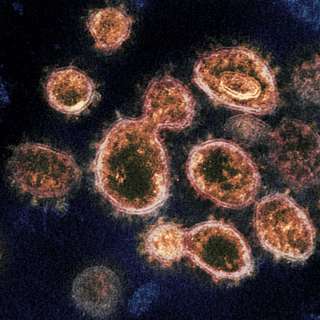
Article: Reducing global catastrophic biological risks

Article: Reducing global catastrophic biological risks

In a few days we'll be putting out a conversation with Dr Greg Lewis, who studies how to prevent global catastrophic biological risks at Oxford's Future of Humanity Institute. Greg also wrote a new ...

15 Huhti 20201h 4min

Emergency episode: Rob & Howie on the menace of COVID-19, and what both governments & individuals might do to help

Emergency episode: Rob & Howie on the menace of COVID-19, and what both governments & individuals might do to help

From home isolation Rob and Howie just recorded an episode on: 1. How many could die in the crisis, and the risk to your health personally. 2. What individuals might be able to do help tackle the coro...

19 Maalis 20201h 52min

Suosittua kategoriassa Koulutus

rss-murhan-anatomia
voi-hyvin-meditaatiot-2
rss-narsisti
psykopodiaa-podcast
rss-vapaudu-voimaasi
rss-niinku-asia-on
psykologia
rss-liian-kuuma-peruna
rss-duodecim-lehti
rss-uskonto-on-tylsaa
rss-valo-minussa-2
adhd-podi
aamukahvilla
kesken
koulu-podcast-2
adhd-tyylilla
jari-sarasvuo-podcast
rss-turun-yliopisto
rss-luonnollinen-synnytys-podcast
rss-laiska-joogi