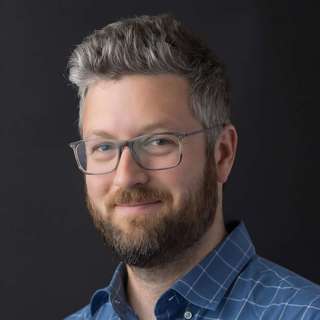
#10 - Nick Beckstead on how to spend billions of dollars preventing human extinction

#10 - Nick Beckstead on how to spend billions of dollars preventing human extinction

What if you were in a position to give away billions of dollars to improve the world? What would you do with it? This is the problem facing Program Officers at the Open Philanthropy Project - people like Dr Nick Beckstead.

Following a PhD in philosophy, Nick works to figure out where money can do the most good. He’s been involved in major grants in a wide range of areas, including ending factory farming through technological innovation, safeguarding the world from advances in biotechnology and artificial intelligence, and spreading rational compassion.

Full transcript, coaching application form, overview of the conversation, and links to resources discussed in the episode:

This episode is a tour through some of the toughest questions ‘effective altruists’ face when figuring out how to best improve the world, including:

* * Should we mostly try to help people currently alive, or future generations? Nick studied this question for years in his PhD thesis, On the Overwhelming Importance of Shaping the Far Future. (The first 31 minutes is a snappier version of my conversation with Toby Ord.)
* Is clean meat (aka *in vitro* meat) technologically feasible any time soon, or should we be looking for plant-based alternatives?
* What are the greatest risks to human civilisation?
* To stop malaria is it more cost-effective to use technology to eliminate mosquitos than to distribute bed nets?
* Should people who want to improve the future work for changes that will be very useful in a specific scenario, or just generally try to improve how well humanity makes decisions?
* What specific jobs should our listeners take in order for Nick to be able to spend more money in useful ways to improve the world?
* Should we expect the future to be better if the economy grows more quickly - or more slowly?

Get free, one-on-one career advice

We’ve helped dozens of people compare between their options, get introductions, and jobs important for the the long-run future. If you want to work on any of the problems discussed in this episode, find out if our coaching can help you.

Jaksot(326)

#181 – Laura Deming on the science that could keep us healthy in our 80s and beyond

#181 – Laura Deming on the science that could keep us healthy in our 80s and beyond

"The question I care about is: What do I want to do? Like, when I'm 80, how strong do I want to be? OK, and then if I want to be that strong, how well do my muscles have to work? OK, and then if that'...

1 Maalis 20241h 37min

#180 – Hugo Mercier on why gullibility and misinformation are overrated

#180 – Hugo Mercier on why gullibility and misinformation are overrated

The World Economic Forum’s global risks survey of 1,400 experts, policymakers, and industry leaders ranked misinformation and disinformation as the number one global risk over the next two years — ran...

21 Helmi 20242h 36min

#179 – Randy Nesse on why evolution left us so vulnerable to depression and anxiety

#179 – Randy Nesse on why evolution left us so vulnerable to depression and anxiety

Mental health problems like depression and anxiety affect enormous numbers of people and severely interfere with their lives. By contrast, we don’t see similar levels of physical ill health in young p...

12 Helmi 20242h 56min

#178 – Emily Oster on what the evidence actually says about pregnancy and parenting

#178 – Emily Oster on what the evidence actually says about pregnancy and parenting

"I think at various times — before you have the kid, after you have the kid — it's useful to sit down and think about: What do I want the shape of this to look like? What time do I want to be spending...

1 Helmi 20242h 22min

#177 – Nathan Labenz on recent AI breakthroughs and navigating the growing rift between AI safety and accelerationist camps

#177 – Nathan Labenz on recent AI breakthroughs and navigating the growing rift between AI safety and accelerationist camps

Back in December we spoke with Nathan Labenz — AI entrepreneur and host of The Cognitive Revolution Podcast — about the speed of progress towards AGI and OpenAI's leadership drama, drawing on Nathan's...

24 Tammi 20242h 47min

#90 Classic episode – Ajeya Cotra on worldview diversification and how big the future could be

#90 Classic episode – Ajeya Cotra on worldview diversification and how big the future could be

You wake up in a mysterious box, and hear the booming voice of God: “I just flipped a coin. If it came up heads, I made ten boxes, labeled 1 through 10 — each of which has a human in it. If it came up...

12 Tammi 20242h 59min

#112 Classic episode – Carl Shulman on the common-sense case for existential risk work and its practical implications

#112 Classic episode – Carl Shulman on the common-sense case for existential risk work and its practical implications

Preventing the apocalypse may sound like an idiosyncratic activity, and it sometimes is justified on exotic grounds, such as the potential for humanity to become a galaxy-spanning civilisation.But the...

8 Tammi 20243h 50min

#111 Classic episode – Mushtaq Khan on using institutional economics to predict effective government reforms

#111 Classic episode – Mushtaq Khan on using institutional economics to predict effective government reforms

If you’re living in the Niger Delta in Nigeria, your best bet at a high-paying career is probably ‘artisanal refining’ — or, in plain language, stealing oil from pipelines.The resulting oil spills dam...

4 Tammi 20243h 22min

Suosittua kategoriassa Koulutus

rss-murhan-anatomia
voi-hyvin-meditaatiot-2
psykopodiaa-podcast
adhd-podi
rss-narsisti
rss-rahamania
rahapuhetta
rss-liian-kuuma-peruna
kesken
rss-uskonto-on-tylsaa
rss-vapaudu-voimaasi
rss-niinku-asia-on
rss-tietoinen-yhteys-podcast-2
aloita-meditaatio
salainen-paivakirja
esa-saarinen-filosofia-ja-systeemiajattelu
filocast-filosofian-perusteet
rss-valo-minussa-2
rss-koira-haudattuna
rss-hereilla