
#10 - Nick Beckstead on how to spend billions of dollars preventing human extinction

#10 - Nick Beckstead on how to spend billions of dollars preventing human extinction

What if you were in a position to give away billions of dollars to improve the world? What would you do with it? This is the problem facing Program Officers at the Open Philanthropy Project - people like Dr Nick Beckstead.

Following a PhD in philosophy, Nick works to figure out where money can do the most good. He’s been involved in major grants in a wide range of areas, including ending factory farming through technological innovation, safeguarding the world from advances in biotechnology and artificial intelligence, and spreading rational compassion.

Full transcript, coaching application form, overview of the conversation, and links to resources discussed in the episode:

This episode is a tour through some of the toughest questions ‘effective altruists’ face when figuring out how to best improve the world, including:

* * Should we mostly try to help people currently alive, or future generations? Nick studied this question for years in his PhD thesis, On the Overwhelming Importance of Shaping the Far Future. (The first 31 minutes is a snappier version of my conversation with Toby Ord.)
* Is clean meat (aka *in vitro* meat) technologically feasible any time soon, or should we be looking for plant-based alternatives?
* What are the greatest risks to human civilisation?
* To stop malaria is it more cost-effective to use technology to eliminate mosquitos than to distribute bed nets?
* Should people who want to improve the future work for changes that will be very useful in a specific scenario, or just generally try to improve how well humanity makes decisions?
* What specific jobs should our listeners take in order for Nick to be able to spend more money in useful ways to improve the world?
* Should we expect the future to be better if the economy grows more quickly - or more slowly?

Get free, one-on-one career advice

We’ve helped dozens of people compare between their options, get introductions, and jobs important for the the long-run future. If you want to work on any of the problems discussed in this episode, find out if our coaching can help you.

Tämä jakso on lisätty Podme-palveluun avoimen RSS-syötteen kautta eikä se ole Podmen omaa tuotantoa. Siksi jakso saattaa sisältää mainontaa.

Jaksot(334)

#114 – Maha Rehman on working with governments to rapidly deliver masks to millions of people

#114 – Maha Rehman on working with governments to rapidly deliver masks to millions of people

It’s hard to believe, but until recently there had never been a large field trial that addressed these simple and obvious questions:1. When ordinary people wear face masks, does it actually reduce the...

22 Loka 20211h 42min
We just put up a new compilation of ten core episodes of the show

We just put up a new compilation of ten core episodes of the show

We recently launched a new podcast feed that might be useful to you and people you know. It's called Effective Altruism: Ten Global Problems, and it's a collection of ten top episodes of this show, se...

20 Loka 20213min

#113 – Varsha Venugopal on using gossip to help vaccinate every child in India

#113 – Varsha Venugopal on using gossip to help vaccinate every child in India

Our failure to make sure all kids globally get all of their basic vaccinations leads to 1.5 million child deaths every year.According to today’s guest, Varsha Venugopal, for the great majority this ha...

18 Loka 20212h 5min
#112 – Carl Shulman on the common-sense case for existential risk work and its practical implications

#112 – Carl Shulman on the common-sense case for existential risk work and its practical implications

Preventing the apocalypse may sound like an idiosyncratic activity, and it sometimes is justified on exotic grounds, such as the potential for humanity to become a galaxy-spanning civilisation.But the...

5 Loka 20213h 48min
#111 – Mushtaq Khan on using institutional economics to predict effective government reforms

#111 – Mushtaq Khan on using institutional economics to predict effective government reforms

If you’re living in the Niger Delta in Nigeria, your best bet at a high-paying career is probably ‘artisanal refining’ — or, in plain language, stealing oil from pipelines. The resulting oil spills da...

10 Syys 20213h 20min
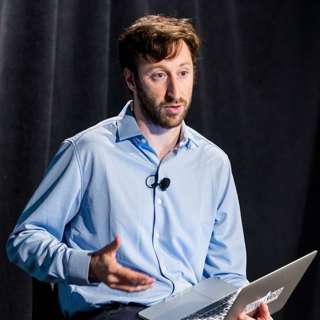
#110 – Holden Karnofsky on building aptitudes and kicking ass

#110 – Holden Karnofsky on building aptitudes and kicking ass

Holden Karnofsky helped create two of the most influential organisations in the effective philanthropy world. So when he outlines a different perspective on career advice than the one we present at 80...

26 Elo 20212h 46min

#109 – Holden Karnofsky on the most important century

#109 – Holden Karnofsky on the most important century

Will the future of humanity be wild, or boring? It's natural to think that if we're trying to be sober and measured, and predict what will really happen rather than spin an exciting story, it's more l...

19 Elo 20212h 19min

#108 – Chris Olah on working at top AI labs without an undergrad degree

#108 – Chris Olah on working at top AI labs without an undergrad degree

Chris Olah has had a fascinating and unconventional career path. Most people who want to pursue a research career feel they need a degree to get taken seriously. But Chris not only doesn't have a P...

11 Elo 20211h 33min

Suosittua kategoriassa Koulutus

rss-murhan-anatomia
psykopodiaa-podcast
voi-hyvin-meditaatiot-2
adhd-podi
rss-rahamania
psykologia
rss-liian-kuuma-peruna
rahapuhetta
rss-niinku-asia-on
kesken
rss-valo-minussa-2
rss-tietoinen-yhteys-podcast-2
filocast-filosofian-perusteet
rss-luonnollinen-synnytys-podcast
rss-narsisti
rss-vapaudu-voimaasi
kehossa
rss-duodecim-lehti
rss-koira-haudattuna
rss-hereilla