#10 - Nick Beckstead on how to spend billions of dollars preventing human extinction

#10 - Nick Beckstead on how to spend billions of dollars preventing human extinction

What if you were in a position to give away billions of dollars to improve the world? What would you do with it? This is the problem facing Program Officers at the Open Philanthropy Project - people like Dr Nick Beckstead.

Following a PhD in philosophy, Nick works to figure out where money can do the most good. He’s been involved in major grants in a wide range of areas, including ending factory farming through technological innovation, safeguarding the world from advances in biotechnology and artificial intelligence, and spreading rational compassion.

Full transcript, coaching application form, overview of the conversation, and links to resources discussed in the episode:

This episode is a tour through some of the toughest questions ‘effective altruists’ face when figuring out how to best improve the world, including:

* * Should we mostly try to help people currently alive, or future generations? Nick studied this question for years in his PhD thesis, On the Overwhelming Importance of Shaping the Far Future. (The first 31 minutes is a snappier version of my conversation with Toby Ord.)
* Is clean meat (aka *in vitro* meat) technologically feasible any time soon, or should we be looking for plant-based alternatives?
* What are the greatest risks to human civilisation?
* To stop malaria is it more cost-effective to use technology to eliminate mosquitos than to distribute bed nets?
* Should people who want to improve the future work for changes that will be very useful in a specific scenario, or just generally try to improve how well humanity makes decisions?
* What specific jobs should our listeners take in order for Nick to be able to spend more money in useful ways to improve the world?
* Should we expect the future to be better if the economy grows more quickly - or more slowly?

Get free, one-on-one career advice

We’ve helped dozens of people compare between their options, get introductions, and jobs important for the the long-run future. If you want to work on any of the problems discussed in this episode, find out if our coaching can help you.

Tämä jakso on lisätty Podme-palveluun avoimen RSS-syötteen kautta eikä se ole Podmen omaa tuotantoa. Siksi jakso saattaa sisältää mainontaa.

Jaksot(334)

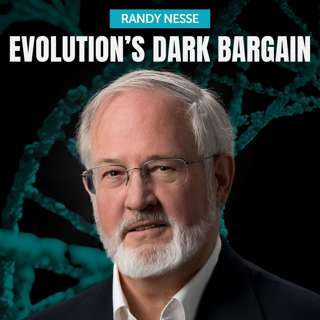
#179 Classic episode – Randy Nesse on why evolution left us so vulnerable to depression and anxiety

#179 Classic episode – Randy Nesse on why evolution left us so vulnerable to depression and anxiety

Mental health problems like depression and anxiety affect enormous numbers of people and severely interfere with their lives. By contrast, we don’t see similar levels of physical ill health in young p...

3 Helmi 2h 51min
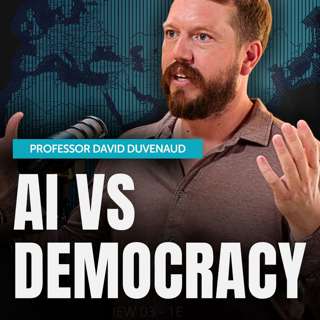
#234 – David Duvenaud on why 'aligned AI' would still kill democracy

#234 – David Duvenaud on why 'aligned AI' would still kill democracy

Democracy might be a brief historical blip. That’s the unsettling thesis of a recent paper, which argues AI that can do all the work a human can do inevitably leads to the “gradual disempowerment” of ...

27 Tammi 2h 31min
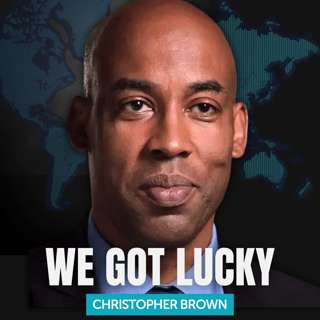
#145 Classic episode – Christopher Brown on why slavery abolition wasn't inevitable

#145 Classic episode – Christopher Brown on why slavery abolition wasn't inevitable

In many ways, humanity seems to have become more humane and inclusive over time. While there’s still a lot of progress to be made, campaigns to give people of different genders, races, sexualities, et...

20 Tammi 2h 56min
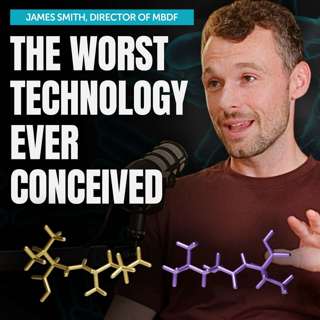
#233 – James Smith on how to prevent a mirror life catastrophe

#233 – James Smith on how to prevent a mirror life catastrophe

When James Smith first heard about mirror bacteria, he was sceptical. But within two weeks, he’d dropped everything to work on it full time, considering it the worst biothreat that he’d seen described...

13 Tammi 2h 9min
#144 Classic episode – Athena Aktipis on why cancer is a fundamental universal phenomena

#144 Classic episode – Athena Aktipis on why cancer is a fundamental universal phenomena

What’s the opposite of cancer? If you answered “cure,” “antidote,” or “antivenom” — you’ve obviously been reading the antonym section at www.merriam-webster.com/thesaurus/cancer.But today’s guest Athe...

9 Tammi 3h 30min
#142 Classic episode – John McWhorter on why the optimal number of languages might be one, and other provocative claims about language

#142 Classic episode – John McWhorter on why the optimal number of languages might be one, and other provocative claims about language

John McWhorter is a linguistics professor at Columbia University specialising in research on creole languages. He's also a content-producing machine, never afraid to give his frank opinion on anything...

6 Tammi 1h 35min
2025 Highlight-o-thon: Oops! All Bests

2025 Highlight-o-thon: Oops! All Bests

It’s that magical time of year once again — highlightapalooza! Stick around for one top bit from each episode we recorded this year, including:Kyle Fish explaining how Anthropic’s AI Claude descends i...

29 Joulu 20251h 40min
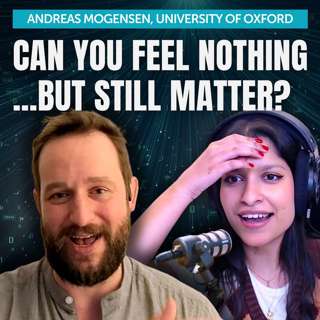
#232 – Andreas Mogensen on what we owe 'philosophical Vulcans' and unconscious beings

#232 – Andreas Mogensen on what we owe 'philosophical Vulcans' and unconscious beings

Most debates about the moral status of AI systems circle the same question: is there something that it feels like to be them? But what if that’s the wrong question to ask? Andreas Mogensen — a senior ...

19 Joulu 20252h 37min

Suosittua kategoriassa Koulutus

rss-murhan-anatomia
psykopodiaa-podcast
voi-hyvin-meditaatiot-2
adhd-podi
rss-niinku-asia-on
rss-rahamania
rss-arkea-ja-aurinkoa-podcast-espanjasta
taytta-tavaraa
kesken
rss-liian-kuuma-peruna
rahapuhetta
kehossa
rss-duodecim-lehti
rss-valo-minussa-2
rss-narsisti
rss-hereilla
dear-ladies
psykologia
ihminen-tavattavissa-tommy-hellsten-instituutti
rss-tyohyvinvoinnin-aakkoset