
#13 - Claire Walsh on testing which policies work & how to get governments to listen to the results

#13 - Claire Walsh on testing which policies work & how to get governments to listen to the results

In both rich and poor countries, government policy is often based on no evidence at all and many programs don’t work. This has particularly harsh effects on the global poor - in some countries governments only spend $100 on each citizen a year so they can’t afford to waste a single dollar.

Enter MIT’s Poverty Action Lab (J-PAL). Since 2003 they’ve conducted experiments to figure out what policies actually help recipients, and then tried to get them implemented by governments and non-profits.

Claire Walsh leads J-PAL’s Government Partnership Initiative, which works to evaluate policies and programs in collaboration with developing world governments, scale policies that have been shown to work, and generally promote a culture of evidence-based policymaking.

Summary, links to career opportunities and topics discussed in the show.

We discussed (her views only, not J-PAL’s):

* How can they get evidence backed policies adopted? Do politicians in the developing world even care whether their programs actually work? Is the norm evidence-based policy, or policy-based evidence?
* Is evidence-based policy an evidence-based strategy itself?
* Which policies does she think would have a particularly large impact on human welfare relative to their cost?
* How did she come to lead one of J-PAL’s departments at 29?
* How do you evaluate the effectiveness of energy and environment programs (Walsh’s area of expertise), and what are the standout approaches in that area?
* 80,000 Hours has warned people about the downsides of starting your career in a non-profit. Walsh started her career in a non-profit and has thrived, so are we making a mistake?
* Other than J-PAL, what are the best places to work in development? What are the best subjects to study? Where can you go network to break into the sector?
* Is living in poverty as bad as we think?

And plenty of other things besides.

We haven’t run an RCT to test whether this episode will actually help your career, but I suggest you listen anyway. Trust my intuition on this one.

Jaksot(324)

#145 Classic episode – Christopher Brown on why slavery abolition wasn't inevitable

#145 Classic episode – Christopher Brown on why slavery abolition wasn't inevitable

In many ways, humanity seems to have become more humane and inclusive over time. While there’s still a lot of progress to be made, campaigns to give people of different genders, races, sexualities, et...

20 Tammi 2h 56min
#233 – James Smith on how to prevent a mirror life catastrophe

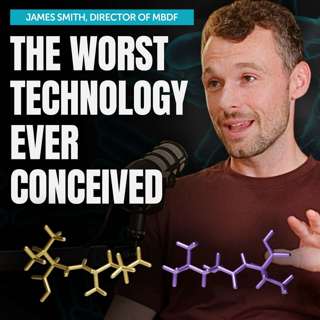
#233 – James Smith on how to prevent a mirror life catastrophe

When James Smith first heard about mirror bacteria, he was sceptical. But within two weeks, he’d dropped everything to work on it full time, considering it the worst biothreat that he’d seen described...

13 Tammi 2h 9min
#144 Classic episode – Athena Aktipis on why cancer is a fundamental universal phenomena

#144 Classic episode – Athena Aktipis on why cancer is a fundamental universal phenomena

What’s the opposite of cancer? If you answered “cure,” “antidote,” or “antivenom” — you’ve obviously been reading the antonym section at www.merriam-webster.com/thesaurus/cancer.But today’s guest Athe...

9 Tammi 3h 30min
#142 Classic episode – John McWhorter on why the optimal number of languages might be one, and other provocative claims about language

#142 Classic episode – John McWhorter on why the optimal number of languages might be one, and other provocative claims about language

John McWhorter is a linguistics professor at Columbia University specialising in research on creole languages. He's also a content-producing machine, never afraid to give his frank opinion on anything...

6 Tammi 1h 35min
2025 Highlight-o-thon: Oops! All Bests

2025 Highlight-o-thon: Oops! All Bests

It’s that magical time of year once again — highlightapalooza! Stick around for one top bit from each episode we recorded this year, including:Kyle Fish explaining how Anthropic’s AI Claude descends i...

29 Joulu 20251h 40min

#232 – Andreas Mogensen on what we owe 'philosophical Vulcans' and unconscious beings

#232 – Andreas Mogensen on what we owe 'philosophical Vulcans' and unconscious beings

Most debates about the moral status of AI systems circle the same question: is there something that it feels like to be them? But what if that’s the wrong question to ask? Andreas Mogensen — a senior ...

19 Joulu 20252h 37min
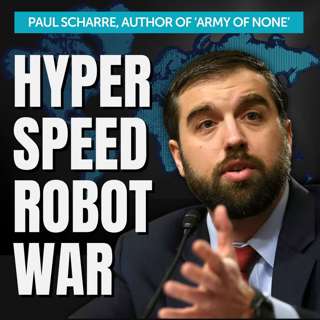
#231 – Paul Scharre on how AI-controlled robots will and won't change war

#231 – Paul Scharre on how AI-controlled robots will and won't change war

In 1983, Stanislav Petrov, a Soviet lieutenant colonel, sat in a bunker watching a red screen flash “MISSILE LAUNCH.” Protocol demanded he report it to superiors, which would very likely trigger a ret...

17 Joulu 20252h 45min
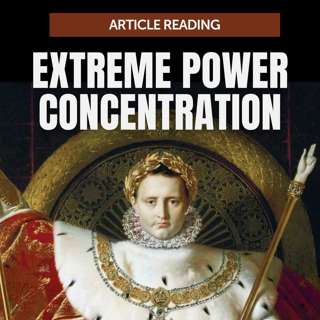
AI might let a few people control everything — permanently (article by Rose Hadshar)

AI might let a few people control everything — permanently (article by Rose Hadshar)

Power is already concentrated today: over 800 million people live on less than $3 a day, the three richest men in the world are worth over $1 trillion, and almost six billion people live in countries ...

12 Joulu 20251h

Suosittua kategoriassa Koulutus

rss-murhan-anatomia
voi-hyvin-meditaatiot-2
rss-narsisti
psykopodiaa-podcast
rss-vapaudu-voimaasi
rss-uskonto-on-tylsaa
psykologia
rss-liian-kuuma-peruna
rss-duodecim-lehti
aamukahvilla
rss-valo-minussa-2
kesken
rss-niinku-asia-on
adhd-podi
koulu-podcast-2
jari-sarasvuo-podcast
rss-xamk-podcast
rss-luonnollinen-synnytys-podcast
rss-laiska-joogi
rss-opi-espanjaa