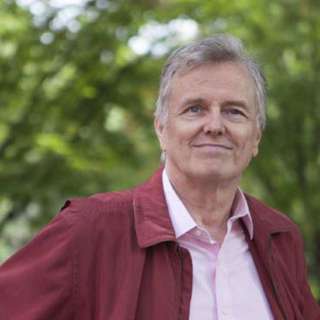

#15 - Phil Tetlock on how chimps beat Berkeley undergrads and when it’s wise to defer to the wise
80,000 Hours Podcast20 Marras 2017

#15 - Phil Tetlock on how chimps beat Berkeley undergrads and when it’s wise to defer to the wise

Prof Philip Tetlock is a social science legend. Over forty years he has researched whose predictions we can trust, whose we can’t and why - and developed methods that allow all of us to be better at predicting the future.

After the Iraq WMDs fiasco, the US intelligence services hired him to figure out how to ensure they’d never screw up that badly again. The result of that work – Superforecasting – was a media sensation in 2015.

Full transcript, brief summary, apply for coaching and links to learn more.

It described Tetlock’s Good Judgement Project, which found forecasting methods so accurate they beat everyone else in open competition, including thousands of people in the intelligence services with access to classified information.

Today he’s working to develop the best forecasting process ever, by combining top human and machine intelligence in the Hybrid Forecasting Competition, which you can sign up and participate in.

We start by describing his key findings, and then push to the edge of what is known about how to foresee the unforeseeable:

* Should people who want to be right just adopt the views of experts rather than apply their own judgement?
* Why are Berkeley undergrads worse forecasters than dart-throwing chimps?
* Should I keep my political views secret, so it will be easier to change them later?
* How can listeners contribute to his latest cutting-edge research?
* What do we know about our accuracy at predicting low-probability high-impact disasters?
* Does his research provide an intellectual basis for populist political movements?
* Was the Iraq War caused by bad politics, or bad intelligence methods?
* What can we learn about forecasting from the 2016 election?
* Can experience help people avoid overconfidence and underconfidence?
* When does an AI easily beat human judgement?
* Could more accurate forecasting methods make the world more dangerous?
* How much does demographic diversity line up with cognitive diversity?
* What are the odds we’ll go to war with China?
* Should we let prediction tournaments run most of the government?

Listen to it. Get free, one-on-one career advice. Want to work on important social science research like Tetlock? We’ve helped hundreds of people compare their options and get introductions. Find out if our coaching can help you.

Jaksot(326)

#231 – Paul Scharre on how AI-controlled robots will and won't change war

#231 – Paul Scharre on how AI-controlled robots will and won't change war

In 1983, Stanislav Petrov, a Soviet lieutenant colonel, sat in a bunker watching a red screen flash “MISSILE LAUNCH.” Protocol demanded he report it to superiors, which would very likely trigger a ret...

17 Joulu 20252h 45min

AI might let a few people control everything — permanently (article by Rose Hadshar)

AI might let a few people control everything — permanently (article by Rose Hadshar)

Power is already concentrated today: over 800 million people live on less than $3 a day, the three richest men in the world are worth over $1 trillion, and almost six billion people live in countries ...

12 Joulu 20251h
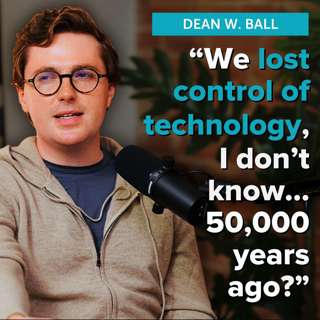
#230 – Dean Ball on how AI is a huge deal — but we shouldn’t regulate it yet

#230 – Dean Ball on how AI is a huge deal — but we shouldn’t regulate it yet

Former White House staffer Dean Ball thinks it's very likely some form of 'superintelligence' arrives in under 20 years. He thinks AI being used for bioweapon research is "a real threat model, obvious...

10 Joulu 20252h 54min

#229 – Marius Hobbhahn on the race to solve AI scheming before models go superhuman

#229 – Marius Hobbhahn on the race to solve AI scheming before models go superhuman

We often worry about AI models “hallucinating” or making honest mistakes. But what happens when a model knows the truth, but decides to deceive you anyway to achieve a goal of its own? This isn’t sci-...

3 Joulu 20253h 3min

Rob & Luisa chat kids, the 2016 fertility crash, and how the 50s invented parenting that makes us miserable

Rob & Luisa chat kids, the 2016 fertility crash, and how the 50s invented parenting that makes us miserable

Global fertility rates aren’t just falling: the rate of decline is accelerating. From 2006 to 2016, fertility dropped gradually, but since 2016 the rate of decline has increased 4.5-fold. In many weal...

25 Marras 20251h 59min

#228 – Eileen Yam on how we're completely out of touch with what the public thinks about AI

#228 – Eileen Yam on how we're completely out of touch with what the public thinks about AI

If you work in AI, you probably think it’s going to boost productivity, create wealth, advance science, and improve your life. If you’re a member of the American public, you probably strongly disagree...

20 Marras 20251h 43min

OpenAI: The nonprofit refuses to be killed (with Tyler Whitmer)

OpenAI: The nonprofit refuses to be killed (with Tyler Whitmer)

Last December, the OpenAI business put forward a plan to completely sideline its nonprofit board. But two state attorneys general have now blocked that effort and kept that board very much alive and k...

11 Marras 20251h 56min
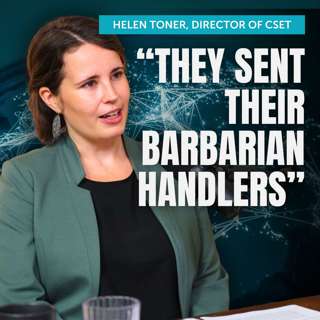
#227 – Helen Toner on the geopolitics of AGI in China and the Middle East

#227 – Helen Toner on the geopolitics of AGI in China and the Middle East

With the US racing to develop AGI and superintelligence ahead of China, you might expect the two countries to be negotiating how they’ll deploy AI, including in the military, without coming to blows. ...

5 Marras 20252h 20min

Suosittua kategoriassa Koulutus

rss-murhan-anatomia
voi-hyvin-meditaatiot-2
psykopodiaa-podcast
rss-narsisti
adhd-podi
rahapuhetta
rss-rahamania
kesken
psykologia
rss-liian-kuuma-peruna
rss-niinku-asia-on
rss-eron-alkemiaa
rss-arkea-ja-aurinkoa-podcast-espanjasta
esa-saarinen-filosofia-ja-systeemiajattelu
rss-duodecim-lehti
rss-vapaudu-voimaasi
rss-luonnollinen-synnytys-podcast
rss-tietoinen-yhteys-podcast-2
rss-finnish-daily-dialogues
ihminen-tavattavissa-tommy-hellsten-instituutti