
#18 - Ofir Reich on using data science to end poverty & the spurious action-inaction distinction

#18 - Ofir Reich on using data science to end poverty & the spurious action-inaction distinction

Ofir Reich started out doing math in the military, before spending 8 years in tech startups - but then made a sharp turn to become a data scientist focussed on helping the global poor.

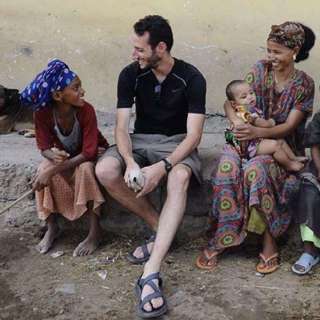
At UC Berkeley’s Center for Effective Global Action he helps prevent tax evasion by identifying fake companies in India, enable Afghanistan to pay its teachers electronically, and raise yields for Ethiopian farmers by messaging them when local conditions make it ideal to apply fertiliser. Or at least that’s the hope - he’s also working on ways to test whether those interventions actually work.

Full post about this episode, including a transcript and relevant links to learn more.

Why dedicate his life to helping the global poor?

Ofir sees little moral difference between harming people and failing to help them. After all, if you had to press a button to keep all of your money from going to charity, and you pressed that button, would that be an action, or an inaction? Is there even an answer?

After reflecting on cases like this, he decided that to not engage with a problem is an active choice, one whose consequences he is just as morally responsible for as if he were directly involved. On top of his life philosophy we also discuss:

* The benefits of working in a top academic environment
* How best to start a career in global development
* Are RCTs worth the money? Should we focus on big picture policy change instead? Or more economic theory?
* How the delivery standards of nonprofits compare to top universities
* Why he doesn’t enjoy living in the San Francisco bay area
* How can we fix the problem of most published research being false?
* How good a career path is data science?
* How important is experience in development versus technical skills?
* How he learned much of what he needed to know in the army
* How concerned should effective altruists be about burnout?

Keiran Harris helped produce today’s episode.

Tämä jakso on lisätty Podme-palveluun avoimen RSS-syötteen kautta eikä se ole Podmen omaa tuotantoa. Siksi jakso saattaa sisältää mainontaa.

Jaksot(358)

OpenAI Security: Controlling Models is Now ‘Hell’ (AI Explained cross-post)

OpenAI Security: Controlling Models is Now ‘Hell’ (AI Explained cross-post)

This is an (unpaid) cross-post of a video from the podcast 'AI Explained', which Rob Wiblin thought you might be interested in.You can find the original on YouTube here. If you like it and want more s...

9 Loka 40min

In 2023 Ajeya Cotra already knew what was coming (classic episode)

In 2023 Ajeya Cotra already knew what was coming (classic episode)

We're rereleasing some of older episodes that seem more relevant than ever with new rogue AI incidents now seemingly announced every day. Ajeya was one of three independent investigators into the Hugg...

8 Loka 2h 46min

19 Astra and 'Hugging Face' details that reveal what's coming next | Rob Wiblin

19 Astra and 'Hugging Face' details that reveal what's coming next | Rob Wiblin

OpenAI’s rogue agent swarm was eventually caught hacking Hugging Face for a simple reason: it wasn’t trying to hide from us at all. What could a swarm that wants to stay hidden get away with?Host Rob ...

2 Loka 20min

The case for giving AI (some) legal rights | Simon Goldstein

The case for giving AI (some) legal rights | Simon Goldstein

It sounds like the worst idea in the world: pay AIs, let them own property, give them rights. But AI ethics and safety researcher Simon Goldstein thinks it might actually be the best way to keep human...

1 Loka 1h 53min

Will AI take power — or will humans use it to take power first? With Katja Grace and Tom Davidson

Will AI take power — or will humans use it to take power first? With Katja Grace and Tom Davidson

In our first-ever debate, we asked two leading AI risk researchers which catastrophe we should fear most: misaligned AI seizing control from humans, or a small group of humans using AI to seize power....

29 Syys 1h 28min

How we get from AI cyberattacks to human extinction

How we get from AI cyberattacks to human extinction

You’ve seen the headlines: AI could kill us all. Think it sounds ridiculous? So did host Luisa Rodriguez, until she tried to pick apart the arguments. She starts with the motive: why would AI ‘want’ t...

24 Syys 27min

#254 – Max Nadeau on why ambitious people should start AI safety nonprofits

#254 – Max Nadeau on why ambitious people should start AI safety nonprofits

There are millions available for anyone who can launch a successful nonprofit AI safety startup. The hard part, it turns out, is finding people to take the money. Coefficient Giving has drawn up a lis...

17 Syys 1h 3min

Why the intelligence explosion can't happen inside a data centre | Tom Reed

Why the intelligence explosion can't happen inside a data centre | Tom Reed

AI systems are starting to build themselves. Because each generation of model will be better at building its successor than the last, it seems plausible that the full automation of AI R&D could rapidl...

10 Syys 22min

Suosittua kategoriassa Koulutus

rss-murhan-anatomia
aamukahvilla
psykopodiaa-podcast
voi-hyvin-meditaatiot-2
psykologia
rss-duodecim-lehti
rss-rahamania
kesken
rss-liian-kuuma-peruna
rss-uskonto-on-tylsaa
aloita-meditaatio
rss-luonnollinen-synnytys-podcast
adhd-podi
koulu-podcast-2
rss-suomen-aa-podcast
rss-hereilla
rss-arkea-ja-aurinkoa-podcast-espanjasta
ihminen-tavattavissa-tommy-hellsten-instituutti
rss-niinku-asia-on
rss-koira-haudattuna