#27 - Dr Tom Inglesby on careers and policies that reduce global catastrophic biological risks

#27 - Dr Tom Inglesby on careers and policies that reduce global catastrophic biological risks

How about this for a movie idea: a main character has to prevent a new contagious strain of Ebola spreading around the world. She’s the best of the best. So good in fact, that her work on early detection systems contains the strain at its source. Ten minutes into the movie, we see the results of her work – nothing happens. Life goes on as usual. She continues to be amazingly competent, and nothing continues to go wrong. Fade to black. Roll credits.

If your job is to prevent catastrophes, success is when nobody has to pay attention to you. But without regular disasters to remind authorities why they hired you in the first place, they can’t tell if you’re actually achieving anything. And when budgets come under pressure you may find that success condemns you to the chopping block.

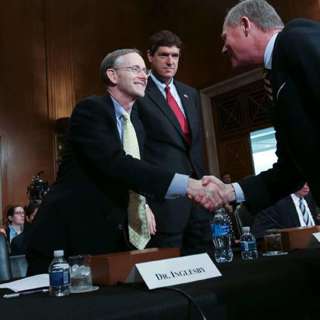
Dr Tom Inglesby, Director of the Center for Health Security at the Johns Hopkins Bloomberg School of Public Health, worries this may be about to happen to the scientists working on the ‘Global Health Security Agenda’.

In 2014 Ebola showed the world why we have to detect and contain new diseases before they spread, and that when it comes to contagious diseases the nations of the world sink or swim together. Fifty countries decided to work together to make sure all their health systems were up to the challenge. Back then Congress provided 5 years’ funding to help some of the world’s poorest countries build the basic health security infrastructure necessary to control pathogens before they could reach the US.

Links to learn more, job opportunities, and full transcript.

But with Ebola fading from public memory and no recent tragedies to terrify us, Congress may not renew that funding and the project could fall apart. (Learn more about how you can help: http://www.nti.org/analysis/articles/protect-us-investments-global-health-security/ )

But there are positive signs as well - the center Inglesby leads recently received a $16 million grant from the Open Philanthropy Project to further their work preventing global catastrophes. It also runs the [Emerging Leaders in Biosecurity Fellowship](http://www.centerforhealthsecurity.org/our-work/emergingbioleaders/) to train the next generation of biosecurity experts for the US government. And Inglesby regularly testifies to Congress on the threats we all face and how to address them.

In this in-depth interview we try to provide concrete guidance for listeners who want to to pursue a career in health security. Some of the topics we cover include:

* Should more people in medicine work on security?
* What are the top jobs for people who want to improve health security and how do they work towards getting them?
* What people can do to protect funding for the Global Health Security Agenda.
* Should we be more concerned about natural or human caused pandemics? Which is more neglected?
* Should we be allocating more attention and resources to global catastrophic risk scenarios?
* Why are senior figures reluctant to prioritize one project or area at the expense of another?
* What does Tom think about the idea that in the medium term, human-caused pandemics will pose a far greater risk than natural pandemics, and so we should focus on specific counter-measures?
* Are the main risks and solutions understood, and it’s just a matter of implementation? Or is the principal task to identify and understand them?
* How is the current US government performing in these areas?
* Which agencies are empowered to think about low probability high magnitude events?
And more...

Get this episode by subscribing: search for '80,000 Hours' in your podcasting app.

The 80,000 Hours Podcast is produced by Keiran Harris.

Jaksot(325)

#138 Classic episode – Sharon Hewitt Rawlette on why pleasure and pain are the only things that intrinsically matter

#138 Classic episode – Sharon Hewitt Rawlette on why pleasure and pain are the only things that intrinsically matter

What in the world is intrinsically good — good in itself even if it has no other effects? Over the millennia, people have offered many answers: joy, justice, equality, accomplishment, loving god, wisd...

22 Tammi 20252h 25min
#134 Classic episode – Ian Morris on what big-picture history teaches us

#134 Classic episode – Ian Morris on what big-picture history teaches us

Wind back 1,000 years and the moral landscape looks very different to today. Most farming societies thought slavery was natural and unobjectionable, premarital sex was an abomination, women should obe...

15 Tammi 20253h 40min

#140 Classic episode – Bear Braumoeller on the case that war isn’t in decline

#140 Classic episode – Bear Braumoeller on the case that war isn’t in decline

Is war in long-term decline? Steven Pinker's The Better Angels of Our Nature brought this previously obscure academic question to the centre of public debate, and pointed to rates of death in war to a...

8 Tammi 20252h 48min

2024 Highlightapalooza! (The best of The 80,000 Hours Podcast this year)

2024 Highlightapalooza! (The best of The 80,000 Hours Podcast this year)

"A shameless recycling of existing content to drive additional audience engagement on the cheap… or the single best, most valuable, and most insight-dense episode we put out in the entire year, depend...

27 Joulu 20242h 50min

#211 – Sam Bowman on why housing still isn't fixed and what would actually work

#211 – Sam Bowman on why housing still isn't fixed and what would actually work

Rich countries seem to find it harder and harder to do anything that creates some losers. People who don’t want houses, offices, power stations, trains, subway stations (or whatever) built in their ar...

19 Joulu 20243h 25min
#210 – Cameron Meyer Shorb on dismantling the myth that we can’t do anything to help wild animals

#210 – Cameron Meyer Shorb on dismantling the myth that we can’t do anything to help wild animals

"I really don’t want to give the impression that I think it is easy to make predictable, controlled, safe interventions in wild systems where there are many species interacting. I don’t think it’s eas...

29 Marras 20243h 21min

#209 – Rose Chan Loui on OpenAI’s gambit to ditch its nonprofit

#209 – Rose Chan Loui on OpenAI’s gambit to ditch its nonprofit

One OpenAI critic calls it “the theft of at least the millennium and quite possibly all of human history.” Are they right?Back in 2015 OpenAI was but a humble nonprofit. That nonprofit started a for-p...

27 Marras 20241h 22min

#208 – Elizabeth Cox on the case that TV shows, movies, and novels can improve the world

#208 – Elizabeth Cox on the case that TV shows, movies, and novels can improve the world

"I think stories are the way we shift the Overton window — so widen the range of things that are acceptable for policy and palatable to the public. Almost by definition, a lot of things that are going...

21 Marras 20242h 22min

Suosittua kategoriassa Koulutus

rss-murhan-anatomia
voi-hyvin-meditaatiot-2
rss-narsisti
adhd-podi
psykopodiaa-podcast
rss-rahamania
rss-uskonto-on-tylsaa
rss-valo-minussa-2
rss-vapaudu-voimaasi
rss-duodecim-lehti
rss-niinku-asia-on
mielipaivakirja
rahapuhetta
aamukahvilla
ilona-rauhala
kesken
dear-ladies
rss-eron-alkemiaa
nakokulmia-rikollisuudesta-irrottautumiseen
rss-arkea-ja-aurinkoa-podcast-espanjasta