
#30 - Eva Vivalt on how little social science findings generalize from one study to another

#30 - Eva Vivalt on how little social science findings generalize from one study to another

If we have a study on the impact of a social program in a particular place and time, how confident can we be that we’ll get a similar result if we study the same program again somewhere else?

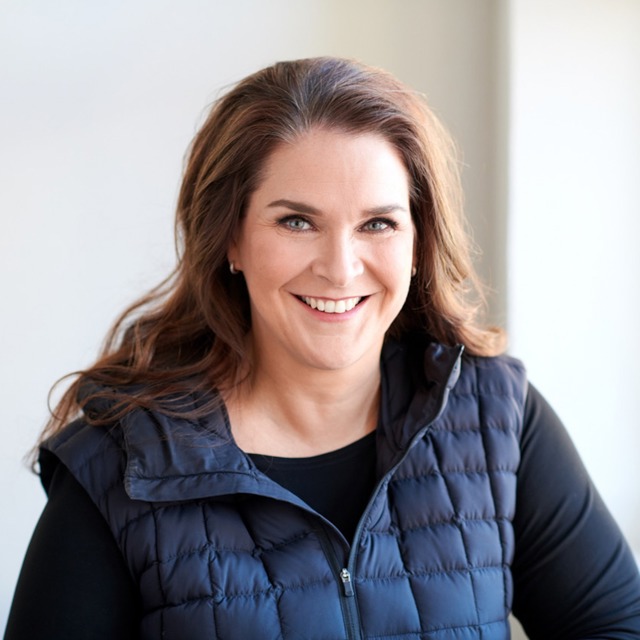
Dr Eva Vivalt is a lecturer in the Research School of Economics at the Australian National University. She compiled a huge database of impact evaluations in global development - including 15,024 estimates from 635 papers across 20 types of intervention - to help answer this question.

Her finding: not confident at all.

The typical study result differs from the average effect found in similar studies so far by almost 100%. That is to say, if all existing studies of a particular education program find that it improves test scores by 10 points - the next result is as likely to be negative or greater than 20 points, as it is to be between 0-20 points.

She also observed that results from smaller studies done with an NGO - often pilot studies - were more likely to look promising. But when governments tried to implement scaled-up versions of those programs, their performance would drop considerably.

For researchers hoping to figure out what works and then take those programs global, these failures of generalizability and ‘external validity’ should be disconcerting.

Is ‘evidence-based development’ writing a cheque its methodology can’t cash? Should this make us invest less in empirical research, or more to get actually reliable results?

Or as some critics say, is interest in impact evaluation distracting us from more important issues, like national or macroeconomic reforms that can’t be easily trialled?

We discuss this as well as Eva’s other research, including Y Combinator’s basic income study where she is a principal investigator.

Full transcript, links to related papers, and highlights from the conversation.

Links mentioned at the start of the show:
* 80,000 Hours Job Board
* 2018 Effective Altruism Survey

**Get this episode by subscribing to our podcast on the world’s most pressing problems and how to solve them: type *80,000 Hours* into your podcasting app.**

Questions include:

* What is the YC basic income study looking at, and what motivates it?
* How do we get people to accept clean meat?
* How much can we generalize from impact evaluations?
* How much can we generalize from studies in development economics?
* Should we be running more or fewer studies?
* Do most social programs work or not?
* The academic incentives around data aggregation
* How much can impact evaluations inform policy decisions?
* How often do people change their minds?
* Do policy makers update too much or too little in the real world?
* How good or bad are the predictions of experts? How does that change when looking at individuals versus the average of a group?
* How often should we believe positive results?
* What’s the state of development economics?
* Eva’s thoughts on our article on social interventions
* How much can we really learn from being empirical?
* How much should we really value RCTs?
* Is an Economics PhD overrated or underrated?

Get this episode by subscribing to our podcast: search for '80,000 Hours' in your podcasting app.

The 80,000 Hours Podcast is produced by Keiran Harris.

Jaksot(333)

'95% of AI Pilots Fail': The hidden agenda behind the viral stat that misled millions

'95% of AI Pilots Fail': The hidden agenda behind the viral stat that misled millions

You might have heard that '95% of corporate AI pilots' are failing. It was one of the most widely cited AI statistics of 2025, parroted by media outlets everywhere. It helped trigger a Nasdaq selloff ...

28 Huhti 10min

#242 – Will MacAskill on how we survive the 'intelligence explosion,' AI character, and the case for 'viatopia'

#242 – Will MacAskill on how we survive the 'intelligence explosion,' AI character, and the case for 'viatopia'

Hundreds of millions already turn to AI on the most personal of topics — therapy, political opinions, and how to treat others. And as AI takes over more of the economy, the character of these systems ...

22 Huhti 3h 9min

Risks from power-seeking AI systems (article narration by Zershaaneh Qureshi)

Risks from power-seeking AI systems (article narration by Zershaaneh Qureshi)

Hundreds of prominent AI scientists and other notable figures signed a statement in 2023 saying that mitigating the risk of extinction from AI should be a global priority. At 80,000 Hours, we’ve consi...

16 Huhti 1h 29min

How scary is Claude Mythos? 303 pages in 21 minutes

How scary is Claude Mythos? 303 pages in 21 minutes

With Claude Mythos we have an AI that knows when it's being tested, can obscure its reasoning when it wants, and is better at breaking into (and out of) computers than any human alive. Rob Wiblin work...

10 Huhti 21min

Village gossip, pesticide bans, and gene drives: 17 experts on the future of global health

Village gossip, pesticide bans, and gene drives: 17 experts on the future of global health

What does it really take to lift millions out of poverty and prevent needless deaths?In this special compilation episode, 17 past guests — including economists, nonprofit founders, and policy advisors...

7 Huhti 4h 6min

What everyone is missing about Anthropic vs the Pentagon. And: The Meta leaks are worse than you think.

What everyone is missing about Anthropic vs the Pentagon. And: The Meta leaks are worse than you think.

When the Pentagon tried to strong-arm Anthropic into dropping its ban on AI-only kill decisions and mass domestic surveillance, the company refused. Its critics went on the attack: Anthropic and its s...

3 Huhti 20min

#241 – Richard Moulange on how now AI codes viable genomes from scratch and outperforms virologists at lab work — what could go wrong?

#241 – Richard Moulange on how now AI codes viable genomes from scratch and outperforms virologists at lab work — what could go wrong?

Last September, scientists used an AI model to design genomes for entirely new bacteriophages (viruses that infect bacteria). They then built them in a lab. Many were viable. And despite being entirel...

31 Maalis 3h 7min

#240 – Samuel Charap on how a Ukraine ceasefire could accidentally set Europe up for a bigger war

#240 – Samuel Charap on how a Ukraine ceasefire could accidentally set Europe up for a bigger war

Many people believe a ceasefire in Ukraine will leave Europe safer. But today's guest lays out how a deal could potentially generate insidious new risks — leaving us in a situation that's equally dang...

24 Maalis 1h 12min

Suosittua kategoriassa Koulutus

rss-murhan-anatomia
psykopodiaa-podcast
voi-hyvin-meditaatiot-2
adhd-podi
rss-niinku-asia-on
rss-liian-kuuma-peruna
rss-arkea-ja-aurinkoa-podcast-espanjasta
taytta-tavaraa
rss-rahamania
kesken
rss-duodecim-lehti
rahapuhetta
kehossa
dear-ladies
ihminen-tavattavissa-tommy-hellsten-instituutti
rss-valo-minussa-2
rss-narsisti
psykologia
rss-tietoinen-yhteys-podcast-2
rss-tyohyvinvoinnin-aakkoset