

#37 - GiveWell picks top charities by estimating the unknowable. James Snowden on how they do it.
80,000 Hours Podcast16 Heinä 2018

#37 - GiveWell picks top charities by estimating the unknowable. James Snowden on how they do it.

What’s the value of preventing the death of a 5-year-old child, compared to a 20-year-old, or an 80-year-old?

The global health community has generally regarded the value as proportional to the number of health-adjusted life-years the person has remaining - but GiveWell, one of the world’s foremost charity evaluators, no longer uses that approach.

They found that contrary to the years-remaining’ method, many of their staff actually value preventing the death of an adult more than preventing the death of a young child. However there’s plenty of disagreement: the team’s estimates of the relative value span a four-fold range.

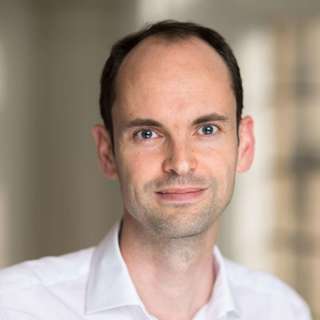
As James Snowden - a research consultant at GiveWell - explains in this episode, there’s no way around making these controversial judgement calls based on limited information. If you try to ignore a question like this, you just implicitly take an unreflective stand on it instead. And for each charity they look into there’s 1 or 2 dozen of these highly uncertain parameters they need to estimate.

GiveWell has been trying to find better ways to make these decisions since its inception in 2007. Lives hang in the balance, so they want their staff to say what they really believe and bring their private knowledge to the table, rather than just defer to a imaginary consensus.

Their strategy is a massive spreadsheet that lists dozens of things they need to estimate, and asking every staff member to give a figure and justification. Then once a year, the GiveWell team get together and try to identify what they really disagree about and think through what evidence it would take to change their minds.

Full transcript, summary of the conversation and links to learn more.

Often the people who have the greatest familiarity with a particular intervention are the ones who drive the decision, as others defer to them. But the group can also end up with very different figures, based on different prior beliefs about moral issues and how the world works. In that case then use the median of everyone’s best guess to make their key decisions.

In making his estimate of the relative badness of dying at different ages, James specifically considered two factors: how many years of life do you lose, and how much interest do you have in those future years? Currently, James believes that the worst time for a person to die is around 8 years of age.

We discuss his experiences with such calculations, as well as a range of other topics:

* Why GiveWell’s recommendations have changed more than it looks.
* What are the biggest research priorities for GiveWell at the moment?
* How do you take into account the long-term knock-on effects from interventions?
* If GiveWell's advice were going to end up being very different in a couple years' time, how might that happen?
* Are there any charities that James thinks are really cost-effective which GiveWell hasn't funded yet?
* How does domestic government spending in the developing world compare to effective charities?
* What are the main challenges with policy related interventions?
* How much time do you spend discovering new interventions?

Get this episode by subscribing to our podcast on the world’s most pressing problems and how to solve them: search for '80,000 Hours' in your podcasting app.

The 80,000 Hours Podcast is produced by Keiran Harris.

Jaksot(326)

#13 - Claire Walsh on testing which policies work & how to get governments to listen to the results

#13 - Claire Walsh on testing which policies work & how to get governments to listen to the results

In both rich and poor countries, government policy is often based on no evidence at all and many programs don’t work. This has particularly harsh effects on the global poor - in some countries governm...

31 Loka 201752min
#12 - Beth Cameron works to stop you dying in a pandemic. Here’s what keeps her up at night.

#12 - Beth Cameron works to stop you dying in a pandemic. Here’s what keeps her up at night.

“When you're in the middle of a crisis and you have to ask for money, you're already too late.” That’s Dr Beth Cameron, who leads Global Biological Policy and Programs at the Nuclear Threat Initiative...

25 Loka 20171h 45min

#11 - Spencer Greenberg on speeding up social science 10-fold & why plenty of startups cause harm

#11 - Spencer Greenberg on speeding up social science 10-fold & why plenty of startups cause harm

Do most meat eaters think it’s wrong to hurt animals? Do Americans think climate change is likely to cause human extinction? What is the best, state-of-the-art therapy for depression? How can we make ...

17 Loka 20171h 29min
#10 - Nick Beckstead on how to spend billions of dollars preventing human extinction

#10 - Nick Beckstead on how to spend billions of dollars preventing human extinction

What if you were in a position to give away billions of dollars to improve the world? What would you do with it? This is the problem facing Program Officers at the Open Philanthropy Project - people l...

11 Loka 20171h 51min
#9 - Christine Peterson on how insecure computers could lead to global disaster, and how to fix it

#9 - Christine Peterson on how insecure computers could lead to global disaster, and how to fix it

Take a trip to Silicon Valley in the 70s and 80s, when going to space sounded like a good way to get around environmental limits, people started cryogenically freezing themselves, and nanotechnology l...

4 Loka 20171h 45min
#8 - Lewis Bollard on how to end factory farming in our lifetimes

#8 - Lewis Bollard on how to end factory farming in our lifetimes

Every year tens of billions of animals are raised in terrible conditions in factory farms before being killed for human consumption. Over the last two years Lewis Bollard – Project Officer for Farm An...

27 Syys 20173h 16min

#7 - Julia Galef on making humanity more rational, what EA does wrong, and why Twitter isn’t all bad

#7 - Julia Galef on making humanity more rational, what EA does wrong, and why Twitter isn’t all bad

The scientific revolution in the 16th century was one of the biggest societal shifts in human history, driven by the discovery of new and better methods of figuring out who was right and who was wrong...

13 Syys 20171h 14min
#6 - Toby Ord on why the long-term future matters more than anything else & what to do about it

#6 - Toby Ord on why the long-term future matters more than anything else & what to do about it

Of all the people whose well-being we should care about, only a small fraction are alive today. The rest are members of future generations who are yet to exist. Whether they’ll be born into a world th...

6 Syys 20172h 8min

Suosittua kategoriassa Koulutus

rss-murhan-anatomia
voi-hyvin-meditaatiot-2
psykopodiaa-podcast
rss-narsisti
adhd-podi
rahapuhetta
rss-rahamania
kesken
psykologia
rss-liian-kuuma-peruna
rss-niinku-asia-on
esa-saarinen-filosofia-ja-systeemiajattelu
rss-eron-alkemiaa
rss-luonnollinen-synnytys-podcast
rss-arkea-ja-aurinkoa-podcast-espanjasta
rss-duodecim-lehti
rss-koira-haudattuna
rss-vapaudu-voimaasi
rss-valo-minussa-2
rss-finnish-daily-dialogues