
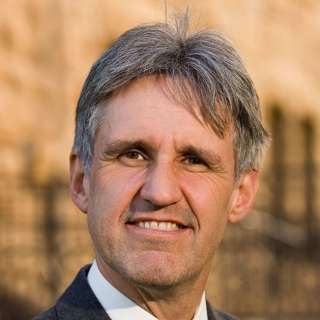
#38 - Yew-Kwang Ng on anticipating effective altruism decades ago & how to make a much happier world
80,000 Hours Podcast26 Heinä 2018

#38 - Yew-Kwang Ng on anticipating effective altruism decades ago & how to make a much happier world

Will people who think carefully about how to maximize welfare eventually converge on the same views?

The effective altruism community has spent a lot of time over the past 10 years debating how best to increase happiness and reduce suffering, and gradually narrowed in on the world’s poorest people, all animals capable of suffering, and future generations.

Yew-Kwang Ng, Professor of Economics at Nanyang Technological University in Singapore, was independently working on this exact question since the 70s. Many of his conclusions have ended up foreshadowing what is now conventional wisdom within effective altruism - though other views he holds remain controversial or little-known.

For instance, he thinks we ought to explore increasing pleasure via direct brain stimulation, and that genetic engineering may be an important tool for increasing happiness in the future.

His work has suggested that the welfare of most wild animals is on balance negative and he thinks that in the future this is a problem humanity might work to solve. Yet he thinks that greatly improved conditions for farm animals could eventually justify eating meat.

He has spent most of his life advocating for the view that happiness, broadly construed, is the only intrinsically valuable thing.

If it’s true that careful researchers will converge as Prof Ng believes, these ideas may prove as prescient as his other, now widely accepted, opinions.

Link to our summary and appreciation of Kwang’s top publications and insights throughout a lifetime of research.

Kwang has led an exceptional life. While in high school he was drawn to physics, mathematics, and philosophy, yet he chose to study economics because of his dream: to establish communism in an independent Malaya.

But events in the Soviet Union and China, in addition to his burgeoning knowledge and academic appreciation of economics, would change his views about the practicability of communism. He would soon complete his journey from young revolutionary to academic economist, and eventually become a columnist writing in support of Deng Xiaoping’s Chinese economic reforms in the 80s.

He got his PhD at Sydney University in 1971, and has since published over 250 refereed papers - covering economics, biology, politics, mathematics, philosophy, psychology, and sociology.

He's most well-known for his work in welfare economics, and proposed ‘welfare biology’ as a new field of study. In 2007, he was made a Distinguished Fellow of the Economic Society of Australia, the highest award that the society bestows.

Links to learn more, summary and full transcript.

In this episode we discuss how he developed some of his most unusual ideas and his fascinating life story, including:

* Why Kwang believes that *’Happiness Is Absolute, Universal, Ultimate, Unidimensional, Cardinally Measurable and Interpersonally Comparable’*
* What are the most pressing questions in economics?
* Did Kwang have to worry about censorship from the Chinese government when promoting market economics, or concern for animal welfare?
* Welfare economics and where Kwang thinks it went wrong

Get this episode by subscribing to our podcast on the world’s most pressing problems and how to solve them: search for '80,000 Hours' in your podcasting app.

The 80,000 Hours Podcast is produced by Keiran Harris.

Jaksot(332)

#134 Classic episode – Ian Morris on what big-picture history teaches us

#134 Classic episode – Ian Morris on what big-picture history teaches us

Wind back 1,000 years and the moral landscape looks very different to today. Most farming societies thought slavery was natural and unobjectionable, premarital sex was an abomination, women should obe...

15 Tammi 20253h 40min

#140 Classic episode – Bear Braumoeller on the case that war isn’t in decline

#140 Classic episode – Bear Braumoeller on the case that war isn’t in decline

Is war in long-term decline? Steven Pinker's The Better Angels of Our Nature brought this previously obscure academic question to the centre of public debate, and pointed to rates of death in war to a...

8 Tammi 20252h 48min

2024 Highlightapalooza! (The best of The 80,000 Hours Podcast this year)

2024 Highlightapalooza! (The best of The 80,000 Hours Podcast this year)

"A shameless recycling of existing content to drive additional audience engagement on the cheap… or the single best, most valuable, and most insight-dense episode we put out in the entire year, depend...

27 Joulu 20242h 50min

#211 – Sam Bowman on why housing still isn't fixed and what would actually work

#211 – Sam Bowman on why housing still isn't fixed and what would actually work

Rich countries seem to find it harder and harder to do anything that creates some losers. People who don’t want houses, offices, power stations, trains, subway stations (or whatever) built in their ar...

19 Joulu 20243h 25min
#210 – Cameron Meyer Shorb on dismantling the myth that we can’t do anything to help wild animals

#210 – Cameron Meyer Shorb on dismantling the myth that we can’t do anything to help wild animals

"I really don’t want to give the impression that I think it is easy to make predictable, controlled, safe interventions in wild systems where there are many species interacting. I don’t think it’s eas...

29 Marras 20243h 21min

#209 – Rose Chan Loui on OpenAI’s gambit to ditch its nonprofit

#209 – Rose Chan Loui on OpenAI’s gambit to ditch its nonprofit

One OpenAI critic calls it “the theft of at least the millennium and quite possibly all of human history.” Are they right?Back in 2015 OpenAI was but a humble nonprofit. That nonprofit started a for-p...

27 Marras 20241h 22min

#208 – Elizabeth Cox on the case that TV shows, movies, and novels can improve the world

#208 – Elizabeth Cox on the case that TV shows, movies, and novels can improve the world

"I think stories are the way we shift the Overton window — so widen the range of things that are acceptable for policy and palatable to the public. Almost by definition, a lot of things that are going...

21 Marras 20242h 22min
#207 – Sarah Eustis-Guthrie on why she shut down her charity, and why more founders should follow her lead

#207 – Sarah Eustis-Guthrie on why she shut down her charity, and why more founders should follow her lead

"I think one of the reasons I took [shutting down my charity] so hard is because entrepreneurship is all about this bets-based mindset. So you say, “I’m going to take a bunch of bets. I’m going to tak...

14 Marras 20242h 58min

Suosittua kategoriassa Koulutus

rss-murhan-anatomia
psykopodiaa-podcast
voi-hyvin-meditaatiot-2
adhd-podi
rss-tietoinen-yhteys-podcast-2
rss-valo-minussa-2
psykologia
rss-liian-kuuma-peruna
rss-rahamania
kesken
rss-niinku-asia-on
rss-arkea-ja-aurinkoa-podcast-espanjasta
rahapuhetta
rss-uskonto-on-tylsaa
rss-vapaudu-voimaasi
jari-sarasvuo-podcast
ihminen-tavattavissa-tommy-hellsten-instituutti
rss-hereilla
aamukahvilla
dear-ladies