

#41 - David Roodman on incarceration, geomagnetic storms, & becoming a world-class researcher

#41 - David Roodman on incarceration, geomagnetic storms, & becoming a world-class researcher

With 698 inmates per 100,000 citizens, the U.S. is by far the leader among large wealthy nations in incarceration. But what effect does imprisonment actually have on crime?

According to David Roodman, Senior Advisor to the Open Philanthropy Project, the marginal effect is zero.

* 80,000 HOURS IMPACT SURVEY - Let me know how this show has helped you with your career.
* ROB'S AUDIOBOOK RECOMMENDATIONS

This stunning rebuke to the American criminal justice system comes from the man Holden Karnofsky’s called "the gold standard for in-depth quantitative research", whose other investigations include the risk of geomagnetic storms, whether deworming improves health and test scores, and the development impacts of microfinance.

Links to learn more, summary and full transcript.

The effects of crime can be split into three categories; before, during, and after.

Does having tougher sentences deter people from committing crime?

After reviewing studies on gun laws and ‘three strikes’ in California, David concluded that the effect of deterrence is zero.

Does imprisoning more people reduce crime by incapacitating potential offenders?

Here he says yes, noting that crimes like motor vehicle theft have gone up in a way that seems pretty clearly connected with recent Californian criminal justice reforms (though the effect on violent crime is far lower).

Finally, do the after-effects of prison make you more or less likely to commit future crimes?

This one is more complicated.

Concerned that he was biased towards a comfortable position against incarceration, David did a cost-benefit analysis using both his favored reading of the evidence and the devil's advocate view; that there is deterrence and that the after-effects are beneficial.

For the devil’s advocate position David used the highest assessment of the harm caused by crime, which suggests a year of prison prevents about $92,000 in crime. But weighed against a lost year of liberty, valued at $50,000, plus the cost of operating prisons, the numbers came out exactly the same.

So even using the least-favorable cost-benefit valuation of the least favorable reading of the evidence -- it just breaks even.

The argument for incarceration melts further when you consider the significant crime that occurs within prisons, de-emphasised because of a lack of data and a perceived lack of compassion for inmates.

In today’s episode we discuss how to conduct such impactful research, and how to proceed having reached strong conclusions.

We also cover:

* How do you become a world class researcher? What kinds of character traits are important?
* Are academics aware of following perverse incentives?
* What’s involved in data replication? How often do papers replicate?
* The politics of large orgs vs. small orgs
* Geomagnetic storms as a potential cause area
* How much does David rely on interviews with experts?
* The effects of deworming on child health and test scores
* Should we have more ‘data vigilantes’?
* What are David’s critiques of effective altruism?
* What are the pros and cons of starting your career in the think tank world?

Get this episode by subscribing to our podcast on the world’s most pressing problems and how to solve them: type 80,000 Hours into your podcasting app. Or read the transcript below.

The 80,000 Hours Podcast is produced by Keiran Harris.

Jaksot(320)

#75 – Michelle Hutchinson on what people most often ask 80,000 Hours

#75 – Michelle Hutchinson on what people most often ask 80,000 Hours

Since it was founded, 80,000 Hours has done one-on-one calls to supplement our online content and offer more personalised advice. We try to help people get clear on their most plausible paths, the key...

28 Huhti 20202h 13min

#74 – Dr Greg Lewis on COVID-19 & catastrophic biological risks

#74 – Dr Greg Lewis on COVID-19 & catastrophic biological risks

Our lives currently revolve around the global emergency of COVID-19; you’re probably reading this while confined to your house, as the death toll from the worst pandemic since 1918 continues to rise. ...

17 Huhti 20202h 37min
Article: Reducing global catastrophic biological risks

Article: Reducing global catastrophic biological risks

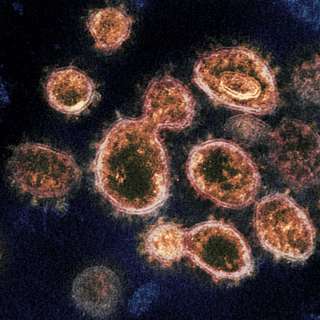
In a few days we'll be putting out a conversation with Dr Greg Lewis, who studies how to prevent global catastrophic biological risks at Oxford's Future of Humanity Institute. Greg also wrote a new ...

15 Huhti 20201h 4min
Emergency episode: Rob & Howie on the menace of COVID-19, and what both governments & individuals might do to help

Emergency episode: Rob & Howie on the menace of COVID-19, and what both governments & individuals might do to help

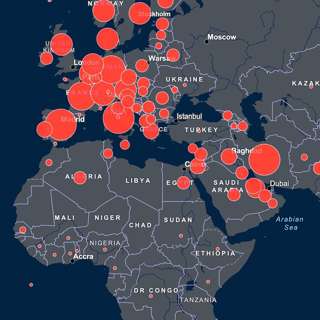
From home isolation Rob and Howie just recorded an episode on: 1. How many could die in the crisis, and the risk to your health personally. 2. What individuals might be able to do help tackle the coro...

19 Maalis 20201h 52min

#73 – Phil Trammell on patient philanthropy and waiting to do good

#73 – Phil Trammell on patient philanthropy and waiting to do good

To do good, most of us look to use our time and money to affect the world around us today. But perhaps that's all wrong. If you took $1,000 you were going to donate and instead put it in the stock mar...

17 Maalis 20202h 35min
#72 - Toby Ord on the precipice and humanity's potential futures

#72 - Toby Ord on the precipice and humanity's potential futures

This week Oxford academic and 80,000 Hours trustee Dr Toby Ord released his new book The Precipice: Existential Risk and the Future of Humanity. It's about how our long-term future could be better tha...

7 Maalis 20203h 14min

#71 - Benjamin Todd on the key ideas of 80,000 Hours

#71 - Benjamin Todd on the key ideas of 80,000 Hours

The 80,000 Hours Podcast is about “the world’s most pressing problems and how you can use your career to solve them”, and in this episode we tackle that question in the most direct way possible. Las...

2 Maalis 20202h 57min

Arden & Rob on demandingness, work-life balance & injustice (80k team chat #1)

Arden & Rob on demandingness, work-life balance & injustice (80k team chat #1)

Today's bonus episode of the podcast is a quick conversation between me and my fellow 80,000 Hours researcher Arden Koehler about a few topics, including the demandingness of morality, work-life balan...

25 Helmi 202044min

Suosittua kategoriassa Koulutus

rss-murhan-anatomia
psykopodiaa-podcast
rss-narsisti
voi-hyvin-meditaatiot-2
aamukahvilla
rss-niinku-asia-on
rss-liian-kuuma-peruna
adhd-podi
psykologia
kesken
rss-vapaudu-voimaasi
rss-valo-minussa-2
dear-ladies
rss-koira-haudattuna
jari-sarasvuo-podcast
esa-saarinen-filosofia-ja-systeemiajattelu
leveli
rss-duodecim-lehti
rss-luonnollinen-synnytys-podcast
rss-ihana-elamani