

#43 - Daniel Ellsberg on the institutional insanity that maintains nuclear doomsday machines

#43 - Daniel Ellsberg on the institutional insanity that maintains nuclear doomsday machines

In Stanley Kubrick’s iconic film Dr. Strangelove, the American president is informed that the Soviet Union has created a secret deterrence system which will automatically wipe out humanity upon detection of a single nuclear explosion in Russia. With US bombs heading towards the USSR and unable to be recalled, Dr Strangelove points out that “the whole point of this Doomsday Machine is lost if you keep it a secret – why didn’t you tell the world, eh?” The Soviet ambassador replies that it was to be announced at the Party Congress the following Monday: “The Premier loves surprises”.

Daniel Ellsberg - leaker of the Pentagon Papers which helped end the Vietnam War and Nixon presidency - claims in his new book The Doomsday Machine: Confessions of a Nuclear War Planner that Dr. Strangelove might as well be a documentary. After attending the film in Washington DC in 1964, he and a colleague wondered how so many details of their nuclear planning had leaked.

Links to learn more, summary and full transcript.

The USSR did in fact develop a doomsday machine, Dead Hand, which probably remains active today.

If the system can’t contact military leaders, it checks for signs of a nuclear strike, and if it detects them, automatically launches all remaining Soviet weapons at targets across the northern hemisphere.

As in the film, the Soviet Union long kept Dead Hand completely secret, eliminating any strategic benefit, and rendering it a pointless menace to humanity.

You might think the United States would have a more sensible nuclear launch policy. You’d be wrong.

As Ellsberg explains, based on first-hand experience as a nuclear war planner in the 50s, that the notion that only the president is able to authorize the use of US nuclear weapons is a carefully cultivated myth.

The authority to launch nuclear weapons is delegated alarmingly far down the chain of command – significantly raising the chance that a lone wolf or communication breakdown could trigger a nuclear catastrophe.

The whole justification for this is to defend against a ‘decapitating attack’, where a first strike on Washington disables the ability of the US hierarchy to retaliate. In a moment of crisis, the Russians might view this as their best hope of survival.

Ostensibly, this delegation removes Russia’s temptation to attempt a decapitating attack – the US can retaliate even if its leadership is destroyed. This strategy only works, though, if the tell the enemy you’ve done it.

Instead, since the 50s this delegation has been one of the United States most closely guarded secrets, eliminating its strategic benefit, and rendering it another pointless menace to humanity.

Strategically, the setup is stupid. Ethically, it is monstrous.

So – how was such a system built? Why does it remain to this day? And how might we shrink our nuclear arsenals to the point they don’t risk the destruction of civilization?

Daniel explores these questions eloquently and urgently in his book. Today we cover:

* Why full disarmament today would be a mistake and the optimal number of nuclear weapons to hold
* How well are secrets kept in the government?
* What was the risk of the first atomic bomb test?
* The effect of Trump on nuclear security
* Do we have a reliable estimate of the magnitude of a ‘nuclear winter’?
* Why Gorbachev allowed Russia’s covert biological warfare program to continue

Get this episode by subscribing: type 80,000 Hours into your podcasting app.

The 80,000 Hours Podcast is produced by Keiran Harris.

Jaksot(324)

#57 – Tom Kalil on how to do the most good in government

#57 – Tom Kalil on how to do the most good in government

You’re 29 years old, and you’ve just been given a job in the White House. How do you quickly figure out how the US Executive Branch behemoth actually works, so that you can have as much impact as poss...

23 Huhti 20192h 50min

#56 - Persis Eskander on wild animal welfare and what, if anything, to do about it

#56 - Persis Eskander on wild animal welfare and what, if anything, to do about it

Elephants in chains at travelling circuses; pregnant pigs trapped in coffin sized crates at factory farms; deers living in the wild. We should welcome the last as a pleasant break from the horror, rig...

15 Huhti 20192h 57min

#55 – Lutter & Winter on founding charter cities with outstanding governance to end poverty

#55 – Lutter & Winter on founding charter cities with outstanding governance to end poverty

Governance matters. Policy change quickly took China from famine to fortune; Singapore from swamps to skyscrapers; and Hong Kong from fishing village to financial centre. Unfortunately, many governmen...

31 Maalis 20192h 31min

#54 – OpenAI on publication norms, malicious uses of AI, and general-purpose learning algorithms

#54 – OpenAI on publication norms, malicious uses of AI, and general-purpose learning algorithms

OpenAI’s Dactyl is an AI system that can manipulate objects with a human-like robot hand. OpenAI Five is an AI system that can defeat humans at the video game Dota 2. The strange thing is they were bo...

19 Maalis 20192h 53min

#53 - Kelsey Piper on the room for important advocacy within journalism

#53 - Kelsey Piper on the room for important advocacy within journalism

“Politics. Business. Opinion. Science. Sports. Animal welfare. Existential risk.” Is this a plausible future lineup for major news outlets? Funded by the Rockefeller Foundation and given very little ...

27 Helmi 20192h 34min

Julia Galef and Rob Wiblin on an updated view of the best ways to help humanity

Julia Galef and Rob Wiblin on an updated view of the best ways to help humanity

This is a cross-post of an interview Rob did with Julia Galef on her podcast Rationally Speaking. Rob and Julia discuss how the career advice 80,000 Hours gives has changed over the years, and the big...

17 Helmi 201956min
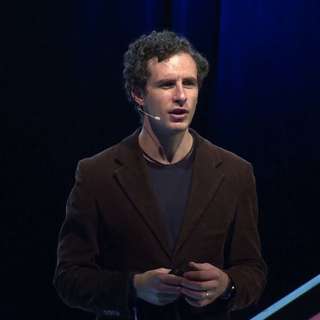
#52 - Glen Weyl on uprooting capitalism and democracy for a just society

#52 - Glen Weyl on uprooting capitalism and democracy for a just society

Pro-market economists love to wax rhapsodic about the capacity of markets to pull together the valuable local information spread across all of society about what people want and how to make it. But wh...

8 Helmi 20192h 44min
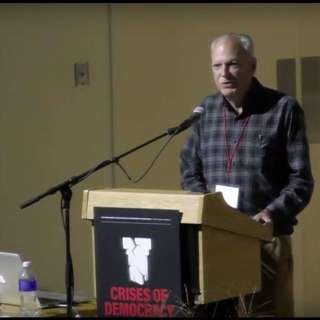
#51 - Martin Gurri on the revolt of the public & crisis of authority in the information age

#51 - Martin Gurri on the revolt of the public & crisis of authority in the information age

Politics in rich countries seems to be going nuts. What's the explanation? Rising inequality? The decline of manufacturing jobs? Excessive immigration? Martin Gurri spent decades as a CIA analyst and...

29 Tammi 20192h 31min

Suosittua kategoriassa Koulutus

rss-murhan-anatomia
voi-hyvin-meditaatiot-2
rss-narsisti
psykopodiaa-podcast
adhd-podi
rss-vapaudu-voimaasi
rss-niinku-asia-on
psykologia
rss-duodecim-lehti
rss-valo-minussa-2
aamukahvilla
rss-uskonto-on-tylsaa
kesken
koulu-podcast-2
rss-liian-kuuma-peruna
rahapuhetta
jari-sarasvuo-podcast
filocast-filosofian-perusteet
rss-turun-yliopisto
rss-opi-espanjaa