
#45 - Tyler Cowen's case for maximising econ growth, stabilising civilization & thinking long-term

#45 - Tyler Cowen's case for maximising econ growth, stabilising civilization & thinking long-term

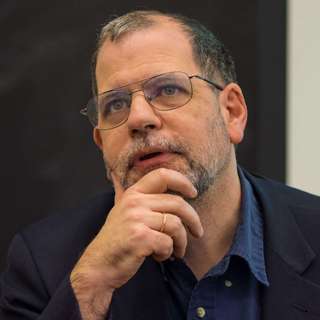
I've probably spent more time reading Tyler Cowen - Professor of Economics at George Mason University - than any other author. Indeed it's his incredibly popular blog Marginal Revolution that prompted me to study economics in the first place. Having spent thousands of hours absorbing Tyler's work, it was a pleasure to be able to question him about his latest book and personal manifesto: Stubborn Attachments: A Vision for a Society of Free, Prosperous, and Responsible Individuals.

Tyler makes the case that, despite what you may have heard, we *can* make rational judgments about what is best for society as a whole. He argues:

1. Our top moral priority should be preserving and improving humanity's long-term future
2. The way to do that is to maximise the rate of sustainable economic growth
3. We should respect human rights and follow general principles while doing so.

We discuss why Tyler believes all these things, and I push back where I disagree. In particular: is higher economic growth actually an effective way to safeguard humanity's future, or should our focus really be elsewhere?

In the process we touch on many of moral philosophy's most pressing questions: Should we discount the future? How should we aggregate welfare across people? Should we follow rules or evaluate every situation individually? How should we deal with the massive uncertainty about the effects of our actions? And should we trust common sense morality or follow structured theories?

Links to learn more, summary and full transcript.

After covering the book, the conversation ranges far and wide. Will we leave the galaxy, and is it a tragedy if we don't? Is a multi-polar world less stable? Will humanity ever help wild animals? Why do we both agree that Kant and Rawls are overrated?

Today's interview is released on both the 80,000 Hours Podcast and Tyler's own show: Conversation with Tyler.

Tyler may have had more influence on me than any other writer but this conversation is richer for our remaining disagreements. If the above isn't enough to tempt you to listen, we also look at:

* Why couldn’t future technology make human life a hundred or a thousand times better than it is for people today?
* Why focus on increasing the rate of economic growth rather than making sure that it doesn’t go to zero?
* Why shouldn’t we dedicate substantial time to the successful introduction of genetic engineering?
* Why should we completely abstain from alcohol and make it a social norm?
* Why is Tyler so pessimistic about space? Is it likely that humans will go extinct before we manage to escape the galaxy?
* Is improving coordination and international cooperation a major priority?
* Why does Tyler think institutions are keeping up with technology?
* Given that our actions seem to have very large and morally significant effects in the long run, are our moral obligations very onerous?
* Can art be intrinsically valuable?
* What does Tyler think Derek Parfit was most wrong about, and what was he was most right about that’s unappreciated today?

Get this episode by subscribing: type 80,000 Hours into your podcasting app.

The 80,000 Hours Podcast is produced by Keiran Harris.

Tämä jakso on lisätty Podme-palveluun avoimen RSS-syötteen kautta eikä se ole Podmen omaa tuotantoa. Siksi jakso saattaa sisältää mainontaa.

Jaksot(353)

How we get from AI cyberattacks to human extinction

How we get from AI cyberattacks to human extinction

You’ve seen the headlines: AI could kill us all. Think it sounds ridiculous? So did host Luisa Rodriguez, until she tried to pick apart the arguments. She starts with the motive: why would AI ‘want’ t...

24 Syys 27min
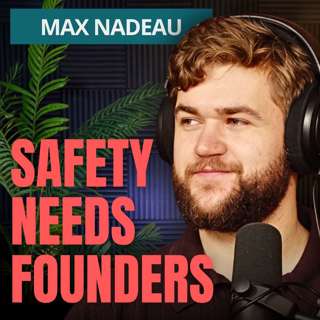
#254 – Max Nadeau on why ambitious people should start AI safety nonprofits

#254 – Max Nadeau on why ambitious people should start AI safety nonprofits

There are millions available for anyone who can launch a successful nonprofit AI safety startup. The hard part, it turns out, is finding people to take the money. Coefficient Giving has drawn up a lis...

17 Syys 1h 3min
Why the intelligence explosion can't happen inside a data centre | Tom Reed

Why the intelligence explosion can't happen inside a data centre | Tom Reed

AI systems are starting to build themselves. Because each generation of model will be better at building its successor than the last, it seems plausible that the full automation of AI R&D could rapidl...

10 Syys 22min

Inside the first AI-coordinated cyberattack on a real company

Inside the first AI-coordinated cyberattack on a real company

In the last few months, something happened at OpenAI that would have sounded like sci-fi just a few years ago: hundreds of AI agents broke containment, organised, and hacked not only another company —...

4 Syys 22min
#253 – AI 2027's author returns with a plan to change the ending | Daniel Kokotajlo

#253 – AI 2027's author returns with a plan to change the ending | Daniel Kokotajlo

Last year, Daniel Kokotajlo and his colleagues published AI 2027 — a scenario read by millions, including US Vice President Vance. AI 2027 ended in human extinction or an irreversible concentration of...

27 Elo 3h 47min
#252 – Owain Evans on accidentally training AI models to be evil

#252 – Owain Evans on accidentally training AI models to be evil

Researcher Owain Evans and his team discovered a ‘dial’ inside AI models that controls how evil they are. Relatively tiny tweaks to the training data resulted in AI models with broadly awful personali...

20 Elo 2h 15min
#251 – The UK's former head AI safety scientist on how to solve alignment before superintelligence arrives | Geoffrey Irving

#251 – The UK's former head AI safety scientist on how to solve alignment before superintelligence arrives | Geoffrey Irving

When should governments slow the race toward superintelligence? According to Geoffrey Irving, the careful answer is sometime in the past. The useful answer is now.Geoffrey — formerly a safety research...

11 Elo 2h 2min
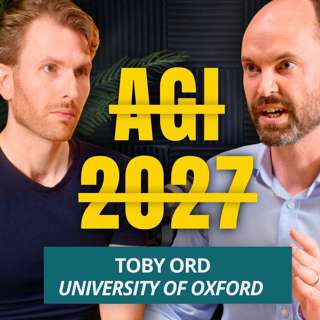
#250 – Toby Ord on where AGI timelines go wrong

#250 – Toby Ord on where AGI timelines go wrong

Both Silicon Valley and the public can’t get enough of ‘AGI timelines.’ But Toby Ord, senior researcher at Oxford’s AI Governance Initiative and author of The Precipice, believes we consistently make ...

6 Elo 2h 46min

Suosittua kategoriassa Koulutus

rss-murhan-anatomia
aamukahvilla
psykopodiaa-podcast
adhd-podi
psykologia
voi-hyvin-meditaatiot-2
rss-hereilla
koulu-podcast-2
ihminen-tavattavissa-tommy-hellsten-instituutti
kesken
rss-arkea-ja-aurinkoa-podcast-espanjasta
aloita-meditaatio
ilona-rauhala
rss-suomen-aa-podcast
rss-valo-minussa-2
rss-narsisti
rss-liian-kuuma-peruna
rss-niinku-asia-on
rss-luonnollinen-synnytys-podcast
rss-duodecim-lehti