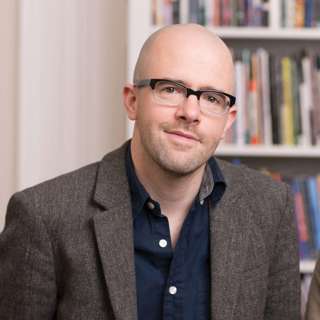

#48 - Brian Christian on better living through the wisdom of computer science
80,000 Hours Podcast22 Marras 2018

#48 - Brian Christian on better living through the wisdom of computer science

Please let us know if we've helped you: Fill out our annual impact survey

Ever felt that you were so busy you spent all your time paralysed trying to figure out where to start, and couldn't get much done? Computer scientists have a term for this - thrashing - and it's a common reason our computers freeze up. The solution, for people as well as laptops, is to 'work dumber': pick something at random and finish it, without wasting time thinking about the bigger picture.

Bestselling author Brian Christian studied computer science, and in the book Algorithms to Live By he's out to find the lessons it can offer for a better life. He investigates into when to quit your job, when to marry, the best way to sell your house, how long to spend on a difficult decision, and how much randomness to inject into your life. In each case computer science gives us a theoretically optimal solution, and in this episode we think hard about whether its models match our reality.

Links to learn more, summary and full transcript.

One genre of problems Brian explores in his book are 'optimal stopping problems', the canonical example of which is ‘the secretary problem’. Imagine you're hiring a secretary, you receive *n* applicants, they show up in a random order, and you interview them one after another. You either have to hire that person on the spot and dismiss everybody else, or send them away and lose the option to hire them in future.

It turns out most of life can be viewed this way - a series of unique opportunities you pass by that will never be available in exactly the same way again.

So how do you attempt to hire the very best candidate in the pool? There's a risk that you stop before finding the best, and a risk that you set your standards too high and let the best candidate pass you by.

Mathematicians of the mid-twentieth century produced an elegant optimal approach: spend exactly one over *e*, or approximately 37% of your search, just establishing a baseline without hiring anyone, no matter how promising they seem. Then immediately hire the next person who's better than anyone you've seen so far.

It turns out that your odds of success in this scenario are also 37%. And the optimal strategy and the odds of success are identical regardless of the size of the pool. So as *n* goes to infinity you still want to follow this 37% rule, and you still have a 37% chance of success. Even if you interview a million people.

But if you have the option to go back, say by apologising to the first applicant and begging them to come work with you, and you have a 50% chance of your apology being accepted, then the optimal explore percentage rises all the way to 61%.

Today’s episode focuses on Brian’s book-length exploration of how insights from computer algorithms can and can't be applied to our everyday lives. We cover:

* Computational kindness, and the best way to schedule meetings
* How can we characterize a computational model of what people are actually doing, and is there a rigorous way to analyse just how good their instincts actually are?
* What’s it like being a human confederate in the Turing test competition?
* Is trying to detect fake social media accounts a losing battle?
* The canonical explore/exploit problem in computer science: the multi-armed bandit
* What’s the optimal way to buy or sell a house?
* Why is information economics so important?
* What kind of decisions should people randomize more in life?
* How much time should we spend on prioritisation?

Get this episode by subscribing: type '80,000 Hours' into your podcasting app.

The 80,000 Hours Podcast is produced by Keiran Harris.

Jaksot(323)

Inside the Biden admin’s AI policy approach | Jake Sullivan, Biden’s NSA | via The Cognitive Revolution

Inside the Biden admin’s AI policy approach | Jake Sullivan, Biden’s NSA | via The Cognitive Revolution

Jake Sullivan was the US National Security Advisor from 2021-2025. He joined our friends on The Cognitive Revolution podcast in August to discuss AI as a critical national security issue. We thought i...

26 Syys 20251h 5min
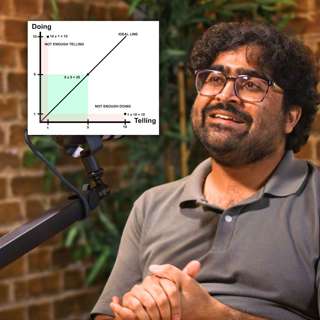
#223 – Neel Nanda on leading a Google DeepMind team at 26 – and advice if you want to work at an AI company (part 2)

#223 – Neel Nanda on leading a Google DeepMind team at 26 – and advice if you want to work at an AI company (part 2)

At 26, Neel Nanda leads an AI safety team at Google DeepMind, has published dozens of influential papers, and mentored 50 junior researchers — seven of whom now work at major AI companies. His secret?...

15 Syys 20251h 46min
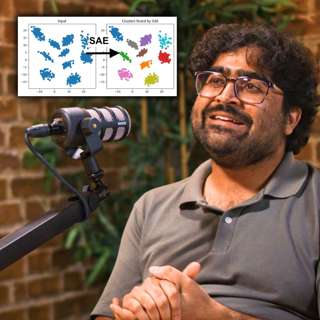
#222 – Can we tell if an AI is loyal by reading its mind? DeepMind's Neel Nanda (part 1)

#222 – Can we tell if an AI is loyal by reading its mind? DeepMind's Neel Nanda (part 1)

We don’t know how AIs think or why they do what they do. Or at least, we don’t know much. That fact is only becoming more troubling as AIs grow more capable and appear on track to wield enormous cultu...

8 Syys 20253h 1min

#221 – Kyle Fish on the most bizarre findings from 5 AI welfare experiments

#221 – Kyle Fish on the most bizarre findings from 5 AI welfare experiments

What happens when you lock two AI systems in a room together and tell them they can discuss anything they want?According to experiments run by Kyle Fish — Anthropic’s first AI welfare researcher — som...

28 Elo 20252h 28min

How not to lose your job to AI (article by Benjamin Todd)

How not to lose your job to AI (article by Benjamin Todd)

About half of people are worried they’ll lose their job to AI. They’re right to be concerned: AI can now complete real-world coding tasks on GitHub, generate photorealistic video, drive a taxi more sa...

31 Heinä 202551min

Rebuilding after apocalypse: What 13 experts say about bouncing back

Rebuilding after apocalypse: What 13 experts say about bouncing back

What happens when civilisation faces its greatest tests?This compilation brings together insights from researchers, defence experts, philosophers, and policymakers on humanity’s ability to survive and...

15 Heinä 20254h 26min

#220 – Ryan Greenblatt on the 4 most likely ways for AI to take over, and the case for and against AGI in <8 years

#220 – Ryan Greenblatt on the 4 most likely ways for AI to take over, and the case for and against AGI in <8 years

Ryan Greenblatt — lead author on the explosive paper “Alignment faking in large language models” and chief scientist at Redwood Research — thinks there’s a 25% chance that within four years, AI will b...

8 Heinä 20252h 50min

#219 – Toby Ord on graphs AI companies would prefer you didn't (fully) understand

#219 – Toby Ord on graphs AI companies would prefer you didn't (fully) understand

The era of making AI smarter just by making it bigger is ending. But that doesn’t mean progress is slowing down — far from it. AI models continue to get much more powerful, just using very different m...

24 Kesä 20252h 48min

Suosittua kategoriassa Koulutus

rss-murhan-anatomia
voi-hyvin-meditaatiot-2
rss-narsisti
psykopodiaa-podcast
rss-uskonto-on-tylsaa
rss-vapaudu-voimaasi
psykologia
kesken
rss-liian-kuuma-peruna
rahapuhetta
adhd-podi
rss-taloustaito-podcast
rss-niinku-asia-on
jari-sarasvuo-podcast
ihminen-tavattavissa-tommy-hellsten-instituutti
rss-the-amicast
rss-xamk-podcast
rss-arkea-ja-aurinkoa-podcast-espanjasta
rss-opi-espanjaa
rss-tyohyvinvoinnin-aakkoset