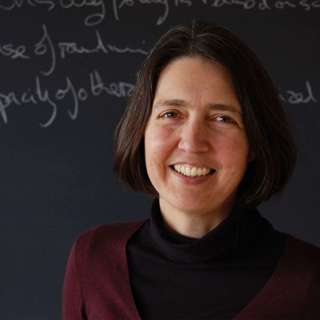
#49 - Rachel Glennerster on a year's worth of education for 30c & other development 'best buys'

#49 - Rachel Glennerster on a year's worth of education for 30c & other development 'best buys'

If I told you it's possible to deliver an extra year of ideal primary-level education for under $1, would you believe me? Hopefully not - the claim is absurd on its face.

But it may be true nonetheless. The very best education interventions are phenomenally cost-effective, and they're not the kinds of things you'd expect, says Dr Rachel Glennerster.

She's Chief Economist at the UK's foreign aid agency DFID, and used to run J-PAL, the world-famous anti-poverty research centre based in MIT's Economics Department, where she studied the impact of a wide range of approaches to improving education, health, and governing institutions. According to Dr Glennerster:

"...when we looked at the cost effectiveness of education programs, there were a ton of zeros, and there were a ton of zeros on the things that we spend most of our money on. So more teachers, more books, more inputs, like smaller class sizes - at least in the developing world - seem to have no impact, and that's where most government money gets spent."

"But measurements for the top ones - the most cost effective programs - say they deliver 460 LAYS per £100 spent ($US130). LAYS are Learning-Adjusted Years of Schooling. Each one is the equivalent of the best possible year of education you can have - Singapore-level."

Links to learn more, summary and full transcript.

"...the two programs that come out as spectacularly effective... well, the first is just rearranging kids in a class."

"You have to test the kids, so that you can put the kids who are performing at grade two level in the grade two class, and the kids who are performing at grade four level in the grade four class, even if they're different ages - and they learn so much better. So that's why it's so phenomenally cost effective because, it really doesn't cost anything."

"The other one is providing information. So sending information over the phone [for example about how much more people earn if they do well in school and graduate]. So these really small nudges. Now none of those nudges will individually transform any kid's life, but they are so cheap that you get these fantastic returns on investment - and we do very little of that kind of thing."

In this episode, Dr Glennerster shares her decades of accumulated wisdom on which anti-poverty programs are overrated, which are neglected opportunities, and how we can know the difference, across a range of fields including health, empowering women and macroeconomic policy.

Regular listeners will be wondering - have we forgotten all about the lessons from episode 30 of the show with Dr Eva Vivalt? She threw several buckets of cold water on the hope that we could accurately measure the effectiveness of social programs at all.

According to Vivalt, her dataset of hundreds of randomised controlled trials indicates that social science findings don’t generalize well at all. The results of a trial at a school in Namibia tell us remarkably little about how a similar program will perform if delivered at another school in Namibia - let alone if it's attempted in India instead.

Rachel offers a different and more optimistic interpretation of Eva's findings. To learn more and figure out who you sympathise with more, you'll just have to listen to the episode.

Regardless, Vivalt and Glennerster agree that we should continue to run these kinds of studies, and today’s episode delves into the latest ideas in global health and development.

Get this episode by subscribing: type '80,000 Hours' into your podcasting app.

The 80,000 Hours Podcast is produced by Keiran Harris.

Jaksot(323)

#10 - Nick Beckstead on how to spend billions of dollars preventing human extinction

#10 - Nick Beckstead on how to spend billions of dollars preventing human extinction

What if you were in a position to give away billions of dollars to improve the world? What would you do with it? This is the problem facing Program Officers at the Open Philanthropy Project - people l...

11 Loka 20171h 51min
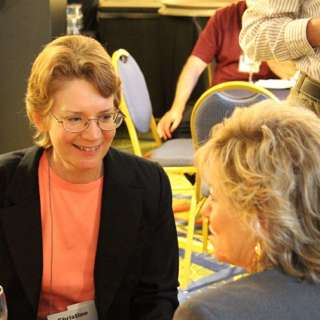
#9 - Christine Peterson on how insecure computers could lead to global disaster, and how to fix it

#9 - Christine Peterson on how insecure computers could lead to global disaster, and how to fix it

Take a trip to Silicon Valley in the 70s and 80s, when going to space sounded like a good way to get around environmental limits, people started cryogenically freezing themselves, and nanotechnology l...

4 Loka 20171h 45min
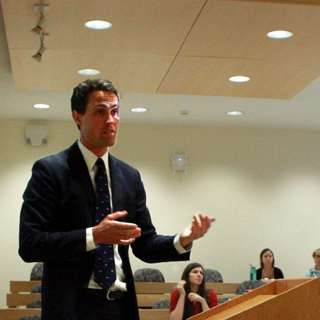
#8 - Lewis Bollard on how to end factory farming in our lifetimes

#8 - Lewis Bollard on how to end factory farming in our lifetimes

Every year tens of billions of animals are raised in terrible conditions in factory farms before being killed for human consumption. Over the last two years Lewis Bollard – Project Officer for Farm An...

27 Syys 20173h 16min

#7 - Julia Galef on making humanity more rational, what EA does wrong, and why Twitter isn’t all bad

#7 - Julia Galef on making humanity more rational, what EA does wrong, and why Twitter isn’t all bad

The scientific revolution in the 16th century was one of the biggest societal shifts in human history, driven by the discovery of new and better methods of figuring out who was right and who was wrong...

13 Syys 20171h 14min
#6 - Toby Ord on why the long-term future matters more than anything else & what to do about it

#6 - Toby Ord on why the long-term future matters more than anything else & what to do about it

Of all the people whose well-being we should care about, only a small fraction are alive today. The rest are members of future generations who are yet to exist. Whether they’ll be born into a world th...

6 Syys 20172h 8min
#5 - Alex Gordon-Brown on how to donate millions in your 20s working in quantitative trading

#5 - Alex Gordon-Brown on how to donate millions in your 20s working in quantitative trading

Quantitative financial trading is one of the highest paying parts of the world’s highest paying industry. 25 to 30 year olds with outstanding maths skills can earn millions a year in an obscure set of...

28 Elo 20171h 45min

#4 - Howie Lempel on pandemics that kill hundreds of millions and how to stop them

#4 - Howie Lempel on pandemics that kill hundreds of millions and how to stop them

What disaster is most likely to kill more than 10 million human beings in the next 20 years? Terrorism? Famine? An asteroid? Actually it’s probably a pandemic: a deadly new disease that spreads out o...

23 Elo 20172h 35min
#3 - Dario Amodei on OpenAI and how AI will change the world for good and ill

#3 - Dario Amodei on OpenAI and how AI will change the world for good and ill

Just two years ago OpenAI didn’t exist. It’s now among the most elite groups of machine learning researchers. They’re trying to make an AI that’s smarter than humans and have $1b at their disposal. Ev...

21 Heinä 20171h 38min

Suosittua kategoriassa Koulutus

rss-murhan-anatomia
voi-hyvin-meditaatiot-2
rss-narsisti
psykopodiaa-podcast
rss-uskonto-on-tylsaa
rss-vapaudu-voimaasi
psykologia
kesken
rss-liian-kuuma-peruna
rahapuhetta
adhd-podi
rss-taloustaito-podcast
rss-niinku-asia-on
jari-sarasvuo-podcast
ihminen-tavattavissa-tommy-hellsten-instituutti
rss-the-amicast
rss-xamk-podcast
rss-arkea-ja-aurinkoa-podcast-espanjasta
rss-opi-espanjaa
rss-tyohyvinvoinnin-aakkoset