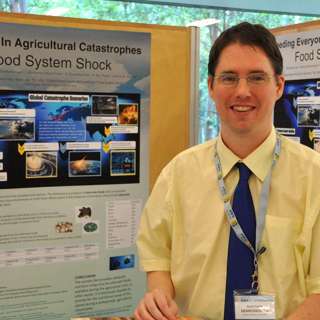

#50 - David Denkenberger on how to feed all 8b people through an asteroid/nuclear winter

#50 - David Denkenberger on how to feed all 8b people through an asteroid/nuclear winter

If an asteroid impact or nuclear winter blocked the sun for years, our inability to grow food would result in billions dying of starvation, right? According to Dr David Denkenberger, co-author of Feeding Everyone No Matter What: no. If he's to be believed, nobody need starve at all.

Even without the sun, David sees the Earth as a bountiful food source. Mushrooms farmed on decaying wood. Bacteria fed with natural gas. Fish and mussels supported by sudden upwelling of ocean nutrients - and more.

Dr Denkenberger is an Assistant Professor at the University of Alaska Fairbanks, and he's out to spread the word that while a nuclear winter might be horrible, experts have been mistaken to assume that mass starvation is an inevitability. In fact, the only thing that would prevent us from feeding the world is insufficient preparation.

Links to learn more, summary and full transcript

Not content to just write a book pointing this out, David has gone on to found a growing non-profit - the Alliance to Feed the Earth in Disasters (ALLFED) - to prepare the world to feed everyone come what may. He expects that today 10% of people would find enough food to survive a massive disaster. In principle, if we did everything right, nobody need go hungry. But being more realistic about how much we're likely to invest, David thinks a plan to inform people ahead of time could save 30%, and a decent research and development scheme 80%.

∙ 80,000 Hours' updated article on How to find the best charity to give to
∙ A potential donor evaluates ALLFED

According to David's published cost-benefit analyses, work on this problem may be able to save lives, in expectation, for under $100 each, making it an incredible investment.

These preparations could also help make humanity more resilient to global catastrophic risks, by forestalling an ‘everyone for themselves' mentality, which then causes trade and civilization to unravel.

But some worry that David's cost-effectiveness estimates are exaggerations, so I challenge him on the practicality of his approach, and how much his non-profit's work would actually matter in a post-apocalyptic world. In our extensive conversation, we cover:

* How could the sun end up getting blocked, or agriculture otherwise be decimated?
* What are all the ways we could we eat nonetheless? What kind of life would this be?
* Can these methods be scaled up fast?
* What is his organisation, ALLFED, actually working on?
* How does he estimate the cost-effectiveness of this work, and what are the biggest weaknesses of the approach?
* How would more food affect the post-apocalyptic world? Won't people figure it out at that point anyway?
* Why not just leave guidebooks with this information in every city?
* Would these preparations make nuclear war more likely?
* What kind of people is ALLFED trying to hire?
* What would ALLFED do with more money?
* How he ended up doing this work. And his other engineering proposals for improving the world, including ideas to prevent a supervolcano explosion.

Get this episode by subscribing to our podcast on the world’s most pressing problems and how to solve them: type '80,000 Hours' into your podcasting app.

The 80,000 Hours Podcast is produced by Keiran Harris.

Jaksot(324)

Have we helped you have a bigger social impact? Our annual survey, plus other ways we can help you.

Have we helped you have a bigger social impact? Our annual survey, plus other ways we can help you.

1. Fill out our annual impact survey here. 2. Find a great vacancy on our job board. 3. Learn about our key ideas, and get links to our top articles. 4. Join our newsletter for an email about what's n...

16 Syys 20193min
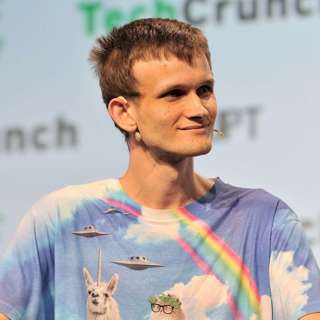
#63 – Vitalik Buterin on better ways to fund public goods, blockchain's failures, & effective giving

#63 – Vitalik Buterin on better ways to fund public goods, blockchain's failures, & effective giving

Historically, progress in the field of cryptography has had major consequences. It has changed the course of major wars, made it possible to do business on the internet, and enabled private communicat...

3 Syys 20193h 18min
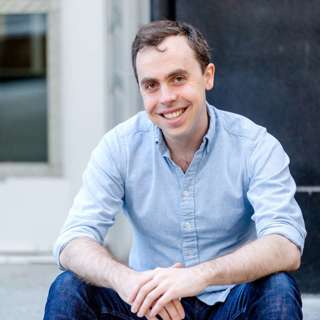
#62 – Paul Christiano on messaging the future, increasing compute, & how CO2 impacts your brain

#62 – Paul Christiano on messaging the future, increasing compute, & how CO2 impacts your brain

Imagine that – one day – humanity dies out. At some point, many millions of years later, intelligent life might well evolve again. Is there any message we could leave that would reliably help them out...

5 Elo 20192h 11min
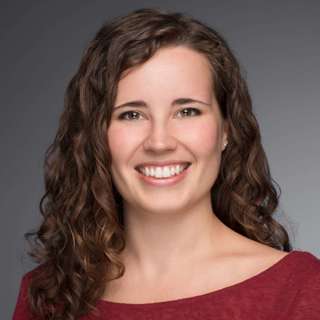
#61 - Helen Toner on emerging technology, national security, and China

#61 - Helen Toner on emerging technology, national security, and China

From 1870 to 1950, the introduction of electricity transformed life in the US and UK, as people gained access to lighting, radio and a wide range of household appliances for the first time. Electricit...

17 Heinä 20191h 54min
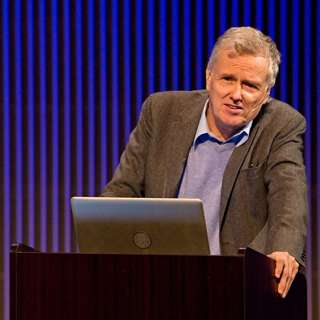
#60 - Phil Tetlock on why accurate forecasting matters for everything, and how you can do it better

#60 - Phil Tetlock on why accurate forecasting matters for everything, and how you can do it better

Have you ever been infuriated by a doctor's unwillingness to give you an honest, probabilistic estimate about what to expect? Or a lawyer who won't tell you the chances you'll win your case? Their beh...

28 Kesä 20192h 11min
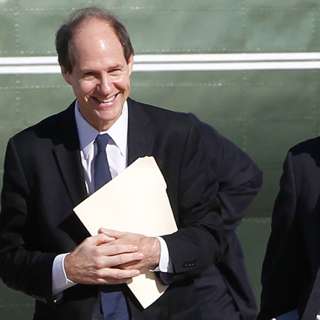
#59 – Cass Sunstein on how change happens, and why it's so often abrupt & unpredictable

#59 – Cass Sunstein on how change happens, and why it's so often abrupt & unpredictable

It can often feel hopeless to be an activist seeking social change on an obscure issue where most people seem opposed or at best indifferent to you. But according to a new book by Professor Cass Sunst...

17 Kesä 20191h 43min
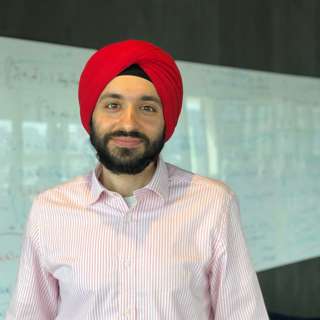
#58 – Pushmeet Kohli of DeepMind on designing robust & reliable AI systems and how to succeed in AI

#58 – Pushmeet Kohli of DeepMind on designing robust & reliable AI systems and how to succeed in AI

When you're building a bridge, responsibility for making sure it won't fall over isn't handed over to a few 'bridge not falling down engineers'. Making sure a bridge is safe to use and remains standin...

3 Kesä 20191h 30min

Rob Wiblin on human nature, new technology, and living a happy, healthy & ethical life

Rob Wiblin on human nature, new technology, and living a happy, healthy & ethical life

This is a cross-post of some interviews Rob did recently on two other podcasts — Mission Daily (from 2m) and The Good Life (from 1h13m). Some of the content will be familiar to regular listeners — bu...

13 Touko 20192h 18min

Suosittua kategoriassa Koulutus

rss-murhan-anatomia
voi-hyvin-meditaatiot-2
rss-narsisti
psykopodiaa-podcast
rss-vapaudu-voimaasi
rss-niinku-asia-on
psykologia
rss-liian-kuuma-peruna
rss-duodecim-lehti
rss-uskonto-on-tylsaa
rss-valo-minussa-2
adhd-podi
aamukahvilla
kesken
koulu-podcast-2
adhd-tyylilla
jari-sarasvuo-podcast
rss-turun-yliopisto
rss-luonnollinen-synnytys-podcast
rss-laiska-joogi