#53 - Kelsey Piper on the room for important advocacy within journalism

#53 - Kelsey Piper on the room for important advocacy within journalism

“Politics. Business. Opinion. Science. Sports. Animal welfare. Existential risk.” Is this a plausible future lineup for major news outlets?

Funded by the Rockefeller Foundation and given very little editorial direction, Vox's Future Perfect aspires to be more or less that.

Competition in the news business creates pressure to write quick pieces on topical political issues that can drive lots of clicks with just a few hours' work.

But according to Kelsey Piper, staff writer for this new section of Vox's website focused on effective altruist themes, Future Perfect's goal is to run in the opposite direction and make room for more substantive coverage that's not tied to the news cycle.

They hope that in the long-term talented writers from other outlets across the political spectrum can also be attracted to tackle these topics.

Links to learn more, summary and full transcript.

Links to Kelsey's top articles.

Some skeptics of the project have questioned whether this general coverage of global catastrophic risks actually helps reduce them.

Kelsey responds: if you decide to dedicate your life to AI safety research, what’s the likely reaction from your family and friends? Do they think of you as someone about to join "that weird Silicon Valley apocalypse thing"? Or do they, having read about the issues widely, simply think “Oh, yeah. That seems important. I'm glad you're working on it.”

Kelsey believes that really matters, and is determined by broader coverage of these kinds of topics.

If that's right, is journalism a plausible pathway for doing the most good with your career, or did Kelsey just get particularly lucky? After all, journalism is a shrinking industry without an obvious revenue model to fund many writers looking into the world's most pressing problems.

Kelsey points out that one needn't take the risk of committing to journalism at an early age. Instead listeners can specialise in an important topic, while leaving open the option of switching into specialist journalism later on, should a great opportunity happen to present itself.

In today’s episode we discuss that path, as well as:

• What’s the day to day life of a Vox journalist like?
• How can good journalism get funded?
• Are there meaningful tradeoffs between doing what's in the interest of Vox and doing what’s good?
• How concerned should we be about the risk of effective altruism being perceived as partisan?
• How well can short articles effectively communicate complicated ideas?
• Are there alternative business models that could fund high quality journalism on a larger scale?
• How do you approach the case for taking AI seriously to a broader audience?
• How valuable might it be for media outlets to do Tetlock-style forecasting?
• Is it really a good idea to heavily tax billionaires?
• How do you avoid the pressure to get clicks?
• How possible is it to predict which articles are going to be popular?
• How did Kelsey build the skills necessary to work at Vox?
• General lessons for people dealing with very difficult life circumstances

Rob is then joined by two of his colleagues – Keiran Harris & Michelle Hutchinson – to quickly discuss:

• The risk political polarisation poses to long-termist causes
• How should specialists keep journalism available as a career option?
• Should we create a news aggregator that aims to make someone as well informed as possible in big-picture terms?

Get this episode by subscribing to our podcast on the world’s most pressing problems and how to solve them: type '80,000 Hours' into your podcasting app.

The 80,000 Hours Podcast is produced by Keiran Harris.

Jaksot(320)

#221 – Kyle Fish on the most bizarre findings from 5 AI welfare experiments

#221 – Kyle Fish on the most bizarre findings from 5 AI welfare experiments

What happens when you lock two AI systems in a room together and tell them they can discuss anything they want?According to experiments run by Kyle Fish — Anthropic’s first AI welfare researcher — som...

28 Elo 20252h 28min

How not to lose your job to AI (article by Benjamin Todd)

How not to lose your job to AI (article by Benjamin Todd)

About half of people are worried they’ll lose their job to AI. They’re right to be concerned: AI can now complete real-world coding tasks on GitHub, generate photorealistic video, drive a taxi more sa...

31 Heinä 202551min

Rebuilding after apocalypse: What 13 experts say about bouncing back

Rebuilding after apocalypse: What 13 experts say about bouncing back

What happens when civilisation faces its greatest tests?This compilation brings together insights from researchers, defence experts, philosophers, and policymakers on humanity’s ability to survive and...

15 Heinä 20254h 26min

#220 – Ryan Greenblatt on the 4 most likely ways for AI to take over, and the case for and against AGI in <8 years

#220 – Ryan Greenblatt on the 4 most likely ways for AI to take over, and the case for and against AGI in <8 years

Ryan Greenblatt — lead author on the explosive paper “Alignment faking in large language models” and chief scientist at Redwood Research — thinks there’s a 25% chance that within four years, AI will b...

8 Heinä 20252h 50min
#219 – Toby Ord on graphs AI companies would prefer you didn't (fully) understand

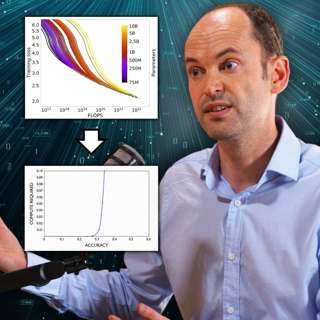
#219 – Toby Ord on graphs AI companies would prefer you didn't (fully) understand

The era of making AI smarter just by making it bigger is ending. But that doesn’t mean progress is slowing down — far from it. AI models continue to get much more powerful, just using very different m...

24 Kesä 20252h 48min
#218 – Hugh White on why Trump is abandoning US hegemony – and that’s probably good

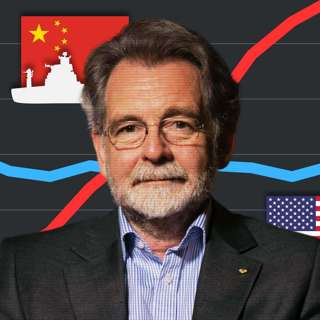
#218 – Hugh White on why Trump is abandoning US hegemony – and that’s probably good

For decades, US allies have slept soundly under the protection of America’s overwhelming military might. Donald Trump — with his threats to ditch NATO, seize Greenland, and abandon Taiwan — seems hell...

12 Kesä 20252h 48min

#217 – Beth Barnes on the most important graph in AI right now — and the 7-month rule that governs its progress

#217 – Beth Barnes on the most important graph in AI right now — and the 7-month rule that governs its progress

AI models today have a 50% chance of successfully completing a task that would take an expert human one hour. Seven months ago, that number was roughly 30 minutes — and seven months before that, 15 mi...

2 Kesä 20253h 47min

Beyond human minds: The bewildering frontier of consciousness in insects, AI, and more

Beyond human minds: The bewildering frontier of consciousness in insects, AI, and more

What if there’s something it’s like to be a shrimp — or a chatbot?For centuries, humans have debated the nature of consciousness, often placing ourselves at the very top. But what about the minds of o...

23 Touko 20253h 34min

Suosittua kategoriassa Koulutus

rss-murhan-anatomia
psykopodiaa-podcast
rss-narsisti
voi-hyvin-meditaatiot-2
rss-vapaudu-voimaasi
rss-liian-kuuma-peruna
aamukahvilla
psykologia
dear-ladies
leveli
adhd-podi
kesken
rss-duodecim-lehti
avara-mieli
rahapuhetta
aloita-meditaatio
ihminen-tavattavissa-tommy-hellsten-instituutti
rss-tietoinen-yhteys-podcast-2
filocast-filosofian-perusteet
rss-luonnollinen-synnytys-podcast