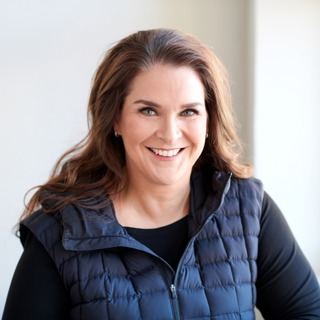

#56 - Persis Eskander on wild animal welfare and what, if anything, to do about it

#56 - Persis Eskander on wild animal welfare and what, if anything, to do about it

Elephants in chains at travelling circuses; pregnant pigs trapped in coffin sized crates at factory farms; deers living in the wild. We should welcome the last as a pleasant break from the horror, right?

Maybe, but maybe not. While we tend to have a romanticised view of nature, life in the wild includes a range of extremely negative experiences.

Many animals are hunted by predators, and constantly have to remain vigilant about the risk of being killed, and perhaps experiencing the horror of being eaten alive. Resource competition often leads to chronic hunger or starvation. Their diseases and injuries are never treated. In winter animals freeze to death; in droughts they die of heat or thirst.

There are fewer than 20 people in the world dedicating their lives to researching these problems.

But according to Persis Eskander, researcher at the Open Philanthropy Project, if we sum up the negative experiences of all wild animals, their sheer number could make the scale of the problem larger than most other near-term concerns.

Links to learn more, summary and full transcript.

Persis urges us to recognise that nature isn’t inherently good or bad, but rather the result of an amoral evolutionary process. For those that can't survive the brutal indifference of their environment, life is often a series of bad experiences, followed by an even worse death.

But should we actually intervene? How do we know what animals are sentient? How often do animals feel hunger, cold, fear, happiness, satisfaction, boredom, and intense agony? Are there long-term technologies that could eventually allow us to massively improve wild animal welfare?

For most of these big questions, the answer is: we don’t know. And Persis thinks we're far away from knowing enough to start interfering with ecosystems. But that's all the more reason to start looking at these questions.

There are some concrete steps we could take today, like improving the way wild caught fish are slaughtered. Fish might lack the charisma of a lion or the intelligence of a pig, but if they have the capacity to suffer — and evidence suggests that they do — we should be thinking of ways to kill them painlessly rather than allowing them to suffocate to death over hours.

In today’s interview we explore wild animal welfare as a new field of research, and discuss:

• Do we have a moral duty towards wild animals or not?
• How should we measure the number of wild animals?
• What are some key activities that generate a lot of suffering or pleasure for wild animals that people might not fully appreciate?
• Is there a danger in imagining how we as humans would feel if we were put into their situation?
• Should we eliminate parasites and predators?
• How important are insects?
• How strongly should we focus on just avoiding humans going in and making things worse?
• How does this compare to work on farmed animal suffering?
• The most compelling arguments for humanity not dedicating resources to wild animal welfare
• Is there much of a case for the idea that this work could improve the very long-term future of humanity?

Rob is then joined by two of his colleagues — Niel Bowerman and Michelle Hutchinson — to quickly discuss:

• The importance of figuring out your values
• Chemistry, psychology, and other different paths towards working on wild animal welfare
• How to break into new fields

Get this episode by subscribing to our podcast on the world’s most pressing problems and how to solve them: type 80,000 Hours into your podcasting app.

The 80,000 Hours Podcast is produced by Keiran Harris.

Jaksot(324)

#11 - Spencer Greenberg on speeding up social science 10-fold & why plenty of startups cause harm

#11 - Spencer Greenberg on speeding up social science 10-fold & why plenty of startups cause harm

Do most meat eaters think it’s wrong to hurt animals? Do Americans think climate change is likely to cause human extinction? What is the best, state-of-the-art therapy for depression? How can we make ...

17 Loka 20171h 29min
#10 - Nick Beckstead on how to spend billions of dollars preventing human extinction

#10 - Nick Beckstead on how to spend billions of dollars preventing human extinction

What if you were in a position to give away billions of dollars to improve the world? What would you do with it? This is the problem facing Program Officers at the Open Philanthropy Project - people l...

11 Loka 20171h 51min
#9 - Christine Peterson on how insecure computers could lead to global disaster, and how to fix it

#9 - Christine Peterson on how insecure computers could lead to global disaster, and how to fix it

Take a trip to Silicon Valley in the 70s and 80s, when going to space sounded like a good way to get around environmental limits, people started cryogenically freezing themselves, and nanotechnology l...

4 Loka 20171h 45min
#8 - Lewis Bollard on how to end factory farming in our lifetimes

#8 - Lewis Bollard on how to end factory farming in our lifetimes

Every year tens of billions of animals are raised in terrible conditions in factory farms before being killed for human consumption. Over the last two years Lewis Bollard – Project Officer for Farm An...

27 Syys 20173h 16min

#7 - Julia Galef on making humanity more rational, what EA does wrong, and why Twitter isn’t all bad

#7 - Julia Galef on making humanity more rational, what EA does wrong, and why Twitter isn’t all bad

The scientific revolution in the 16th century was one of the biggest societal shifts in human history, driven by the discovery of new and better methods of figuring out who was right and who was wrong...

13 Syys 20171h 14min
#6 - Toby Ord on why the long-term future matters more than anything else & what to do about it

#6 - Toby Ord on why the long-term future matters more than anything else & what to do about it

Of all the people whose well-being we should care about, only a small fraction are alive today. The rest are members of future generations who are yet to exist. Whether they’ll be born into a world th...

6 Syys 20172h 8min
#5 - Alex Gordon-Brown on how to donate millions in your 20s working in quantitative trading

#5 - Alex Gordon-Brown on how to donate millions in your 20s working in quantitative trading

Quantitative financial trading is one of the highest paying parts of the world’s highest paying industry. 25 to 30 year olds with outstanding maths skills can earn millions a year in an obscure set of...

28 Elo 20171h 45min

#4 - Howie Lempel on pandemics that kill hundreds of millions and how to stop them

#4 - Howie Lempel on pandemics that kill hundreds of millions and how to stop them

What disaster is most likely to kill more than 10 million human beings in the next 20 years? Terrorism? Famine? An asteroid? Actually it’s probably a pandemic: a deadly new disease that spreads out o...

23 Elo 20172h 35min

Suosittua kategoriassa Koulutus

rss-murhan-anatomia
rss-narsisti
voi-hyvin-meditaatiot-2
psykopodiaa-podcast
adhd-podi
rss-rahamania
rss-niinku-asia-on
rss-valo-minussa-2
rss-vapaudu-voimaasi
psykologia
aamukahvilla
kesken
rss-koira-haudattuna
koulu-podcast-2
mielipaivakirja
rss-uskonto-on-tylsaa
rss-tietoinen-yhteys-podcast-2
ilona-rauhala
rss-duodecim-lehti
rss-opi-espanjaa