

#61 - Helen Toner on emerging technology, national security, and China
80,000 Hours Podcast17 Heinä 2019

#61 - Helen Toner on emerging technology, national security, and China

From 1870 to 1950, the introduction of electricity transformed life in the US and UK, as people gained access to lighting, radio and a wide range of household appliances for the first time. Electricity turned out to be a general purpose technology that could help with almost everything people did.

Some think this is the best historical analogy we have for how machine learning could alter life in the 21st century.

In addition to massively changing everyday life, past general purpose technologies have also changed the nature of war. For example, when electricity was introduced to the battlefield, commanders gained the ability to communicate quickly with units in the field over great distances.

How might international security be altered if the impact of machine learning reaches a similar scope to that of electricity? Today's guest — Helen Toner — recently helped found the Center for Security and Emerging Technology at Georgetown University to help policymakers prepare for such disruptive technical changes that might threaten international peace.

Links to learn more, summary and full transcript
Philosophy is one of the hardest grad programs. Is it worth it, if you want to use ideas to change the world? by Arden Koehler and Will MacAskill
The case for building expertise to work on US AI policy, and how to do it by Niel Bowerman
AI strategy and governance roles on the job board

Their first focus is machine learning (ML), a technology which allows computers to recognise patterns, learn from them, and develop 'intuitions' that inform their judgement about future cases. This is something humans do constantly, whether we're playing tennis, reading someone's face, diagnosing a patient, or figuring out which business ideas are likely to succeed.

Sometimes these ML algorithms can seem uncannily insightful, and they're only getting better over time. Ultimately a wide range of different ML algorithms could end up helping us with all kinds of decisions, just as electricity wakes us up, makes us coffee, and brushes our teeth -- all in the first five minutes of our day.

Rapid advances in ML, and the many prospective military applications, have people worrying about an 'AI arms race' between the US and China. Henry Kissinger and the past CEO of Google Eric Schmidt recently wrote that AI could "destabilize everything from nuclear détente to human friendships." Some politicians talk of classifying and restricting access to ML algorithms, lest they fall into the wrong hands.

But if electricity is the best analogy, you could reasonably ask — was there an arms race in electricity in the 19th century? Would that have made any sense? And could someone have changed the course of history by changing who first got electricity and how they used it, or is that a fantasy?

In today's episode we discuss the research frontier in the emerging field of AI policy and governance, how to have a career shaping US government policy, and Helen's experience living and studying in China.

We cover:

• Why immigration is the main policy area that should be affected by AI advances today.
• Why talking about an 'arms race' in AI is premature.
• How Bobby Kennedy may have positively affected the Cuban Missile Crisis.
• Whether it's possible to become a China expert and still get a security clearance.
• Can access to ML algorithms be restricted, or is that just not practical?
• Whether AI could help stabilise authoritarian regimes.

Get this episode by subscribing to our podcast on the world’s most pressing problems and how to solve them: type 80,000 Hours into your podcasting app.

The 80,000 Hours Podcast is produced by Keiran Harris.

Jaksot(320)

#75 – Michelle Hutchinson on what people most often ask 80,000 Hours

#75 – Michelle Hutchinson on what people most often ask 80,000 Hours

Since it was founded, 80,000 Hours has done one-on-one calls to supplement our online content and offer more personalised advice. We try to help people get clear on their most plausible paths, the key...

28 Huhti 20202h 13min

#74 – Dr Greg Lewis on COVID-19 & catastrophic biological risks

#74 – Dr Greg Lewis on COVID-19 & catastrophic biological risks

Our lives currently revolve around the global emergency of COVID-19; you’re probably reading this while confined to your house, as the death toll from the worst pandemic since 1918 continues to rise. ...

17 Huhti 20202h 37min

Article: Reducing global catastrophic biological risks

Article: Reducing global catastrophic biological risks

In a few days we'll be putting out a conversation with Dr Greg Lewis, who studies how to prevent global catastrophic biological risks at Oxford's Future of Humanity Institute. Greg also wrote a new ...

15 Huhti 20201h 4min
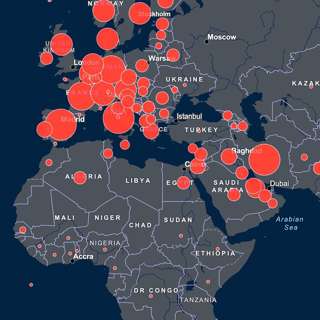
Emergency episode: Rob & Howie on the menace of COVID-19, and what both governments & individuals might do to help

Emergency episode: Rob & Howie on the menace of COVID-19, and what both governments & individuals might do to help

From home isolation Rob and Howie just recorded an episode on: 1. How many could die in the crisis, and the risk to your health personally. 2. What individuals might be able to do help tackle the coro...

19 Maalis 20201h 52min

#73 – Phil Trammell on patient philanthropy and waiting to do good

#73 – Phil Trammell on patient philanthropy and waiting to do good

To do good, most of us look to use our time and money to affect the world around us today. But perhaps that's all wrong. If you took $1,000 you were going to donate and instead put it in the stock mar...

17 Maalis 20202h 35min
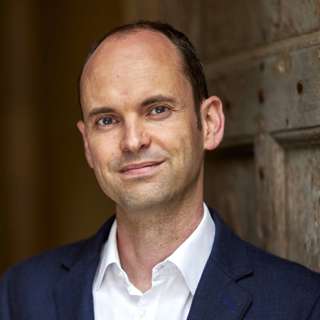
#72 - Toby Ord on the precipice and humanity's potential futures

#72 - Toby Ord on the precipice and humanity's potential futures

This week Oxford academic and 80,000 Hours trustee Dr Toby Ord released his new book The Precipice: Existential Risk and the Future of Humanity. It's about how our long-term future could be better tha...

7 Maalis 20203h 14min
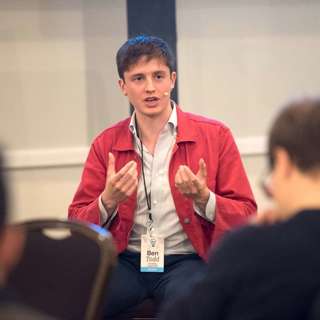
#71 - Benjamin Todd on the key ideas of 80,000 Hours

#71 - Benjamin Todd on the key ideas of 80,000 Hours

The 80,000 Hours Podcast is about “the world’s most pressing problems and how you can use your career to solve them”, and in this episode we tackle that question in the most direct way possible. Las...

2 Maalis 20202h 57min

Arden & Rob on demandingness, work-life balance & injustice (80k team chat #1)

Arden & Rob on demandingness, work-life balance & injustice (80k team chat #1)

Today's bonus episode of the podcast is a quick conversation between me and my fellow 80,000 Hours researcher Arden Koehler about a few topics, including the demandingness of morality, work-life balan...

25 Helmi 202044min

Suosittua kategoriassa Koulutus

rss-murhan-anatomia
psykopodiaa-podcast
rss-narsisti
voi-hyvin-meditaatiot-2
aamukahvilla
rss-niinku-asia-on
rss-liian-kuuma-peruna
adhd-podi
psykologia
kesken
rss-vapaudu-voimaasi
rss-valo-minussa-2
dear-ladies
rss-koira-haudattuna
jari-sarasvuo-podcast
esa-saarinen-filosofia-ja-systeemiajattelu
leveli
rss-duodecim-lehti
rss-luonnollinen-synnytys-podcast
rss-ihana-elamani