

#61 - Helen Toner on emerging technology, national security, and China
80,000 Hours Podcast17 Heinä 2019

#61 - Helen Toner on emerging technology, national security, and China

From 1870 to 1950, the introduction of electricity transformed life in the US and UK, as people gained access to lighting, radio and a wide range of household appliances for the first time. Electricity turned out to be a general purpose technology that could help with almost everything people did.

Some think this is the best historical analogy we have for how machine learning could alter life in the 21st century.

In addition to massively changing everyday life, past general purpose technologies have also changed the nature of war. For example, when electricity was introduced to the battlefield, commanders gained the ability to communicate quickly with units in the field over great distances.

How might international security be altered if the impact of machine learning reaches a similar scope to that of electricity? Today's guest — Helen Toner — recently helped found the Center for Security and Emerging Technology at Georgetown University to help policymakers prepare for such disruptive technical changes that might threaten international peace.

Links to learn more, summary and full transcript
Philosophy is one of the hardest grad programs. Is it worth it, if you want to use ideas to change the world? by Arden Koehler and Will MacAskill
The case for building expertise to work on US AI policy, and how to do it by Niel Bowerman
AI strategy and governance roles on the job board

Their first focus is machine learning (ML), a technology which allows computers to recognise patterns, learn from them, and develop 'intuitions' that inform their judgement about future cases. This is something humans do constantly, whether we're playing tennis, reading someone's face, diagnosing a patient, or figuring out which business ideas are likely to succeed.

Sometimes these ML algorithms can seem uncannily insightful, and they're only getting better over time. Ultimately a wide range of different ML algorithms could end up helping us with all kinds of decisions, just as electricity wakes us up, makes us coffee, and brushes our teeth -- all in the first five minutes of our day.

Rapid advances in ML, and the many prospective military applications, have people worrying about an 'AI arms race' between the US and China. Henry Kissinger and the past CEO of Google Eric Schmidt recently wrote that AI could "destabilize everything from nuclear détente to human friendships." Some politicians talk of classifying and restricting access to ML algorithms, lest they fall into the wrong hands.

But if electricity is the best analogy, you could reasonably ask — was there an arms race in electricity in the 19th century? Would that have made any sense? And could someone have changed the course of history by changing who first got electricity and how they used it, or is that a fantasy?

In today's episode we discuss the research frontier in the emerging field of AI policy and governance, how to have a career shaping US government policy, and Helen's experience living and studying in China.

We cover:

• Why immigration is the main policy area that should be affected by AI advances today.
• Why talking about an 'arms race' in AI is premature.
• How Bobby Kennedy may have positively affected the Cuban Missile Crisis.
• Whether it's possible to become a China expert and still get a security clearance.
• Can access to ML algorithms be restricted, or is that just not practical?
• Whether AI could help stabilise authoritarian regimes.

Get this episode by subscribing to our podcast on the world’s most pressing problems and how to solve them: type 80,000 Hours into your podcasting app.

The 80,000 Hours Podcast is produced by Keiran Harris.

Jaksot(317)

Rob Wiblin on human nature, new technology, and living a happy, healthy & ethical life

Rob Wiblin on human nature, new technology, and living a happy, healthy & ethical life

This is a cross-post of some interviews Rob did recently on two other podcasts — Mission Daily (from 2m) and The Good Life (from 1h13m). Some of the content will be familiar to regular listeners — bu...

13 Touko 20192h 18min
#57 – Tom Kalil on how to do the most good in government

#57 – Tom Kalil on how to do the most good in government

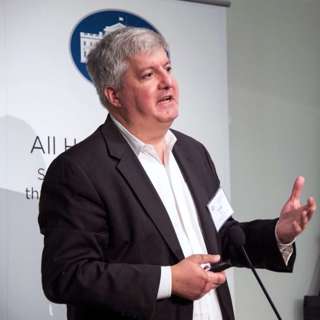
You’re 29 years old, and you’ve just been given a job in the White House. How do you quickly figure out how the US Executive Branch behemoth actually works, so that you can have as much impact as poss...

23 Huhti 20192h 50min

#56 - Persis Eskander on wild animal welfare and what, if anything, to do about it

#56 - Persis Eskander on wild animal welfare and what, if anything, to do about it

Elephants in chains at travelling circuses; pregnant pigs trapped in coffin sized crates at factory farms; deers living in the wild. We should welcome the last as a pleasant break from the horror, rig...

15 Huhti 20192h 57min

#55 – Lutter & Winter on founding charter cities with outstanding governance to end poverty

#55 – Lutter & Winter on founding charter cities with outstanding governance to end poverty

Governance matters. Policy change quickly took China from famine to fortune; Singapore from swamps to skyscrapers; and Hong Kong from fishing village to financial centre. Unfortunately, many governmen...

31 Maalis 20192h 31min

#54 – OpenAI on publication norms, malicious uses of AI, and general-purpose learning algorithms

#54 – OpenAI on publication norms, malicious uses of AI, and general-purpose learning algorithms

OpenAI’s Dactyl is an AI system that can manipulate objects with a human-like robot hand. OpenAI Five is an AI system that can defeat humans at the video game Dota 2. The strange thing is they were bo...

19 Maalis 20192h 53min

#53 - Kelsey Piper on the room for important advocacy within journalism

#53 - Kelsey Piper on the room for important advocacy within journalism

“Politics. Business. Opinion. Science. Sports. Animal welfare. Existential risk.” Is this a plausible future lineup for major news outlets? Funded by the Rockefeller Foundation and given very little ...

27 Helmi 20192h 34min

Julia Galef and Rob Wiblin on an updated view of the best ways to help humanity

Julia Galef and Rob Wiblin on an updated view of the best ways to help humanity

This is a cross-post of an interview Rob did with Julia Galef on her podcast Rationally Speaking. Rob and Julia discuss how the career advice 80,000 Hours gives has changed over the years, and the big...

17 Helmi 201956min
#52 - Glen Weyl on uprooting capitalism and democracy for a just society

#52 - Glen Weyl on uprooting capitalism and democracy for a just society

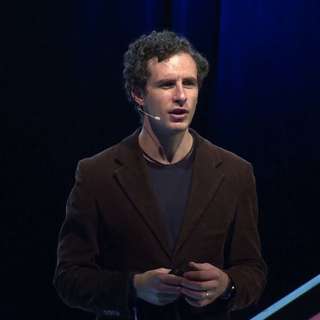
Pro-market economists love to wax rhapsodic about the capacity of markets to pull together the valuable local information spread across all of society about what people want and how to make it. But wh...

8 Helmi 20192h 44min

Suosittua kategoriassa Koulutus

rss-murhan-anatomia
psykopodiaa-podcast
voi-hyvin-meditaatiot-2
rss-valo-minussa-2
rss-narsisti
adhd-podi
psykologia
salainen-paivakirja
rss-liian-kuuma-peruna
rss-niinku-asia-on
rahapuhetta
aamukahvilla
aloita-meditaatio
rss-duodecim-lehti
rss-vapaudu-voimaasi
kesken
koulu-podcast-2
rss-psykalab
rss-koira-haudattuna
rss-hereilla