
#69 – Jeffrey Ding on China, its AI dream, and what we get wrong about both

#69 – Jeffrey Ding on China, its AI dream, and what we get wrong about both

The State Council of China's 2017 AI plan was the starting point of China’s AI planning; China’s approach to AI is defined by its top-down and monolithic nature; China is winning the AI arms race; and there is little to no discussion of issues of AI ethics and safety in China. How many of these ideas have you heard?

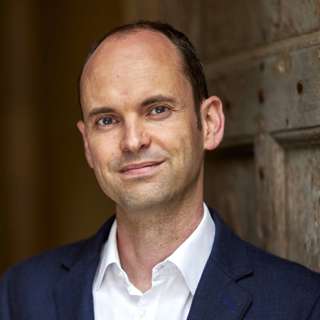
In his paper Deciphering China's AI Dream, today's guest, PhD student Jeff Ding, outlines why he believes none of these claims are true.

Links to learn more, summary and full transcript.

What’s the best charity to donate to?

He first places China’s new AI strategy in the context of its past science and technology plans, as well as other countries’ AI plans. What is China actually doing in the space of AI development?

Jeff emphasises that China's AI strategy did not appear out of nowhere with the 2017 state council AI development plan, which attracted a lot of overseas attention. Rather that was just another step forward in a long trajectory of increasing focus on science and technology. It's connected with a plan to develop an 'Internet of Things', and linked to a history of strategic planning for technology in areas like aerospace and biotechnology.

And it was not just the central government that was moving in this space; companies were already pushing forward in AI development, and local level governments already had their own AI plans. You could argue that the central government was following their lead in AI more than the reverse.

What are the different levers that China is pulling to try to spur AI development?

Here, Jeff wanted to challenge the myth that China's AI development plan is based on a monolithic central plan requiring people to develop AI. In fact, bureaucratic agencies, companies, academic labs, and local governments each set up their own strategies, which sometimes conflict with the central government.

Are China's AI capabilities especially impressive? In the paper Jeff develops a new index to measure and compare the US and China's progress in AI.

Jeff’s AI Potential Index — which incorporates trends and capabilities in data, hardware, research and talent, and the commercial AI ecosystem — indicates China’s AI capabilities are about half those of America. His measure, though imperfect, dispels the notion that China's AI capabilities have surpassed the US or make it the world's leading AI power.

Following that 2017 plan, a lot of Western observers thought that to have a good national AI strategy we'd need to figure out how to play catch-up with China. Yet Chinese strategic thinkers and writers at the time actually thought that they were behind — because the Obama administration had issued a series of three white papers in 2016.

Finally, Jeff turns to the potential consequences of China’s AI dream for issues of national security, economic development, AI safety and social governance.

He claims that, despite the widespread belief to the contrary, substantive discussions about AI safety and ethics are indeed emerging in China. For instance, a new book from Tencent’s Research Institute is proactive in calling for stronger awareness of AI safety issues.

In today’s episode, Rob and Jeff go through this widely-discussed report, and also cover:

• The best analogies for thinking about the growing influence of AI
• How do prominent Chinese figures think about AI?
• Coordination with China
• China’s social credit system
• Suggestions for people who want to become professional China specialists
• And more.

Chapters:

  • Rob’s intro (00:00:00)
  • The interview begins (00:01:02)
  • Deciphering China’s AI Dream (00:04:17)
  • Analogies for thinking about AI (00:12:30)
  • How do prominent Chinese figures think about AI? (00:16:15)
  • Cultural cliches in the West and China (00:18:59)
  • Coordination with China on AI (00:24:03)
  • Private companies vs. government research (00:28:55)
  • Compute (00:31:58)
  • China’s social credit system (00:41:26)
  • Relationship between China and other countries beyond AI (00:43:51)
  • Careers advice (00:54:40)
  • Jeffrey’s talk at EAG (01:16:01)
  • Rob’s outro (01:37:12)


Producer: Keiran Harris.
Audio mastering: Ben Cordell.
Transcriptions: Zakee Ulhaq.

Jaksot(318)

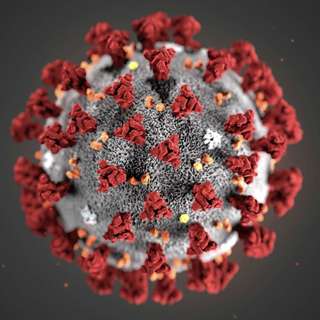
Rob & Howie on what we do and don't know about 2019-nCoV

Rob & Howie on what we do and don't know about 2019-nCoV

Two 80,000 Hours researchers, Robert Wiblin and Howie Lempel, record an experimental bonus episode about the new 2019-nCoV virus.See this list of resources, including many discussed in the episode, to...

3 Helmi 20201h 18min

#68 - Will MacAskill on the paralysis argument, whether we're at the hinge of history, & his new priorities

#68 - Will MacAskill on the paralysis argument, whether we're at the hinge of history, & his new priorities

You’re given a box with a set of dice in it. If you roll an even number, a person's life is saved. If you roll an odd number, someone else will die. Each time you shake the box you get $10. Should you...

24 Tammi 20203h 25min

#44 Classic episode - Paul Christiano on finding real solutions to the AI alignment problem

#44 Classic episode - Paul Christiano on finding real solutions to the AI alignment problem

Rebroadcast: this episode was originally released in October 2018. Paul Christiano is one of the smartest people I know. After our first session produced such great material, we decided to do a seco...

15 Tammi 20203h 51min

#33 Classic episode - Anders Sandberg on cryonics, solar flares, and the annual odds of nuclear war

#33 Classic episode - Anders Sandberg on cryonics, solar flares, and the annual odds of nuclear war

Rebroadcast: this episode was originally released in May 2018. Joseph Stalin had a life-extension program dedicated to making himself immortal. What if he had succeeded? According to Bryan Caplan ...

8 Tammi 20201h 25min

#17 Classic episode - Will MacAskill on moral uncertainty, utilitarianism & how to avoid being a moral monster

#17 Classic episode - Will MacAskill on moral uncertainty, utilitarianism & how to avoid being a moral monster

Rebroadcast: this episode was originally released in January 2018. Immanuel Kant is a profoundly influential figure in modern philosophy, and was one of the earliest proponents for universal democracy...

31 Joulu 20191h 52min

#67 – David Chalmers on the nature and ethics of consciousness

#67 – David Chalmers on the nature and ethics of consciousness

What is it like to be you right now? You're seeing this text on the screen, smelling the coffee next to you, and feeling the warmth of the cup. There’s a lot going on in your head — your conscious exp...

16 Joulu 20194h 41min

#66 – Peter Singer on being provocative, effective altruism, & how his moral views have changed

#66 – Peter Singer on being provocative, effective altruism, & how his moral views have changed

In 1989, the professor of moral philosophy Peter Singer was all over the news for his inflammatory opinions about abortion. But the controversy stemmed from Practical Ethics — a book he’d actually rel...

5 Joulu 20192h 1min

#65 – Ambassador Bonnie Jenkins on 8 years pursuing WMD arms control, & diversity in diplomacy

#65 – Ambassador Bonnie Jenkins on 8 years pursuing WMD arms control, & diversity in diplomacy

"…it started when the Soviet Union fell apart and there was a real desire to ensure security of nuclear materials and pathogens, and that scientists with [WMD-related] knowledge could get paid so that...

19 Marras 20191h 40min

Suosittua kategoriassa Koulutus

rss-murhan-anatomia
psykopodiaa-podcast
voi-hyvin-meditaatiot-2
rss-narsisti
adhd-podi
psykologia
rss-liian-kuuma-peruna
kesken
rss-niinku-asia-on
rss-duodecim-lehti
ihminen-tavattavissa-tommy-hellsten-instituutti
rahapuhetta
aamukahvilla
rss-honest-talk-with-laurrenna
rss-luonnollinen-synnytys-podcast
rss-tietoinen-yhteys-podcast-2
rss-opeklubi
rss-vapaudu-voimaasi
nakokulmia-rikollisuudesta-irrottautumiseen
rss-arkea-ja-aurinkoa-podcast-espanjasta