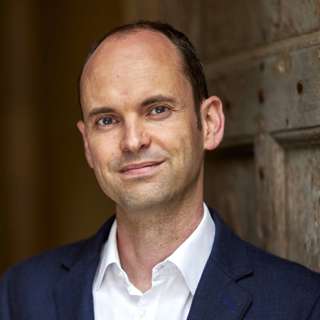

#72 - Toby Ord on the precipice and humanity's potential futures

#72 - Toby Ord on the precipice and humanity's potential futures

This week Oxford academic and 80,000 Hours trustee Dr Toby Ord released his new book The Precipice: Existential Risk and the Future of Humanity. It's about how our long-term future could be better than almost anyone believes, but also how humanity's recklessness is putting that future at grave risk — in Toby's reckoning, a 1 in 6 chance of being extinguished this century.

I loved the book and learned a great deal from it (buy it here, US and audiobook release March 24). While preparing for this interview I copied out 87 facts that were surprising, shocking or important. Here's a sample of 16:

1. The probability of a supervolcano causing a civilisation-threatening catastrophe in the next century is estimated to be 100x that of asteroids and comets combined.

2. The Biological Weapons Convention — a global agreement to protect humanity — has just four employees, and a smaller budget than an average McDonald’s.

3. In 2008 a 'gamma ray burst' reached Earth from another galaxy, 10 billion light years away. It was still bright enough to be visible to the naked eye. We aren't sure what generates gamma ray bursts but one cause may be two neutron stars colliding.

4. Before detonating the first nuclear weapon, scientists in the Manhattan Project feared that the high temperatures in the core, unprecedented for Earth, might be able to ignite the hydrogen in water. This would set off a self-sustaining reaction that would burn off the Earth’s oceans, killing all life above ground. They thought this was unlikely, but many atomic scientists feared their calculations could be missing something. As far as we know, the US President was never informed of this possibility, but similar risks were one reason Hitler stopped…

N.B. I've had to cut off this list as we only get 4,000 characters in these show notes, so:

Click here to read the whole list, see a full transcript, and find related links.

And if you like the list, you can get a free copy of the introduction and first chapter by joining our mailing list.

While I've been studying these topics for years and known Toby for the last eight, a remarkable amount of what's in The Precipice was new to me.

Of course the book isn't a series of isolated amusing facts, but rather a systematic review of the many ways humanity's future could go better or worse, how we might know about them, and what might be done to improve the odds.

And that's how we approach this conversation, first talking about each of the main threats, then how we can learn about things that have never happened before, then finishing with what a great future for humanity might look like and how it might be achieved.

Toby is a famously good explainer of complex issues — a bit of a modern Carl Sagan character — so as expected this was a great interview, and one which Arden Koehler and I barely even had to work for.

Some topics Arden and I ask about include:

• What Toby changed his mind about while writing the book
• Are people exaggerating when they say that climate change could actually end civilization?
• What can we learn from historical pandemics?
• Toby’s estimate of unaligned AI causing human extinction in the next century
• Is this century the most important time in human history, or is that a narcissistic delusion?
• Competing vision for humanity's ideal future
• And more.

Get this episode by subscribing: type '80,000 Hours' into your podcasting app. Or read the linked transcript.

Producer: Keiran Harris.
Audio mastering: Ben Cordell.
Transcriptions: Zakee Ulhaq.

Jaksot(321)

#16 - Michelle Hutchinson on global priorities research & shaping the ideas of intellectuals

#16 - Michelle Hutchinson on global priorities research & shaping the ideas of intellectuals

In the 40s and 50s neoliberalism was a fringe movement within economics. But by the 80s it had become a dominant school of thought in public policy, and achieved major policy changes across the Englis...

22 Joulu 201755min
#15 - Phil Tetlock on how chimps beat Berkeley undergrads and when it’s wise to defer to the wise

#15 - Phil Tetlock on how chimps beat Berkeley undergrads and when it’s wise to defer to the wise

Prof Philip Tetlock is a social science legend. Over forty years he has researched whose predictions we can trust, whose we can’t and why - and developed methods that allow all of us to be better at p...

20 Marras 20171h 24min
#14 - Sharon Nunez & Jose Valle on going undercover to expose animal abuse

#14 - Sharon Nunez & Jose Valle on going undercover to expose animal abuse

What if you knew that ducks were being killed with pitchforks? Rabbits dumped alive into containers? Or pigs being strangled with forklifts? Would you be willing to go undercover to expose the crime? ...

13 Marras 20171h 25min
#13 - Claire Walsh on testing which policies work & how to get governments to listen to the results

#13 - Claire Walsh on testing which policies work & how to get governments to listen to the results

In both rich and poor countries, government policy is often based on no evidence at all and many programs don’t work. This has particularly harsh effects on the global poor - in some countries governm...

31 Loka 201752min
#12 - Beth Cameron works to stop you dying in a pandemic. Here’s what keeps her up at night.

#12 - Beth Cameron works to stop you dying in a pandemic. Here’s what keeps her up at night.

“When you're in the middle of a crisis and you have to ask for money, you're already too late.” That’s Dr Beth Cameron, who leads Global Biological Policy and Programs at the Nuclear Threat Initiative...

25 Loka 20171h 45min

#11 - Spencer Greenberg on speeding up social science 10-fold & why plenty of startups cause harm

#11 - Spencer Greenberg on speeding up social science 10-fold & why plenty of startups cause harm

Do most meat eaters think it’s wrong to hurt animals? Do Americans think climate change is likely to cause human extinction? What is the best, state-of-the-art therapy for depression? How can we make ...

17 Loka 20171h 29min
#10 - Nick Beckstead on how to spend billions of dollars preventing human extinction

#10 - Nick Beckstead on how to spend billions of dollars preventing human extinction

What if you were in a position to give away billions of dollars to improve the world? What would you do with it? This is the problem facing Program Officers at the Open Philanthropy Project - people l...

11 Loka 20171h 51min
#9 - Christine Peterson on how insecure computers could lead to global disaster, and how to fix it

#9 - Christine Peterson on how insecure computers could lead to global disaster, and how to fix it

Take a trip to Silicon Valley in the 70s and 80s, when going to space sounded like a good way to get around environmental limits, people started cryogenically freezing themselves, and nanotechnology l...

4 Loka 20171h 45min

Suosittua kategoriassa Koulutus

rss-murhan-anatomia
psykopodiaa-podcast
voi-hyvin-meditaatiot-2
rss-narsisti
rss-liian-kuuma-peruna
rss-vapaudu-voimaasi
rss-hereilla
dear-ladies
rss-uskonto-on-tylsaa
rss-valo-minussa-2
ihminen-tavattavissa-tommy-hellsten-instituutti
leveli
rss-luonnollinen-synnytys-podcast
rss-tietoinen-yhteys-podcast-2
adhd-podi
aloita-meditaatio
kesken
psykologia
rss-duodecim-lehti
esa-saarinen-filosofia-ja-systeemiajattelu