#73 – Phil Trammell on patient philanthropy and waiting to do good
80,000 Hours Podcast17 Maalis 2020

#73 – Phil Trammell on patient philanthropy and waiting to do good

To do good, most of us look to use our time and money to affect the world around us today. But perhaps that's all wrong.

If you took $1,000 you were going to donate and instead put it in the stock market — where it grew on average 5% a year — in 100 years you'd have $125,000 to give away instead. And in 200 years you'd have $17 million.

This astonishing fact has driven today's guest, economics researcher Philip Trammell at Oxford's Global Priorities Institute, to investigate the case for and against so-called 'patient philanthropy' in depth. If the case for patient philanthropy is as strong as Phil believes, many of us should be trying to improve the world in a very different way than we are now.

He points out that on top of being able to dispense vastly more, whenever your trustees decide to use your gift to improve the world, they'll also be able to rely on the much broader knowledge available to future generations. A donor two hundred years ago couldn't have known distributing anti-malarial bed nets was a good idea. Not only did bed nets not exist — we didn't even know about germs, and almost nothing in medicine was justified by science.

ADDED: Does the COVID-19 emergency mean we should actually use resources right now? See Phil's first thoughts on this question here.

Links to learn more, summary and full transcript.

What similar leaps will our descendants have made in 200 years, allowing your now vast foundation to benefit more people in even greater ways?

And there's a third reason to wait as well. What are the odds that we today live at the most critical point in history, when resources happen to have the greatest ability to do good? It's possible. But the future may be very long, so there has to be a good chance that some moment in the future will be both more pivotal and more malleable than our own.

Of course, there are many objections to this proposal. If you start a foundation you hope will wait around for centuries, might it not be destroyed in a war, revolution, or financial collapse?

Or might it not drift from its original goals, eventually just serving the interest of its distant future trustees, rather than the noble pursuits you originally intended?

Or perhaps it could fail for the reverse reason, by staying true to your original vision — if that vision turns out to be as deeply morally mistaken as the Rhodes' Scholarships initial charter, which limited it to 'white Christian men'.

Alternatively, maybe the world will change in the meantime, making your gift useless. At one end, humanity might destroy itself before your trust tries to do anything with the money. Or perhaps everyone in the future will be so fabulously wealthy, or the problems of the world already so overcome, that your philanthropy will no longer be able to do much good.

Are these concerns, all of them legitimate, enough to overcome the case in favour of patient philanthropy? In today's conversation with researcher Phil Trammell and my 80,000 Hours colleague Howie Lempel, we try to answer that, and also discuss:

• Real attempts at patient philanthropy in history and how they worked out
• Should we have a mixed strategy, where some altruists are patient and others impatient?
• Which causes most need money now, and which later?
• What is the research frontier here?
• What does this all mean for what listeners should do differently?

Chapters:

  • Rob’s intro (00:00:00)
  • The interview begins (00:02:23)
  • Consequences for getting this question wrong (00:06:03)
  • What have people had to say about this question in the past? (00:07:22)
  • The case for saving (00:11:51)
  • Hundred year leases (00:29:28)
  • Should we be concerned about one group taking control of the world? (00:34:51)
  • Finding better interventions in the future (00:37:20)
  • The hinge of history (00:43:46)
  • Does uncertainty lead us to wanting to wait? (01:01:52)
  • Counterarguments (01:11:36)
  • What about groups who have a particular sense of urgency? (01:40:46)
  • How much should we actually save? (02:01:35)
  • Implications for career choices (02:19:49)


Producer: Keiran Harris.
Audio mastering: Ben Cordell.
Transcriptions: Zakee Ulhaq.

Jaksot(323)

#90 – Ajeya Cotra on worldview diversification and how big the future could be

#90 – Ajeya Cotra on worldview diversification and how big the future could be

You wake up in a mysterious box, and hear the booming voice of God: “I just flipped a coin. If it came up heads, I made ten boxes, labeled 1 through 10 — each of which has a human in it. If it ca...

21 Tammi 20212h 59min

Rob Wiblin on self-improvement and research ethics

Rob Wiblin on self-improvement and research ethics

This is a crosspost of an episode of the Clearer Thinking Podcast: 022: Self-Improvement and Research Ethics with Rob Wiblin. Rob chats with Spencer Greenberg, who has been an audience favourite in...

13 Tammi 20212h 30min

#73 - Phil Trammell on patient philanthropy and waiting to do good [re-release]

#73 - Phil Trammell on patient philanthropy and waiting to do good [re-release]

Rebroadcast: this episode was originally released in March 2020. To do good, most of us look to use our time and money to affect the world around us today. But perhaps that's all wrong. If you too...

7 Tammi 20212h 41min

#75 – Michelle Hutchinson on what people most often ask 80,000 Hours [re-release]

#75 – Michelle Hutchinson on what people most often ask 80,000 Hours [re-release]

Rebroadcast: this episode was originally released in April 2020. Since it was founded, 80,000 Hours has done one-on-one calls to supplement our online content and offer more personalised advice. We ...

30 Joulu 20202h 14min
#89 – Owen Cotton-Barratt on epistemic systems and layers of defense against potential global catastrophes

#89 – Owen Cotton-Barratt on epistemic systems and layers of defense against potential global catastrophes

From one point of view academia forms one big 'epistemic' system — a process which directs attention, generates ideas, and judges which are good. Traditional print media is another such system, and we...

17 Joulu 20202h 38min
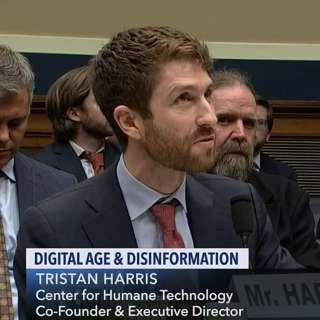
#88 – Tristan Harris on the need to change the incentives of social media companies

#88 – Tristan Harris on the need to change the incentives of social media companies

In its first 28 days on Netflix, the documentary The Social Dilemma — about the possible harms being caused by social media and other technology products — was seen by 38 million households in about 1...

3 Joulu 20202h 35min
Benjamin Todd on what the effective altruism community most needs (80k team chat #4)

Benjamin Todd on what the effective altruism community most needs (80k team chat #4)

In the last '80k team chat' with Ben Todd and Arden Koehler, we discussed what effective altruism is and isn't, and how to argue for it. In this episode we turn now to what the effective altruism comm...

12 Marras 20201h 25min
#87 – Russ Roberts on whether it's more effective to help strangers, or people you know

#87 – Russ Roberts on whether it's more effective to help strangers, or people you know

If you want to make the world a better place, would it be better to help your niece with her SATs, or try to join the State Department to lower the risk that the US and China go to war? People involve...

3 Marras 20201h 49min

Suosittua kategoriassa Koulutus

rss-murhan-anatomia
voi-hyvin-meditaatiot-2
rss-narsisti
psykopodiaa-podcast
psykologia
rss-uskonto-on-tylsaa
rss-vapaudu-voimaasi
rss-liian-kuuma-peruna
kesken
rahapuhetta
rss-niinku-asia-on
adhd-podi
rss-taloustaito-podcast
jari-sarasvuo-podcast
rss-the-amicast
rss-valo-minussa-2
rss-xamk-podcast
rss-arkea-ja-aurinkoa-podcast-espanjasta
rss-opi-espanjaa
rss-hereilla