
#74 – Dr Greg Lewis on COVID-19 & catastrophic biological risks

#74 – Dr Greg Lewis on COVID-19 & catastrophic biological risks

Our lives currently revolve around the global emergency of COVID-19; you’re probably reading this while confined to your house, as the death toll from the worst pandemic since 1918 continues to rise.

The question of how to tackle COVID-19 has been foremost in the minds of many, including here at 80,000 Hours.

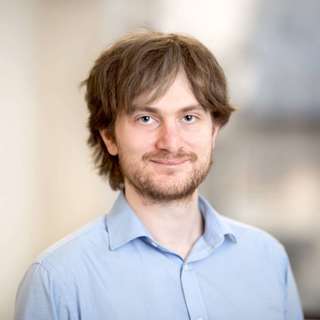
Today's guest, Dr Gregory Lewis, acting head of the Biosecurity Research Group at Oxford University's Future of Humanity Institute, puts the crisis in context, explaining how COVID-19 compares to other diseases, pandemics of the past, and possible worse crises in the future.

COVID-19 is a vivid reminder that we are unprepared to contain or respond to new pathogens.

How would we cope with a virus that was even more contagious and even more deadly? Greg's work focuses on these risks -- of outbreaks that threaten our entire future through an unrecoverable collapse of civilisation, or even the extinction of humanity.

Links to learn more, summary and full transcript.

If such a catastrophe were to occur, Greg believes it’s more likely to be caused by accidental or deliberate misuse of biotechnology than by a pathogen developed by nature.

There are a few direct causes for concern: humans now have the ability to produce some of the most dangerous diseases in history in the lab; technological progress may enable the creation of pathogens which are nastier than anything we see in nature; and most biotechnology has yet to even be conceived, so we can’t assume all the dangers will be familiar.

This is grim stuff, but it needn’t be paralysing. In the years following COVID-19, humanity may be inspired to better prepare for the existential risks of the next century: improving our science, updating our policy options, and enhancing our social cohesion.

COVID-19 is a tragedy of stunning proportions, and its immediate threat is undoubtedly worthy of significant resources.

But we will get through it; if a future biological catastrophe poses an existential risk, we may not get a second chance. It is therefore vital to learn every lesson we can from this pandemic, and provide our descendants with the security we wish for ourselves.

Today’s episode is the hosting debut of our Strategy Advisor, Howie Lempel.

80,000 Hours has focused on COVID-19 for the last few weeks and published over ten pieces about it, and a substantial benefit of this interview was to help inform our own views. As such, at times this episode may feel like eavesdropping on a private conversation, and it is likely to be of most interest to people primarily focused on making the long-term future go as well as possible.

In this episode, Howie and Greg cover:

• Reflections on the first few months of the pandemic
• Common confusions around COVID-19
• How COVID-19 compares to other diseases
• What types of interventions have been available to policymakers
• Arguments for and against working on global catastrophic biological risks (GCBRs)
• How to know if you’re a good fit to work on GCBRs
• The response of the effective altruism community, as well as 80,000 Hours in particular, to COVID-19
• And much more.

Chapters:

  • Rob’s intro (00:00:00)
  • The interview begins (00:03:15)
  • What is COVID-19? (00:16:05)
  • If you end up infected, how severe is it likely to be? (00:19:21)
  • How does COVID-19 compare to other diseases? (00:25:42)
  • Common confusions around COVID-19 (00:32:02)
  • What types of interventions were available to policymakers? (00:46:20)
  • Nonpharmaceutical Interventions (01:04:18)
  • What can you do personally? (01:18:25)
  • Reflections on the first few months of the pandemic (01:23:46)
  • Global catastrophic biological risks (GCBRs) (01:26:17)
  • Counterarguments to working on GCBRs (01:45:56)
  • How do GCBRs compare to other problems? (01:49:05)
  • Careers (01:59:50)
  • The response of the effective altruism community to COVID-19 (02:11:42)
  • The response of 80,000 Hours to COVID-19 (02:28:12)


Get this episode by subscribing: type '80,000 Hours' into your podcasting app. Or read the linked transcript.

Producer: Keiran Harris.
Audio mastering: Ben Cordell.
Transcriptions: Zakee Ulhaq.

Jaksot(323)

#104 – Pardis Sabeti on the Sentinel system for detecting and stopping pandemics

#104 – Pardis Sabeti on the Sentinel system for detecting and stopping pandemics

When the first person with COVID-19 went to see a doctor in Wuhan, nobody could tell that it wasn’t a familiar disease like the flu — that we were dealing with something new. How much death and destru...

29 Kesä 20212h 20min
#103 – Max Roser on building the world's best source of COVID-19 data at Our World in Data

#103 – Max Roser on building the world's best source of COVID-19 data at Our World in Data

History is filled with stories of great people stepping up in times of crisis. Presidents averting wars; soldiers leading troops away from certain death; data scientists sleeping on the office floor t...

21 Kesä 20212h 22min

#102 – Tom Moynihan on why prior generations missed some of the biggest priorities of all

#102 – Tom Moynihan on why prior generations missed some of the biggest priorities of all

It can be tough to get people to truly care about reducing existential risks today. But spare a thought for the longtermist of the 17th century: they were surrounded by people who thought extinction w...

11 Kesä 20213h 56min
#101 – Robert Wright on using cognitive empathy to save the world

#101 – Robert Wright on using cognitive empathy to save the world

In 2003, Saddam Hussein refused to let Iraqi weapons scientists leave the country to be interrogated. Given the overwhelming domestic support for an invasion at the time, most key figures in the U.S. ...

28 Touko 20211h 36min

#100 – Having a successful career with depression, anxiety and imposter syndrome

#100 – Having a successful career with depression, anxiety and imposter syndrome

Today's episode is one of the most remarkable and really, unique, pieces of content we’ve ever produced (and I can say that because I had almost nothing to do with making it!). The producer of this ...

19 Touko 20212h 51min

#99 – Leah Garcés on turning adversaries into allies to change the chicken industry

#99 – Leah Garcés on turning adversaries into allies to change the chicken industry

For a chance to prevent enormous amounts of suffering, would you be brave enough to drive five hours to a remote location to meet a man who seems likely to be your enemy, knowing that it might be an a...

13 Touko 20212h 26min

#98 – Christian Tarsney on future bias and a possible solution to moral fanaticism

#98 – Christian Tarsney on future bias and a possible solution to moral fanaticism

Imagine that you’re in the hospital for surgery. This kind of procedure is always safe, and always successful — but it can take anywhere from one to ten hours. You can’t be knocked out for the operati...

5 Touko 20212h 38min
#97 – Mike Berkowitz on keeping the US a liberal democratic country

#97 – Mike Berkowitz on keeping the US a liberal democratic country

Donald Trump’s attempt to overturn the results of the 2020 election split the Republican party. There were those who went along with it — 147 members of Congress raised objections to the official cert...

20 Huhti 20212h 36min

Suosittua kategoriassa Koulutus

rss-murhan-anatomia
voi-hyvin-meditaatiot-2
rss-narsisti
rss-uskonto-on-tylsaa
rss-liian-kuuma-peruna
rss-vapaudu-voimaasi
psykopodiaa-podcast
psykologia
adhd-podi
rss-valo-minussa-2
aamukahvilla
kesken
rss-duodecim-lehti
rahapuhetta
rss-tietoinen-yhteys-podcast-2
rss-hereilla
dear-ladies
filocast-filosofian-perusteet
ihminen-tavattavissa-tommy-hellsten-instituutti
rss-taloustaito-podcast