#74 – Dr Greg Lewis on COVID-19 & catastrophic biological risks

#74 – Dr Greg Lewis on COVID-19 & catastrophic biological risks

Our lives currently revolve around the global emergency of COVID-19; you’re probably reading this while confined to your house, as the death toll from the worst pandemic since 1918 continues to rise.

The question of how to tackle COVID-19 has been foremost in the minds of many, including here at 80,000 Hours.

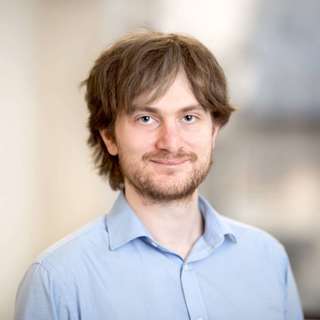
Today's guest, Dr Gregory Lewis, acting head of the Biosecurity Research Group at Oxford University's Future of Humanity Institute, puts the crisis in context, explaining how COVID-19 compares to other diseases, pandemics of the past, and possible worse crises in the future.

COVID-19 is a vivid reminder that we are unprepared to contain or respond to new pathogens.

How would we cope with a virus that was even more contagious and even more deadly? Greg's work focuses on these risks -- of outbreaks that threaten our entire future through an unrecoverable collapse of civilisation, or even the extinction of humanity.

Links to learn more, summary and full transcript.

If such a catastrophe were to occur, Greg believes it’s more likely to be caused by accidental or deliberate misuse of biotechnology than by a pathogen developed by nature.

There are a few direct causes for concern: humans now have the ability to produce some of the most dangerous diseases in history in the lab; technological progress may enable the creation of pathogens which are nastier than anything we see in nature; and most biotechnology has yet to even be conceived, so we can’t assume all the dangers will be familiar.

This is grim stuff, but it needn’t be paralysing. In the years following COVID-19, humanity may be inspired to better prepare for the existential risks of the next century: improving our science, updating our policy options, and enhancing our social cohesion.

COVID-19 is a tragedy of stunning proportions, and its immediate threat is undoubtedly worthy of significant resources.

But we will get through it; if a future biological catastrophe poses an existential risk, we may not get a second chance. It is therefore vital to learn every lesson we can from this pandemic, and provide our descendants with the security we wish for ourselves.

Today’s episode is the hosting debut of our Strategy Advisor, Howie Lempel.

80,000 Hours has focused on COVID-19 for the last few weeks and published over ten pieces about it, and a substantial benefit of this interview was to help inform our own views. As such, at times this episode may feel like eavesdropping on a private conversation, and it is likely to be of most interest to people primarily focused on making the long-term future go as well as possible.

In this episode, Howie and Greg cover:

• Reflections on the first few months of the pandemic
• Common confusions around COVID-19
• How COVID-19 compares to other diseases
• What types of interventions have been available to policymakers
• Arguments for and against working on global catastrophic biological risks (GCBRs)
• How to know if you’re a good fit to work on GCBRs
• The response of the effective altruism community, as well as 80,000 Hours in particular, to COVID-19
• And much more.

Chapters:

  • Rob’s intro (00:00:00)
  • The interview begins (00:03:15)
  • What is COVID-19? (00:16:05)
  • If you end up infected, how severe is it likely to be? (00:19:21)
  • How does COVID-19 compare to other diseases? (00:25:42)
  • Common confusions around COVID-19 (00:32:02)
  • What types of interventions were available to policymakers? (00:46:20)
  • Nonpharmaceutical Interventions (01:04:18)
  • What can you do personally? (01:18:25)
  • Reflections on the first few months of the pandemic (01:23:46)
  • Global catastrophic biological risks (GCBRs) (01:26:17)
  • Counterarguments to working on GCBRs (01:45:56)
  • How do GCBRs compare to other problems? (01:49:05)
  • Careers (01:59:50)
  • The response of the effective altruism community to COVID-19 (02:11:42)
  • The response of 80,000 Hours to COVID-19 (02:28:12)


Get this episode by subscribing: type '80,000 Hours' into your podcasting app. Or read the linked transcript.

Producer: Keiran Harris.
Audio mastering: Ben Cordell.
Transcriptions: Zakee Ulhaq.

Jaksot(324)

#42 - Amanda Askell on moral empathy, the value of information & the ethics of infinity

#42 - Amanda Askell on moral empathy, the value of information & the ethics of infinity

Consider two familiar moments at a family reunion. Our host, Uncle Bill, takes pride in his barbecuing skills. But his niece Becky says that she now refuses to eat meat. A groan goes round the table; ...

11 Syys 20182h 46min

#41 - David Roodman on incarceration, geomagnetic storms, & becoming a world-class researcher

#41 - David Roodman on incarceration, geomagnetic storms, & becoming a world-class researcher

With 698 inmates per 100,000 citizens, the U.S. is by far the leader among large wealthy nations in incarceration. But what effect does imprisonment actually have on crime? According to David Roodman...

28 Elo 20182h 18min

#40 - Katja Grace on forecasting future technology & how much we should trust expert predictions

#40 - Katja Grace on forecasting future technology & how much we should trust expert predictions

Experts believe that artificial intelligence will be better than humans at driving trucks by 2027, working in retail by 2031, writing bestselling books by 2049, and working as surgeons by 2053. But ho...

21 Elo 20182h 11min

#39 - Spencer Greenberg on the scientific approach to solving difficult everyday questions

#39 - Spencer Greenberg on the scientific approach to solving difficult everyday questions

Will Trump be re-elected? Will North Korea give up their nuclear weapons? Will your friend turn up to dinner? Spencer Greenberg, founder of ClearerThinking.org has a process for working out such real...

7 Elo 20182h 17min

#38 - Yew-Kwang Ng on anticipating effective altruism decades ago & how to make a much happier world

#38 - Yew-Kwang Ng on anticipating effective altruism decades ago & how to make a much happier world

Will people who think carefully about how to maximize welfare eventually converge on the same views? The effective altruism community has spent a lot of time over the past 10 years debating how best t...

26 Heinä 20181h 59min

#37 - GiveWell picks top charities by estimating the unknowable. James Snowden on how they do it.

#37 - GiveWell picks top charities by estimating the unknowable. James Snowden on how they do it.

What’s the value of preventing the death of a 5-year-old child, compared to a 20-year-old, or an 80-year-old? The global health community has generally regarded the value as proportional to the numbe...

16 Heinä 20181h 44min

#36 - Tanya Singh on ending the operations management bottleneck in effective altruism

#36 - Tanya Singh on ending the operations management bottleneck in effective altruism

Almost nobody is able to do groundbreaking physics research themselves, and by the time his brilliance was appreciated, Einstein was hardly limited by funding. But what if you could find a way to unlo...

11 Heinä 20182h 4min
#35 - Tara Mac Aulay on the audacity to fix the world without asking permission

#35 - Tara Mac Aulay on the audacity to fix the world without asking permission

"You don't need permission. You don't need to be allowed to do something that's not in your job description. If you think that it's gonna make your company or your organization more successful and mor...

21 Kesä 20181h 22min

Suosittua kategoriassa Koulutus

rss-murhan-anatomia
voi-hyvin-meditaatiot-2
rss-narsisti
rss-uskonto-on-tylsaa
rss-vapaudu-voimaasi
psykologia
rss-liian-kuuma-peruna
psykopodiaa-podcast
rss-duodecim-lehti
adhd-podi
aamukahvilla
kesken
rss-valo-minussa-2
rss-tietoinen-yhteys-podcast-2
rss-hereilla
filocast-filosofian-perusteet
rss-taloustaito-podcast
rss-turun-yliopisto
rss-luonnollinen-synnytys-podcast
rss-synapselingo-opi-englantia