#74 – Dr Greg Lewis on COVID-19 & catastrophic biological risks

#74 – Dr Greg Lewis on COVID-19 & catastrophic biological risks

Our lives currently revolve around the global emergency of COVID-19; you’re probably reading this while confined to your house, as the death toll from the worst pandemic since 1918 continues to rise.

The question of how to tackle COVID-19 has been foremost in the minds of many, including here at 80,000 Hours.

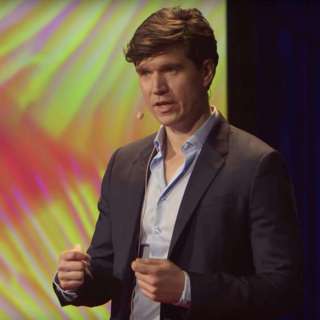
Today's guest, Dr Gregory Lewis, acting head of the Biosecurity Research Group at Oxford University's Future of Humanity Institute, puts the crisis in context, explaining how COVID-19 compares to other diseases, pandemics of the past, and possible worse crises in the future.

COVID-19 is a vivid reminder that we are unprepared to contain or respond to new pathogens.

How would we cope with a virus that was even more contagious and even more deadly? Greg's work focuses on these risks -- of outbreaks that threaten our entire future through an unrecoverable collapse of civilisation, or even the extinction of humanity.

Links to learn more, summary and full transcript.

If such a catastrophe were to occur, Greg believes it’s more likely to be caused by accidental or deliberate misuse of biotechnology than by a pathogen developed by nature.

There are a few direct causes for concern: humans now have the ability to produce some of the most dangerous diseases in history in the lab; technological progress may enable the creation of pathogens which are nastier than anything we see in nature; and most biotechnology has yet to even be conceived, so we can’t assume all the dangers will be familiar.

This is grim stuff, but it needn’t be paralysing. In the years following COVID-19, humanity may be inspired to better prepare for the existential risks of the next century: improving our science, updating our policy options, and enhancing our social cohesion.

COVID-19 is a tragedy of stunning proportions, and its immediate threat is undoubtedly worthy of significant resources.

But we will get through it; if a future biological catastrophe poses an existential risk, we may not get a second chance. It is therefore vital to learn every lesson we can from this pandemic, and provide our descendants with the security we wish for ourselves.

Today’s episode is the hosting debut of our Strategy Advisor, Howie Lempel.

80,000 Hours has focused on COVID-19 for the last few weeks and published over ten pieces about it, and a substantial benefit of this interview was to help inform our own views. As such, at times this episode may feel like eavesdropping on a private conversation, and it is likely to be of most interest to people primarily focused on making the long-term future go as well as possible.

In this episode, Howie and Greg cover:

• Reflections on the first few months of the pandemic
• Common confusions around COVID-19
• How COVID-19 compares to other diseases
• What types of interventions have been available to policymakers
• Arguments for and against working on global catastrophic biological risks (GCBRs)
• How to know if you’re a good fit to work on GCBRs
• The response of the effective altruism community, as well as 80,000 Hours in particular, to COVID-19
• And much more.

Chapters:

  • Rob’s intro (00:00:00)
  • The interview begins (00:03:15)
  • What is COVID-19? (00:16:05)
  • If you end up infected, how severe is it likely to be? (00:19:21)
  • How does COVID-19 compare to other diseases? (00:25:42)
  • Common confusions around COVID-19 (00:32:02)
  • What types of interventions were available to policymakers? (00:46:20)
  • Nonpharmaceutical Interventions (01:04:18)
  • What can you do personally? (01:18:25)
  • Reflections on the first few months of the pandemic (01:23:46)
  • Global catastrophic biological risks (GCBRs) (01:26:17)
  • Counterarguments to working on GCBRs (01:45:56)
  • How do GCBRs compare to other problems? (01:49:05)
  • Careers (01:59:50)
  • The response of the effective altruism community to COVID-19 (02:11:42)
  • The response of 80,000 Hours to COVID-19 (02:28:12)


Get this episode by subscribing: type '80,000 Hours' into your podcasting app. Or read the linked transcript.

Producer: Keiran Harris.
Audio mastering: Ben Cordell.
Transcriptions: Zakee Ulhaq.

Jaksot(320)

#23 - How to actually become an AI alignment researcher, according to Dr Jan Leike

#23 - How to actually become an AI alignment researcher, according to Dr Jan Leike

Want to help steer the 21st century’s most transformative technology? First complete an undergrad degree in computer science and mathematics. Prioritize harder courses over easier ones. Publish at lea...

16 Maalis 201845min

#22 - Leah Utyasheva on the non-profit that figured out how to massively cut suicide rates

#22 - Leah Utyasheva on the non-profit that figured out how to massively cut suicide rates

How people kill themselves varies enormously depending on which means are most easily available. In the United States, suicide by firearm stands out. In Hong Kong, where most people live in high rise ...

7 Maalis 20181h 8min

#21 - Holden Karnofsky on times philanthropy transformed the world & Open Phil’s plan to do the same

#21 - Holden Karnofsky on times philanthropy transformed the world & Open Phil’s plan to do the same

The Green Revolution averted mass famine during the 20th century. The contraceptive pill gave women unprecedented freedom in planning their own lives. Both are widely recognised as scientific breakthr...

27 Helmi 20182h 35min

#20 - Bruce Friedrich on inventing outstanding meat substitutes to end speciesism & factory farming

#20 - Bruce Friedrich on inventing outstanding meat substitutes to end speciesism & factory farming

Before the US Civil War, it was easier for the North to morally oppose slavery. Why? Because unlike the South they weren’t profiting much from its existence. The fight for abolition was partly won bec...

19 Helmi 20181h 18min

#19 - Samantha Pitts-Kiefer on working next to the White House trying to prevent nuclear war

#19 - Samantha Pitts-Kiefer on working next to the White House trying to prevent nuclear war

Rogue elements within a state’s security forces enrich dozens of kilograms of uranium. It’s then assembled into a crude nuclear bomb. The bomb is transported on a civilian aircraft to Washington D.C, ...

14 Helmi 20181h 4min

#18 - Ofir Reich on using data science to end poverty & the spurious action-inaction distinction

#18 - Ofir Reich on using data science to end poverty & the spurious action-inaction distinction

Ofir Reich started out doing math in the military, before spending 8 years in tech startups - but then made a sharp turn to become a data scientist focussed on helping the global poor. At UC Berkeley...

31 Tammi 20181h 18min

#17 - Will MacAskill on moral uncertainty, utilitarianism & how to avoid being a moral monster

#17 - Will MacAskill on moral uncertainty, utilitarianism & how to avoid being a moral monster

Immanuel Kant is a profoundly influential figure in modern philosophy, and was one of the earliest proponents for universal democracy and international cooperation. He also thought that women have no ...

19 Tammi 20181h 52min

#16 - Michelle Hutchinson on global priorities research & shaping the ideas of intellectuals

#16 - Michelle Hutchinson on global priorities research & shaping the ideas of intellectuals

In the 40s and 50s neoliberalism was a fringe movement within economics. But by the 80s it had become a dominant school of thought in public policy, and achieved major policy changes across the Englis...

22 Joulu 201755min

Suosittua kategoriassa Koulutus

rss-murhan-anatomia
psykopodiaa-podcast
rss-narsisti
voi-hyvin-meditaatiot-2
aamukahvilla
rss-vapaudu-voimaasi
rss-niinku-asia-on
adhd-podi
rss-liian-kuuma-peruna
kesken
psykologia
dear-ladies
rss-koira-haudattuna
leveli
rss-luonnollinen-synnytys-podcast
rahapuhetta
aloita-meditaatio
rss-duodecim-lehti
jari-sarasvuo-podcast
rss-palopaikalla-podcast