

#75 – Michelle Hutchinson on what people most often ask 80,000 Hours

#75 – Michelle Hutchinson on what people most often ask 80,000 Hours

Since it was founded, 80,000 Hours has done one-on-one calls to supplement our online content and offer more personalised advice. We try to help people get clear on their most plausible paths, the key uncertainties they face in choosing between them, and provide resources, pointers, and introductions to help them in those paths.

I (Michelle Hutchinson) joined the team a couple of years ago after working at Oxford's Global Priorities Institute, and these days I'm 80,000 Hours' Head of Advising. Since then, chatting to hundreds of people about their career plans has given me some idea of the kinds of things it’s useful for people to hear about when thinking through their careers.

So we thought it would be useful to discuss some on the show for everyone to hear.

Links to learn more, summary and full transcript.
See over 500 vacancies on our job board.
Apply for one-on-one career advising.

Among other common topics, we cover:

• Why traditional careers advice involves thinking through what types of roles you enjoy followed by which of those are impactful, while we recommend going the other way: ranking roles on impact, and then going down the list to find the one you think you’d most flourish in.
• That if you’re pitching your job search at the right level of role, you’ll need to apply to a large number of different jobs. So it's wise to broaden your options, by applying for both stretch and backup roles, and not over-emphasising a small number of organisations.
• Our suggested process for writing a longer term career plan: 1. shortlist your best medium to long-term career options, then 2. figure out the key uncertainties in choosing between them, and 3. map out concrete next steps to resolve those uncertainties.
• Why many listeners aren't spending enough time finding out about what the day-to-day work is like in paths they're considering, or reaching out to people for advice or opportunities.
• The difficulty of maintaining the ambition to increase your social impact, while also being proud of and motivated by what you're already accomplishing.

I also thought it might be useful to give people a sense of what I do and don’t do in advising calls, to help them figure out if they should sign up for it.

If you’re wondering whether you’ll benefit from advising, bear in mind that it tends to be more useful to people:

1. With similar views to 80,000 Hours on what the world’s most pressing problems are, because we’ve done most research on the problems we think it’s most important to address.
2. Who don’t yet have close connections with people working at effective altruist organisations.
3. Who aren’t strongly locationally constrained.

If you’re unsure, it doesn’t take long to apply, and a lot of people say they find the application form itself helps them reflect on their plans. We’re particularly keen to hear from people from under-represented backgrounds.

Also in this episode:

• I describe mistakes I’ve made in advising, and career changes made by people I’ve spoken with.
• Rob and I argue about what risks to take with your career, like when it’s sensible to take a study break, or start from the bottom in a new career path.
• I try to forecast how I’ll change after I have a baby, Rob speculates wildly on what motherhood is like, and Arden and I mercilessly mock Rob.

Chapters:

  • Rob’s intro (00:00:00)
  • The interview begins (00:02:50)
  • The process of advising (00:09:34)
  • We’re not just excited about our priority paths (00:14:37)
  • Common things Michelle says during advising (00:18:13)
  • Interpersonal comparisons (00:31:18)
  • Thinking about current impact (00:40:31)
  • Applying to different kinds of orgs (00:42:29)
  • Difference in impact between jobs / causes (00:49:04)
  • Common mistakes (00:55:40)
  • Career change stories (01:11:44)
  • When is advising really useful for people? (01:24:28)
  • Managing risk in careers (01:55:29)


Producer: Keiran Harris.
Audio mastering: Ben Cordell.
Transcriptions: Zakee Ulhaq.

Jaksot(320)

#60 - Phil Tetlock on why accurate forecasting matters for everything, and how you can do it better

#60 - Phil Tetlock on why accurate forecasting matters for everything, and how you can do it better

Have you ever been infuriated by a doctor's unwillingness to give you an honest, probabilistic estimate about what to expect? Or a lawyer who won't tell you the chances you'll win your case? Their beh...

28 Kesä 20192h 11min

#59 – Cass Sunstein on how change happens, and why it's so often abrupt & unpredictable

#59 – Cass Sunstein on how change happens, and why it's so often abrupt & unpredictable

It can often feel hopeless to be an activist seeking social change on an obscure issue where most people seem opposed or at best indifferent to you. But according to a new book by Professor Cass Sunst...

17 Kesä 20191h 43min

#58 – Pushmeet Kohli of DeepMind on designing robust & reliable AI systems and how to succeed in AI

#58 – Pushmeet Kohli of DeepMind on designing robust & reliable AI systems and how to succeed in AI

When you're building a bridge, responsibility for making sure it won't fall over isn't handed over to a few 'bridge not falling down engineers'. Making sure a bridge is safe to use and remains standin...

3 Kesä 20191h 30min

Rob Wiblin on human nature, new technology, and living a happy, healthy & ethical life

Rob Wiblin on human nature, new technology, and living a happy, healthy & ethical life

This is a cross-post of some interviews Rob did recently on two other podcasts — Mission Daily (from 2m) and The Good Life (from 1h13m). Some of the content will be familiar to regular listeners — bu...

13 Touko 20192h 18min
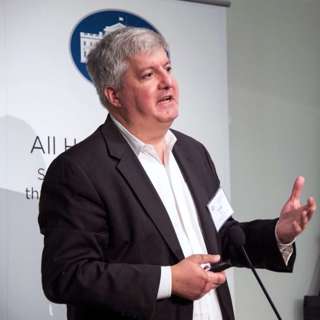
#57 – Tom Kalil on how to do the most good in government

#57 – Tom Kalil on how to do the most good in government

You’re 29 years old, and you’ve just been given a job in the White House. How do you quickly figure out how the US Executive Branch behemoth actually works, so that you can have as much impact as poss...

23 Huhti 20192h 50min

#56 - Persis Eskander on wild animal welfare and what, if anything, to do about it

#56 - Persis Eskander on wild animal welfare and what, if anything, to do about it

Elephants in chains at travelling circuses; pregnant pigs trapped in coffin sized crates at factory farms; deers living in the wild. We should welcome the last as a pleasant break from the horror, rig...

15 Huhti 20192h 57min

#55 – Lutter & Winter on founding charter cities with outstanding governance to end poverty

#55 – Lutter & Winter on founding charter cities with outstanding governance to end poverty

Governance matters. Policy change quickly took China from famine to fortune; Singapore from swamps to skyscrapers; and Hong Kong from fishing village to financial centre. Unfortunately, many governmen...

31 Maalis 20192h 31min

#54 – OpenAI on publication norms, malicious uses of AI, and general-purpose learning algorithms

#54 – OpenAI on publication norms, malicious uses of AI, and general-purpose learning algorithms

OpenAI’s Dactyl is an AI system that can manipulate objects with a human-like robot hand. OpenAI Five is an AI system that can defeat humans at the video game Dota 2. The strange thing is they were bo...

19 Maalis 20192h 53min

Suosittua kategoriassa Koulutus

rss-murhan-anatomia
psykopodiaa-podcast
rss-narsisti
voi-hyvin-meditaatiot-2
aamukahvilla
rss-vapaudu-voimaasi
rss-niinku-asia-on
psykologia
rss-liian-kuuma-peruna
adhd-podi
kesken
dear-ladies
leveli
rss-duodecim-lehti
rss-koira-haudattuna
rss-luonnollinen-synnytys-podcast
rahapuhetta
aloita-meditaatio
ihminen-tavattavissa-tommy-hellsten-instituutti
rss-ai-mita-siskopodcast