
#80 – Stuart Russell on why our approach to AI is broken and how to fix it

#80 – Stuart Russell on why our approach to AI is broken and how to fix it

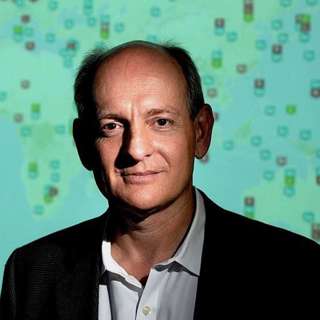
Stuart Russell, Professor at UC Berkeley and co-author of the most popular AI textbook, thinks the way we approach machine learning today is fundamentally flawed.

In his new book, Human Compatible, he outlines the 'standard model' of AI development, in which intelligence is measured as the ability to achieve some definite, completely-known objective that we've stated explicitly. This is so obvious it almost doesn't even seem like a design choice, but it is.

Unfortunately there's a big problem with this approach: it's incredibly hard to say exactly what you want. AI today lacks common sense, and simply does whatever we've asked it to. That's true even if the goal isn't what we really want, or the methods it's choosing are ones we would never accept.

We already see AIs misbehaving for this reason. Stuart points to the example of YouTube's recommender algorithm, which reportedly nudged users towards extreme political views because that made it easier to keep them on the site. This isn't something we wanted, but it helped achieve the algorithm's objective: maximise viewing time.

Like King Midas, who asked to be able to turn everything into gold but ended up unable to eat, we get too much of what we've asked for.

Links to learn more, summary and full transcript.

This 'alignment' problem will get more and more severe as machine learning is embedded in more and more places: recommending us news, operating power grids, deciding prison sentences, doing surgery, and fighting wars. If we're ever to hand over much of the economy to thinking machines, we can't count on ourselves correctly saying exactly what we want the AI to do every time.

Stuart isn't just dissatisfied with the current model though, he has a specific solution. According to him we need to redesign AI around 3 principles:

1. The AI system's objective is to achieve what humans want.
2. But the system isn't sure what we want.
3. And it figures out what we want by observing our behaviour.
Stuart thinks this design architecture, if implemented, would be a big step forward towards reliably beneficial AI.

For instance, a machine built on these principles would be happy to be turned off if that's what its owner thought was best, while one built on the standard model should resist being turned off because being deactivated prevents it from achieving its goal. As Stuart says, "you can't fetch the coffee if you're dead."

These principles lend themselves towards machines that are modest and cautious, and check in when they aren't confident they're truly achieving what we want.

We've made progress toward putting these principles into practice, but the remaining engineering problems are substantial. Among other things, the resulting AIs need to be able to interpret what people really mean to say based on the context of a situation. And they need to guess when we've rejected an option because we've considered it and decided it's a bad idea, and when we simply haven't thought about it at all.

Stuart thinks all of these problems are surmountable, if we put in the work. The harder problems may end up being social and political.

When each of us can have an AI of our own — one smarter than any person — how do we resolve conflicts between people and their AI agents? And if AIs end up doing most work that people do today, how can humans avoid becoming enfeebled, like lazy children tended to by machines, but not intellectually developed enough to know what they really want?

Chapters:

  • Rob’s intro (00:00:00)
  • The interview begins (00:19:06)
  • Human Compatible: Artificial Intelligence and the Problem of Control (00:21:27)
  • Principles for Beneficial Machines (00:29:25)
  • AI moral rights (00:33:05)
  • Humble machines (00:39:35)
  • Learning to predict human preferences (00:45:55)
  • Animals and AI (00:49:33)
  • Enfeeblement problem (00:58:21)
  • Counterarguments (01:07:09)
  • Orthogonality thesis (01:24:25)
  • Intelligence explosion (01:29:15)
  • Policy ideas (01:38:39)
  • What most needs to be done (01:50:14)

Producer: Keiran Harris.
Audio mastering: Ben Cordell.
Transcriptions: Zakee Ulhaq.

Tämä jakso on lisätty Podme-palveluun avoimen RSS-syötteen kautta eikä se ole Podmen omaa tuotantoa. Siksi jakso saattaa sisältää mainontaa.

Jaksot(343)

Jasmine Sun on what the people building AI really believe

Jasmine Sun on what the people building AI really believe

Many AI researchers believe mass job displacement is coming — and some even think there’s a chance their technology will kill everyone. But they’re building it anyway. Writer and journalist Jasmine Su...

21 Heinä 0s

#247 – Anton Leicht on how middle powers avoid losing everything in a post-AI world

#247 – Anton Leicht on how middle powers avoid losing everything in a post-AI world

In a post-AGI world, can a country without access to frontier AI even be considered sovereign anymore?Anton Leicht says once frontier AI becomes a core economic input, the countries that own it will p...

14 Heinä 0s

#246 – Sneha Revanur on how a small team of activists helped pass America's landmark AI safety laws

#246 – Sneha Revanur on how a small team of activists helped pass America's landmark AI safety laws

Six years ago, aged just 15, Sneha Revanur founded the AI advocacy nonprofit Encode AI — back when AI felt like a niche issue. Now the world’s caught up with her, and she’s ready to share everything s...

8 Heinä 52min

We can guess what intergalactic war would look like. And strangely, it matters.

We can guess what intergalactic war would look like. And strangely, it matters.

Intergalactic war is probably billions of years away — yet physics can already tell us how it ends. And strangely that conclusion is relevant to decisions people have to make today.In this video, Rob ...

18 Kesä 15min

How AI could create the world’s biggest problems (article by Zershaaneh Qureshi)

How AI could create the world’s biggest problems (article by Zershaaneh Qureshi)

Imagine you’re living 15,000 years ago. Your people are hunter-gatherers and you sleep under the stars. If someone told you humans would one day build cities with millions of people, fly through the a...

11 Kesä 1h 29min

#245 – Rohin Shah on what it's really like to run AGI safety at Google DeepMind (and where I disagree with 'doomers')

#245 – Rohin Shah on what it's really like to run AGI safety at Google DeepMind (and where I disagree with 'doomers')

Most people working on AI safety think without a massive effort AI systems will probably end up with goals catastrophically different from humanity’s. Today’s guest, Rohin Shah — head of AGI Safety an...

2 Kesä 2h 48min

What makes for a dream job? | Benjamin Todd

What makes for a dream job? | Benjamin Todd

What actually makes a job fulfilling? It's not what most career advice tells you. "Follow your passion" sounds inspiring, but it's misleading — and the research backs that up.Drawing on hundreds of st...

28 Touko 28min

#244 – Benjamin Todd on how we’re updating our career advice for the strangest time in history

#244 – Benjamin Todd on how we’re updating our career advice for the strangest time in history

The average career is 80,000 hours long. With AI advancing so rapidly, the hours you have left in your career matter more than ever.Some leading AI researchers think there’s a 10% chance that AI syste...

26 Touko 1h 6min

Suosittua kategoriassa Koulutus

rss-murhan-anatomia
psykopodiaa-podcast
voi-hyvin-meditaatiot-2
rss-arkea-ja-aurinkoa-podcast-espanjasta
aamukahvilla
kesken
rss-luonnollinen-synnytys-podcast
rss-koira-haudattuna
rss-narsisti
rss-rahataito-podcast
ihminen-tavattavissa-tommy-hellsten-instituutti
rss-hereilla
rahapuhetta
solu-ja-molekyylibiologian-perusteet
mielipaivakirja
rss-liian-kuuma-peruna
rss-perho-rajoilla
ilona-rauhala
rss-niinku-asia-on
rss-suomen-aa-podcast