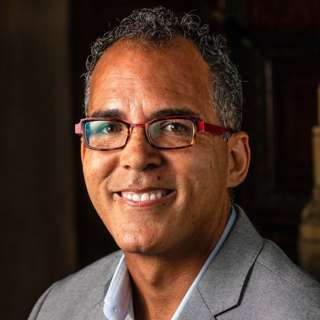

#82 – James Forman Jr on reducing the cruelty of the US criminal legal system
80,000 Hours Podcast27 Heinä 2020

#82 – James Forman Jr on reducing the cruelty of the US criminal legal system

No democracy has ever incarcerated as many people as the United States. To get its incarceration rate down to the global average, the US would have to release 3 in 4 people in its prisons today.

The effects on Black Americans have been especially severe — Black people make up 12% of the US population but 33% of its prison population. In the early 2000's when incarceration reached its peak, the US government estimated that 32% of Black boys would go to prison at some point in their lives, 5.5 times the figure for whites.

Contrary to popular understanding, nonviolent drug offenders make up less than a fifth of the incarcerated population. The only way to get its incarceration rate near the global average will be to shorten prison sentences for so-called 'violent criminals' — a politically toxic idea. But could we change that?

According to today’s guest, Professor James Forman Jr — a former public defender in Washington DC, Pulitzer Prize-winning author of Locking Up Our Own: Crime and Punishment in Black America, and now a professor at Yale Law School — there are two things we have to do to make that happen.

Links to learn more, summary and full transcript.

First, he thinks we should lose the term 'violent offender', and maybe even 'violent crime'. When you say 'violent crime', most people immediately think of murder and rape — but they're only a small fraction of the crimes that the law deems as violent.

In reality, the crime that puts the most people in prison in the US is robbery. And the law says that robbery is a violent crime whether a weapon is involved or not. By moving away from the catch-all category of 'violent criminals' we can judge the risk posed by individual people more sensibly.

Second, he thinks we should embrace the restorative justice movement. Instead of asking "What was the law? Who broke it? What should the punishment be", restorative justice asks "Who was harmed? Who harmed them? And what can we as a society, including the person who committed the harm, do to try to remedy that harm?"

Instead of being narrowly focused on how many years people should spend in prison as retribution, it starts a different conversation.

You might think this apparently softer approach would be unsatisfying to victims of crime. But James has discovered that a lot of victims of crime find that the current system doesn't help them in any meaningful way. What they primarily want to know is: why did this happen to me?

The best way to find that out is to actually talk to the person who harmed them, and in doing so gain a better understanding of the underlying factors behind the crime. The restorative justice approach facilitates these conversations in a way the current system doesn't allow, and can include restitution, apologies, and face-to-face reconciliation.

That’s just one topic of many covered in today’s episode, with much of the conversation focusing on Professor Forman’s 2018 book Locking Up Our Own — an examination of the historical roots of contemporary criminal justice practices in the US, and his experience setting up a charter school for at-risk youth in DC.

Chapters:

  • Rob’s intro (00:00:00)
  • The interview begins (00:02:02)
  • How did we get here? (00:04:07)
  • The role racism plays in policing today (00:14:47)
  • Black American views on policing and criminal justice (00:22:37)
  • Has the core argument of the book been controversial? (00:31:51)
  • The role that class divisions played in forming the current legal system (00:37:33)
  • What are the biggest problems today? (00:40:56)
  • What changes in policy would make the biggest difference? (00:52:41)
  • Shorter sentences for violent crimes (00:58:26)
  • Important recent successes (01:08:21)
  • What can people actually do to help? (01:14:38)


Get this episode by subscribing: type 80,000 Hours into your podcasting app. Or read the linked transcript.

Producer: Keiran Harris.
Audio mastering: Ben Cordell.
Transcriptions: Zakee Ulhaq.

Jaksot(325)

#12 - Beth Cameron works to stop you dying in a pandemic. Here’s what keeps her up at night.

#12 - Beth Cameron works to stop you dying in a pandemic. Here’s what keeps her up at night.

“When you're in the middle of a crisis and you have to ask for money, you're already too late.” That’s Dr Beth Cameron, who leads Global Biological Policy and Programs at the Nuclear Threat Initiative...

25 Loka 20171h 45min

#11 - Spencer Greenberg on speeding up social science 10-fold & why plenty of startups cause harm

#11 - Spencer Greenberg on speeding up social science 10-fold & why plenty of startups cause harm

Do most meat eaters think it’s wrong to hurt animals? Do Americans think climate change is likely to cause human extinction? What is the best, state-of-the-art therapy for depression? How can we make ...

17 Loka 20171h 29min
#10 - Nick Beckstead on how to spend billions of dollars preventing human extinction

#10 - Nick Beckstead on how to spend billions of dollars preventing human extinction

What if you were in a position to give away billions of dollars to improve the world? What would you do with it? This is the problem facing Program Officers at the Open Philanthropy Project - people l...

11 Loka 20171h 51min
#9 - Christine Peterson on how insecure computers could lead to global disaster, and how to fix it

#9 - Christine Peterson on how insecure computers could lead to global disaster, and how to fix it

Take a trip to Silicon Valley in the 70s and 80s, when going to space sounded like a good way to get around environmental limits, people started cryogenically freezing themselves, and nanotechnology l...

4 Loka 20171h 45min
#8 - Lewis Bollard on how to end factory farming in our lifetimes

#8 - Lewis Bollard on how to end factory farming in our lifetimes

Every year tens of billions of animals are raised in terrible conditions in factory farms before being killed for human consumption. Over the last two years Lewis Bollard – Project Officer for Farm An...

27 Syys 20173h 16min

#7 - Julia Galef on making humanity more rational, what EA does wrong, and why Twitter isn’t all bad

#7 - Julia Galef on making humanity more rational, what EA does wrong, and why Twitter isn’t all bad

The scientific revolution in the 16th century was one of the biggest societal shifts in human history, driven by the discovery of new and better methods of figuring out who was right and who was wrong...

13 Syys 20171h 14min

#6 - Toby Ord on why the long-term future matters more than anything else & what to do about it

#6 - Toby Ord on why the long-term future matters more than anything else & what to do about it

Of all the people whose well-being we should care about, only a small fraction are alive today. The rest are members of future generations who are yet to exist. Whether they’ll be born into a world th...

6 Syys 20172h 8min

#5 - Alex Gordon-Brown on how to donate millions in your 20s working in quantitative trading

#5 - Alex Gordon-Brown on how to donate millions in your 20s working in quantitative trading

Quantitative financial trading is one of the highest paying parts of the world’s highest paying industry. 25 to 30 year olds with outstanding maths skills can earn millions a year in an obscure set of...

28 Elo 20171h 45min

Suosittua kategoriassa Koulutus

rss-murhan-anatomia
voi-hyvin-meditaatiot-2
rss-narsisti
adhd-podi
psykopodiaa-podcast
rss-uskonto-on-tylsaa
rss-rahamania
rss-duodecim-lehti
rss-valo-minussa-2
rss-vapaudu-voimaasi
rss-liian-kuuma-peruna
rahapuhetta
rss-niinku-asia-on
aloita-meditaatio
kesken
dear-ladies
mielipaivakirja
rss-eron-alkemiaa
rss-tietoinen-yhteys-podcast-2
aamukahvilla