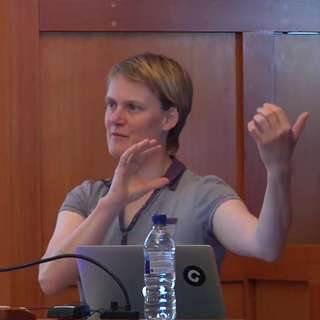
#86 – Hilary Greaves on Pascal's mugging, strong longtermism, and whether existing can be good for us

#86 – Hilary Greaves on Pascal's mugging, strong longtermism, and whether existing can be good for us

Had World War 1 never happened, you might never have existed.

It’s very unlikely that the exact chain of events that led to your conception would have happened otherwise — so perhaps you wouldn't have been born.

Would that mean that it's better for you that World War 1 happened (regardless of whether it was better for the world overall)?

On the one hand, if you're living a pretty good life, you might think the answer is yes – you get to live rather than not.

On the other hand, it sounds strange to say that it's better for you to be alive, because if you'd never existed there'd be no you to be worse off. But if you wouldn't be worse off if you hadn't existed, can you be better off because you do?

In this episode, philosophy professor Hilary Greaves – Director of Oxford University’s Global Priorities Institute – helps untangle this puzzle for us and walks me and Rob through the space of possible answers. She argues that philosophers have been too quick to conclude what she calls existence non-comparativism – i.e, that it can't be better for someone to exist vs. not.

Links to learn more, summary and full transcript.

Where we come down on this issue matters. If people are not made better off by existing and having good lives, you might conclude that bringing more people into existence isn't better for them, and thus, perhaps, that it's not better at all.

This would imply that bringing about a world in which more people live happy lives might not actually be a good thing (if the people wouldn't otherwise have existed) — which would affect how we try to make the world a better place.

Those wanting to have children in order to give them the pleasure of a good life would in some sense be mistaken. And if humanity stopped bothering to have kids and just gradually died out we would have no particular reason to be concerned.

Furthermore it might mean we should deprioritise issues that primarily affect future generations, like climate change or the risk of humanity accidentally wiping itself out.

This is our second episode with Professor Greaves. The first one was a big hit, so we thought we'd come back and dive into even more complex ethical issues.

We discuss:

• The case for different types of ‘strong longtermism’ — the idea that we ought morally to try to make the very long run future go as well as possible
• What it means for us to be 'clueless' about the consequences of our actions
• Moral uncertainty -- what we should do when we don't know which moral theory is correct
• Whether we should take a bet on a really small probability of a really great outcome
• The field of global priorities research at the Global Priorities Institute and beyond

Chapters:

  • The interview begins (00:02:53)
  • The Case for Strong Longtermism (00:05:49)
  • Compatible moral views (00:20:03)
  • Defining cluelessness (00:39:26)
  • Why cluelessness isn’t an objection to longtermism (00:51:05)
  • Theories of what to do under moral uncertainty (01:07:42)
  • Pascal’s mugging (01:16:37)
  • Comparing Existence and Non-Existence (01:30:58)
  • Philosophers who reject existence comparativism (01:48:56)
  • Lives framework (02:01:52)
  • Global priorities research (02:09:25)


Get this episode by subscribing: type 80,000 Hours into your podcasting app. Or read the linked transcript.

Producer: Keiran Harris.
Audio mastering: Ben Cordell.
Transcriptions: Zakee Ulhaq.

Jaksot(320)

#66 – Peter Singer on being provocative, effective altruism, & how his moral views have changed

#66 – Peter Singer on being provocative, effective altruism, & how his moral views have changed

In 1989, the professor of moral philosophy Peter Singer was all over the news for his inflammatory opinions about abortion. But the controversy stemmed from Practical Ethics — a book he’d actually rel...

5 Joulu 20192h 1min

#65 – Ambassador Bonnie Jenkins on 8 years pursuing WMD arms control, & diversity in diplomacy

#65 – Ambassador Bonnie Jenkins on 8 years pursuing WMD arms control, & diversity in diplomacy

"…it started when the Soviet Union fell apart and there was a real desire to ensure security of nuclear materials and pathogens, and that scientists with [WMD-related] knowledge could get paid so that...

19 Marras 20191h 40min
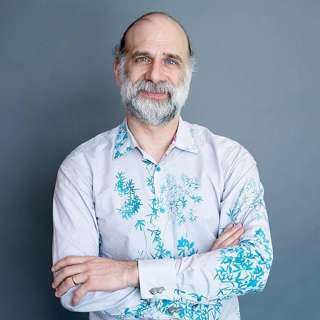
#64 – Bruce Schneier on how insecure electronic voting could break the United States — and surveillance without tyranny

#64 – Bruce Schneier on how insecure electronic voting could break the United States — and surveillance without tyranny

November 3 2020, 10:32PM: CNN, NBC, and FOX report that Donald Trump has narrowly won Florida, and with it, re-election.  November 3 2020, 11:46PM: The NY Times and Wall Street Journal report that so...

25 Loka 20192h 11min

Rob Wiblin on plastic straws, nicotine, doping, & whether changing the long-term is really possible

Rob Wiblin on plastic straws, nicotine, doping, & whether changing the long-term is really possible

Today's episode is a compilation of interviews I recently recorded for two other shows, Love Your Work and The Neoliberal Podcast.  If you've listened to absolutely everything on this podcast feed, y...

25 Syys 20193h 14min

Have we helped you have a bigger social impact? Our annual survey, plus other ways we can help you.

Have we helped you have a bigger social impact? Our annual survey, plus other ways we can help you.

1. Fill out our annual impact survey here. 2. Find a great vacancy on our job board. 3. Learn about our key ideas, and get links to our top articles. 4. Join our newsletter for an email about what's n...

16 Syys 20193min

#63 – Vitalik Buterin on better ways to fund public goods, blockchain's failures, & effective giving

#63 – Vitalik Buterin on better ways to fund public goods, blockchain's failures, & effective giving

Historically, progress in the field of cryptography has had major consequences. It has changed the course of major wars, made it possible to do business on the internet, and enabled private communicat...

3 Syys 20193h 18min
#62 – Paul Christiano on messaging the future, increasing compute, & how CO2 impacts your brain

#62 – Paul Christiano on messaging the future, increasing compute, & how CO2 impacts your brain

Imagine that – one day – humanity dies out. At some point, many millions of years later, intelligent life might well evolve again. Is there any message we could leave that would reliably help them out...

5 Elo 20192h 11min

#61 - Helen Toner on emerging technology, national security, and China

#61 - Helen Toner on emerging technology, national security, and China

From 1870 to 1950, the introduction of electricity transformed life in the US and UK, as people gained access to lighting, radio and a wide range of household appliances for the first time. Electricit...

17 Heinä 20191h 54min

Suosittua kategoriassa Koulutus

rss-murhan-anatomia
psykopodiaa-podcast
rss-narsisti
voi-hyvin-meditaatiot-2
aamukahvilla
rss-niinku-asia-on
rss-liian-kuuma-peruna
adhd-podi
psykologia
kesken
rss-vapaudu-voimaasi
rss-valo-minussa-2
dear-ladies
rss-koira-haudattuna
jari-sarasvuo-podcast
esa-saarinen-filosofia-ja-systeemiajattelu
leveli
rss-duodecim-lehti
rss-luonnollinen-synnytys-podcast
rss-ihana-elamani