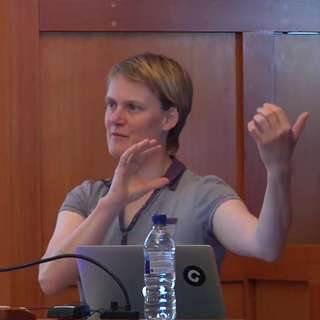

#86 – Hilary Greaves on Pascal's mugging, strong longtermism, and whether existing can be good for us

#86 – Hilary Greaves on Pascal's mugging, strong longtermism, and whether existing can be good for us

Had World War 1 never happened, you might never have existed.

It’s very unlikely that the exact chain of events that led to your conception would have happened otherwise — so perhaps you wouldn't have been born.

Would that mean that it's better for you that World War 1 happened (regardless of whether it was better for the world overall)?

On the one hand, if you're living a pretty good life, you might think the answer is yes – you get to live rather than not.

On the other hand, it sounds strange to say that it's better for you to be alive, because if you'd never existed there'd be no you to be worse off. But if you wouldn't be worse off if you hadn't existed, can you be better off because you do?

In this episode, philosophy professor Hilary Greaves – Director of Oxford University’s Global Priorities Institute – helps untangle this puzzle for us and walks me and Rob through the space of possible answers. She argues that philosophers have been too quick to conclude what she calls existence non-comparativism – i.e, that it can't be better for someone to exist vs. not.

Links to learn more, summary and full transcript.

Where we come down on this issue matters. If people are not made better off by existing and having good lives, you might conclude that bringing more people into existence isn't better for them, and thus, perhaps, that it's not better at all.

This would imply that bringing about a world in which more people live happy lives might not actually be a good thing (if the people wouldn't otherwise have existed) — which would affect how we try to make the world a better place.

Those wanting to have children in order to give them the pleasure of a good life would in some sense be mistaken. And if humanity stopped bothering to have kids and just gradually died out we would have no particular reason to be concerned.

Furthermore it might mean we should deprioritise issues that primarily affect future generations, like climate change or the risk of humanity accidentally wiping itself out.

This is our second episode with Professor Greaves. The first one was a big hit, so we thought we'd come back and dive into even more complex ethical issues.

We discuss:

• The case for different types of ‘strong longtermism’ — the idea that we ought morally to try to make the very long run future go as well as possible
• What it means for us to be 'clueless' about the consequences of our actions
• Moral uncertainty -- what we should do when we don't know which moral theory is correct
• Whether we should take a bet on a really small probability of a really great outcome
• The field of global priorities research at the Global Priorities Institute and beyond

Chapters:

  • The interview begins (00:02:53)
  • The Case for Strong Longtermism (00:05:49)
  • Compatible moral views (00:20:03)
  • Defining cluelessness (00:39:26)
  • Why cluelessness isn’t an objection to longtermism (00:51:05)
  • Theories of what to do under moral uncertainty (01:07:42)
  • Pascal’s mugging (01:16:37)
  • Comparing Existence and Non-Existence (01:30:58)
  • Philosophers who reject existence comparativism (01:48:56)
  • Lives framework (02:01:52)
  • Global priorities research (02:09:25)


Get this episode by subscribing: type 80,000 Hours into your podcasting app. Or read the linked transcript.

Producer: Keiran Harris.
Audio mastering: Ben Cordell.
Transcriptions: Zakee Ulhaq.

Jaksot(319)

How not to lose your job to AI (article by Benjamin Todd)

How not to lose your job to AI (article by Benjamin Todd)

About half of people are worried they’ll lose their job to AI. They’re right to be concerned: AI can now complete real-world coding tasks on GitHub, generate photorealistic video, drive a taxi more sa...

31 Heinä 202551min

Rebuilding after apocalypse: What 13 experts say about bouncing back

Rebuilding after apocalypse: What 13 experts say about bouncing back

What happens when civilisation faces its greatest tests?This compilation brings together insights from researchers, defence experts, philosophers, and policymakers on humanity’s ability to survive and...

15 Heinä 20254h 26min
#220 – Ryan Greenblatt on the 4 most likely ways for AI to take over, and the case for and against AGI in <8 years

#220 – Ryan Greenblatt on the 4 most likely ways for AI to take over, and the case for and against AGI in <8 years

Ryan Greenblatt — lead author on the explosive paper “Alignment faking in large language models” and chief scientist at Redwood Research — thinks there’s a 25% chance that within four years, AI will b...

8 Heinä 20252h 50min

#219 – Toby Ord on graphs AI companies would prefer you didn't (fully) understand

#219 – Toby Ord on graphs AI companies would prefer you didn't (fully) understand

The era of making AI smarter just by making it bigger is ending. But that doesn’t mean progress is slowing down — far from it. AI models continue to get much more powerful, just using very different m...

24 Kesä 20252h 48min
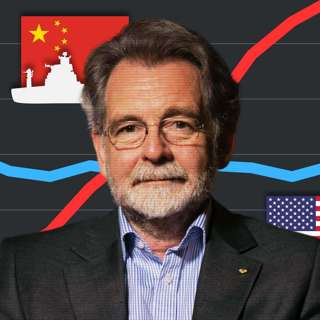
#218 – Hugh White on why Trump is abandoning US hegemony – and that’s probably good

#218 – Hugh White on why Trump is abandoning US hegemony – and that’s probably good

For decades, US allies have slept soundly under the protection of America’s overwhelming military might. Donald Trump — with his threats to ditch NATO, seize Greenland, and abandon Taiwan — seems hell...

12 Kesä 20252h 48min

#217 – Beth Barnes on the most important graph in AI right now — and the 7-month rule that governs its progress

#217 – Beth Barnes on the most important graph in AI right now — and the 7-month rule that governs its progress

AI models today have a 50% chance of successfully completing a task that would take an expert human one hour. Seven months ago, that number was roughly 30 minutes — and seven months before that, 15 mi...

2 Kesä 20253h 47min

Beyond human minds: The bewildering frontier of consciousness in insects, AI, and more

Beyond human minds: The bewildering frontier of consciousness in insects, AI, and more

What if there’s something it’s like to be a shrimp — or a chatbot?For centuries, humans have debated the nature of consciousness, often placing ourselves at the very top. But what about the minds of o...

23 Touko 20253h 34min

Don’t believe OpenAI’s “nonprofit” spin (emergency pod with Tyler Whitmer)

Don’t believe OpenAI’s “nonprofit” spin (emergency pod with Tyler Whitmer)

OpenAI’s recent announcement that its nonprofit would “retain control” of its for-profit business sounds reassuring. But this seemingly major concession, celebrated by so many, is in itself largely me...

15 Touko 20251h 12min

Suosittua kategoriassa Koulutus

rss-murhan-anatomia
voi-hyvin-meditaatiot-2
psykopodiaa-podcast
rss-narsisti
adhd-podi
rss-liian-kuuma-peruna
rss-valo-minussa-2
aamukahvilla
jari-sarasvuo-podcast
rss-uskonto-on-tylsaa
rss-duodecim-lehti
rss-luonnollinen-synnytys-podcast
rss-arkea-ja-aurinkoa-podcast-espanjasta
rss-niinku-asia-on
kesken
salainen-paivakirja
psykologia
ihminen-tavattavissa-tommy-hellsten-instituutti
leveli
rss-tietoinen-yhteys-podcast-2